Nana Banana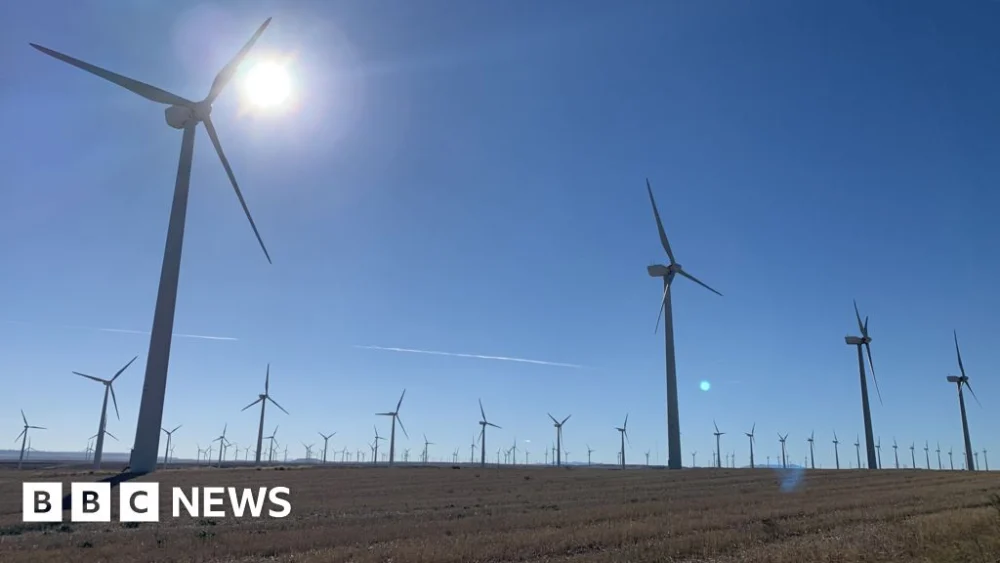
The town’s green credentials have recently received a significant boost with the commencement of construction on a colossal factory dedicated to producing batteries for electric vehicles. This groundbreaking project is a joint venture between the Chinese industrial giant CATL, the world’s largest battery manufacturer, and Netherlands-based automotive conglomerate Stellantis. Their combined investment of approximately €4 billion ($4.7 billion; £3.5 billion) marks a monumental commitment, with China’s ambassador to Spain, Yao Jing, hailing it as "one of the biggest Chinese investments Europe has ever seen." This facility is not merely an economic boon but a strategic move, positioning Spain at the forefront of Europe’s electric vehicle supply chain and reducing reliance on Asian battery production.
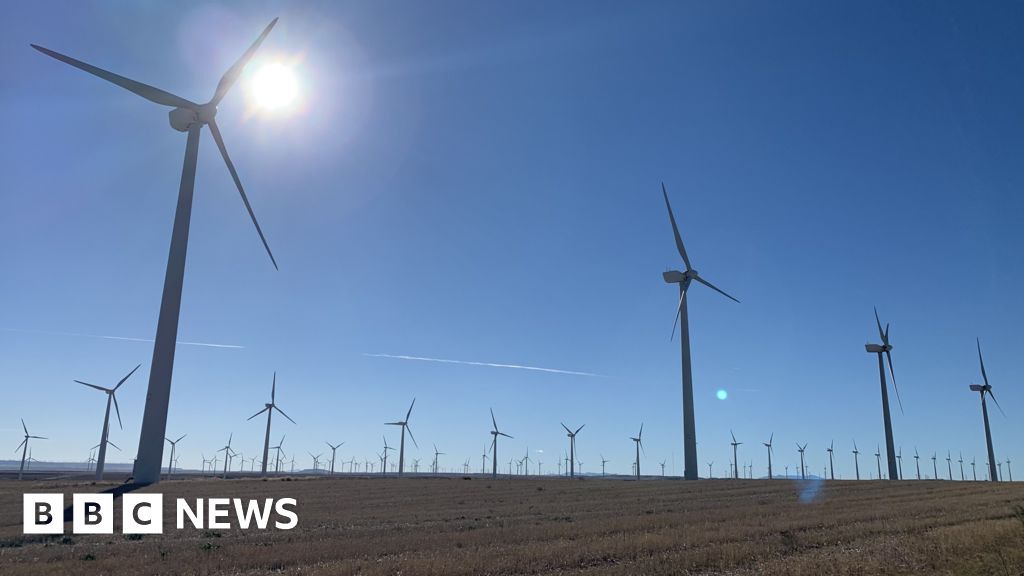
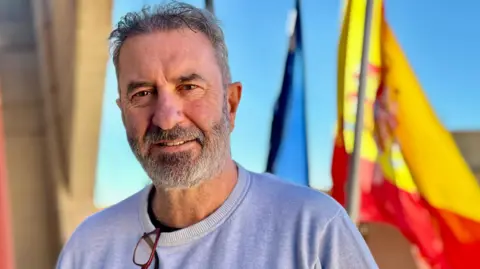
Luis Bertol Moreno, the mayor of Figueruelas, emphasizes the logical rationale behind selecting his town for such a pivotal project. "We’re in Aragón, where there’s wind all year round, there are lots of hours of sunshine, and we are surrounded by wind turbines and solar panels," he explains. "Those [energy sources] will be crucial in generating electricity for the new factory, and I understand that was the key reason for building it here in Figueruelas." The promise of locally sourced, clean energy was a decisive factor, illustrating how Spain’s renewable infrastructure can attract significant foreign direct investment and foster green industrial growth.
This factory serves as a powerful validation of Spain’s progressive energy model, which has unequivocally prioritized renewable sources. The nation has undergone a remarkable transformation in its electricity generation mix. In 2017, renewables accounted for a mere third of Spain’s electricity production. However, by the close of last year, this figure had surged to an impressive 57%, demonstrating a rapid and effective pivot towards green power. The Spanish government, led by Prime Minister Pedro Sánchez’s Socialist party, has set an even more ambitious target: to have renewables contribute 81% of electricity output by 2030.
Earlier this year, Prime Minister Sánchez encapsulated his administration’s forward-thinking approach with a pointed retort to former US President Donald Trump’s pro-fossil fuel mantra, "Dig, baby, dig." Sánchez declared, "Green, baby, green," underscoring the profound economic, environmental, and social benefits he sees in the widespread adoption of renewable energy. This slogan reflects a broader commitment to the European Green Deal and a vision for Spain as a leader in sustainable development.
However, Spain’s steadfast commitment to an all-in renewable strategy has come under intense scrutiny in recent months, primarily triggered by a widespread blackout on April 28th. The incident plunged homes, businesses, government buildings, public transport networks, schools, and universities across Spain and even parts of neighboring Portugal into darkness for several hours. The sheer scale of the disruption, impacting millions of citizens and critical infrastructure, immediately ignited a fierce political debate over the resilience and reliability of the national energy grid.
With the government initially unable to provide a comprehensive explanation for the outage, the country’s energy mix quickly became a politically charged issue. Alberto Núñez Feijóo, the leader of the conservative opposition Partido Popular (PP), seized upon the opportunity to criticize the government’s "fanaticism" in pursuing its green agenda. He publicly suggested that an excessive reliance on intermittent renewable sources might have been a contributing factor to the system failure, advocating for a fundamental rethink of Spain’s energy model. The fact that, just a week prior to the blackout, solar generation in mainland Spain had achieved a record-breaking 61.5% share of the electricity mix further fueled these claims, allowing critics to draw a seemingly direct, albeit unproven, link.
Yet, both the government and Red Eléctrica, Spain’s national grid operator, have vehemently denied any direct correlation between the blackout and the high penetration of renewable energy sources. Concha Sánchez, head of operations for Red Eléctrica, stated unequivocally, "We have operated the system with higher renewable rates [previously] with no effect on the security of the system. Definitely it’s not a question of the rate of renewables at that moment." She explained that the blackout was attributed to a complex interplay of issues, including an "unknown event" within the system moments before the outage, which triggered anomalous voltage oscillations. While a cyber-attack was swiftly and repeatedly ruled out, Red Eléctrica and the government are still awaiting definitive reports to pinpoint the precise cause, leaving a lingering sense of uncertainty.
In the wake of the April incident, a noticeable shift has occurred in Spain’s electricity mix, with a greater reliance on natural gas. This tactical adjustment, even if temporary, reinforces the perception that Spain is standing at a critical energy crossroads. The increased use of gas, a fossil fuel, contrasts sharply with the "Green, baby, green" rhetoric and highlights the practical challenges of maintaining grid stability and energy security while rapidly transitioning to a predominantly renewable system.
Spain’s nuclear industry, which currently provides a substantial 20% of the national electricity, has become particularly vocal since the blackout. It is actively pushing back against the government’s long-standing plans to systematically close the country’s five operational nuclear plants between 2027 and 2035. This policy positions Spain as an anomaly in Europe, where many countries are experiencing a "nuclear renaissance," re-evaluating and even extending the lifespans of their nuclear facilities as a reliable, low-carbon baseload power source. Countries like France, the UK, and several Eastern European nations are investing heavily in new nuclear technologies and extending existing plant operations to ensure energy independence and meet climate targets.
Ignacio Araluce, president of Foro Nuclear, the association representing Spain’s nuclear industry, critically observes that Spain is "the only country in the world that is scheduling the closure of nuclear plants that are in operation." He passionately argues that nuclear energy provides indispensable stability to the grid, offering consistent, carbon-free power regardless of weather conditions, making it perfectly compatible with the green energy transition. The companies that own the Almaraz plant in south-western Spain, slated to be the first to shut down in 2027, have formally requested a three-year extension to its operational life until 2030, a request currently under review. This decision could set a precedent for the entire fleet.
Mr. Araluce praises renewable sources for their reliance on natural elements but points out their inherent intermittency. "How can you produce energy in those hours when the renewables are not producing?" he asks, answering his own question: "with a source like nuclear, that is not producing CO2, that is producing all hours of the year." This argument resonates deeply with the political opposition. The far-right Vox party, in particular, has been a staunch critic of the planned nuclear shutdown, describing nuclear power as "a crucial source of stability" in the context of what they perceive as the government’s inadequate explanation for the April blackout. The conservative PP also largely aligns with this view, advocating for a diverse energy mix that includes nuclear.
Concha Sánchez of Red Eléctrica acknowledges that there is significant room for improvement in Spain’s electricity model, particularly concerning grid infrastructure and energy storage. She points to the Iberian Peninsula’s relative isolation from the broader European grid, which can limit energy exchanges and increase vulnerability. Critically, she highlights the urgent need for robust storage solutions. "While we have taken a good path when it comes to renewable installation, we cannot say the same regarding storage," she admits. "We need to foster storage installation." Adequate storage, whether through large-scale batteries like those planned for Figueruelas, pumped-hydro systems, or emerging green hydrogen technologies, is essential to capture surplus renewable energy and release it when generation is low, thus providing the flexibility and stability that critics argue renewables currently lack.
Adding another layer of complexity to Spain’s energy future is the country’s volatile political panorama. The Socialist-led coalition government has been embroiled in a series of corruption scandals and has seen its parliamentary majority effectively collapse in recent weeks, raising the distinct possibility of a snap election in the coming months. Polls suggest that a right-wing government, potentially a coalition of the PP and Vox, would be the likely outcome. Such a shift in power would almost certainly usher in a significant re-evaluation of current energy policies, placing less emphasis on the rapid deployment of renewables and advocating for a partial return to more traditional energy sources, including a halt to the nuclear phase-out and potentially increased investment in natural gas infrastructure. This political instability casts a shadow of uncertainty over long-term energy planning and investor confidence in green projects.
Despite these national debates and political uncertainties, Spain’s renewable transition continues its momentum on the ground. For Figueruelas, in Aragón, this translates into tangible benefits beyond just cheap, clean energy. The town’s population of just 1,000 is projected to increase dramatically with the arrival of 2,000 Chinese workers to help construct the new battery plant. Once operational, the facility is expected to create an astonishing 35,000 indirect jobs across the region, revitalizing the local economy. "These kinds of investments revitalize the area, they revitalize the construction sector, hostelry," says local resident Manuel Martín. "And the energy is free — it just depends on the sun and the wind."
Spain stands at a critical juncture, balancing its ambitious climate goals and the tangible benefits of green investment with the imperative of energy security and grid stability. The success of projects like the Figueruelas battery factory demonstrates the immense potential of a renewable-centric economy, yet the recent blackout and the ensuing political fallout highlight the complex challenges that lie ahead. The question remains whether Spain can navigate this intricate path, maintain its leadership in green energy, and deliver a truly resilient and sustainable power system for its future.




 Roy Suryo

 Nakalama John
 atisusanti
 Ramos Leo