Nakalama John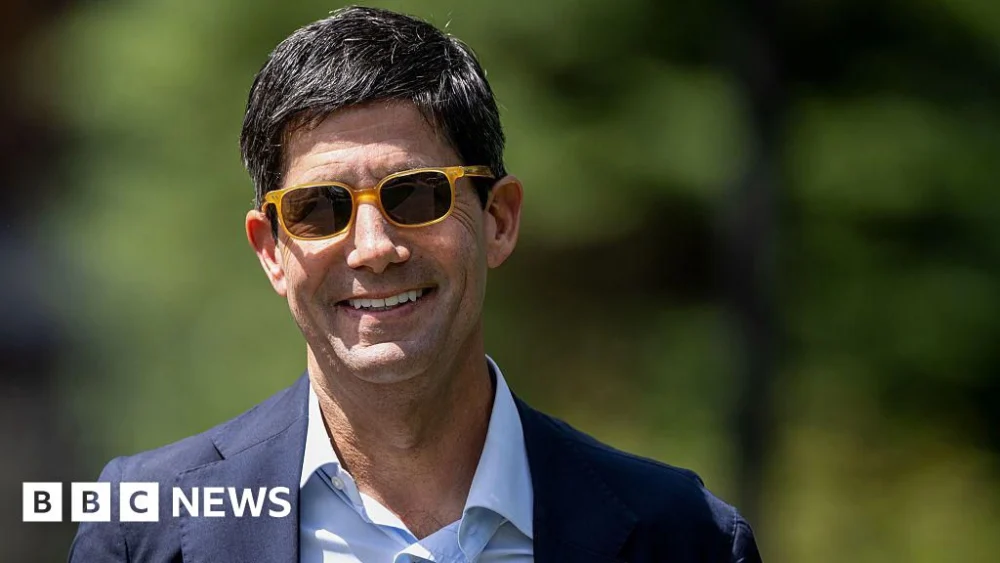
Donald Trump has consistently called for significant change at the US central bank, often expressing frustration with its leadership and policies during his previous term. Now, with Jerome Powell’s term as Federal Reserve chairman poised to conclude in May, the former president could be on the verge of getting his wish for a more amenable head of the nation’s most powerful economic institution. On Friday, the US president announced Kevin Warsh – a conservative economist whom he had considered but ultimately passed over for the post during his first term – as his choice to replace Powell. "Warsh is ‘central casting’ and he will never let you down," Trump declared on social media, signaling a strong belief in his nominee’s alignment with presidential priorities.
The irony of this selection, however, is not lost on seasoned observers of monetary policy. Kevin Warsh has, for much of his career, cultivated a reputation as a staunch supporter of higher interest rates and a critic of expansive monetary policy – a "hawk" in central banking parlance. This past stance would appear to place him directly at odds with Trump, a self-described "low interest rate guy" who famously lambasted Powell for not cutting rates quickly enough, even going so far as to label him an "enemy" of the United States. Trump has made no secret of his desire for a Fed chair who would be on board with his views, creating a fascinating dynamic around Warsh’s nomination. The central question now is whether Warsh’s selection will indeed lead to the kind of central bank leadership Trump envisions, or if the demands of economic reality and institutional independence will prevail.
Warsh brings a distinguished and traditional background to the demanding role of Fed chair. An Ivy League alumnus, he holds degrees from Stanford University and Harvard Law School, laying a strong academic foundation for his career. His prior stint at the Fed as a Governor from 2006 to 2011, having been appointed by President George W. Bush at the young age of 35, provided him with direct experience during one of the most tumultuous periods in modern financial history – the 2008 global financial crisis and its aftermath. Before and after his time at the Fed, Warsh honed his expertise on Wall Street, notably at Morgan Stanley, and more recently as a distinguished visiting fellow at the Hoover Institution, a prominent conservative economic think tank at Stanford University. This latter affiliation has been instrumental in shaping and articulating his economic philosophy in recent years.
During his tenure as a Fed Governor, Warsh was known for his skepticism regarding the efficacy and potential side effects of aggressive monetary easing. He was notably a minority voice within the Federal Open Market Committee (FOMC) during the crisis, fretting that the extensive economic stimulus measures, particularly quantitative easing (QE), would inevitably lead to rampant inflation. This view was largely out of step with the prevailing consensus among his colleagues and has been retrospectively critiqued given the persistent low inflation environment that followed. More recently, however, Warsh has appeared to temper some of his more hawkish pronouncements in opinion articles and media appearances, seemingly attempting to broaden his appeal and perhaps signal a more pragmatic approach. This perceived shift raises questions about the consistency of his economic philosophy and whether it’s genuinely evolved or strategically adapted.
Supporters of Warsh emphasize his intellectual rigor and his sensitivity to concerns about the central bank’s independence. They argue that his deep understanding of financial markets and his experience at the highest levels of economic policymaking would make him a responsible steward of the Fed. Lee Ohanian, an economics professor at UCLA and a senior fellow at the Hoover Institution who has known Warsh for years, articulated this perspective, stating that taking direct orders from a president "would diminish the Fed. It would diminish the office of the chairman, and it would create tremendous turmoil in the financial markets. Kevin knows that." This sentiment suggests a belief that Warsh would prioritize the Fed’s institutional integrity over short-term political demands. His nomination has drawn praise from establishment figures across the political spectrum, including former Secretary of State Condoleezza Rice, and Mohamed el-Erian, a high-profile economist with an extensive career on Wall Street, who view him as a capable and experienced choice.
Yet, critics are quick to point out potential conflicts and inconsistencies. Some have questioned whether the influence of Warsh’s father-in-law, Ronald Lauder – a billionaire heir, prominent Republican donor, and long-time friend of Donald Trump – played an undue role in his selection. This perception of potential cronyism, they argue, could undermine public trust in the independence of the appointment. Others scrutinize his record as a policymaker, noting his staunch opposition to aggressive economic stimulus during the 2008 financial crisis. His concerns about inflation during a period of deflationary pressures and economic contraction were a minority view then and have not been widely vindicated by subsequent economic history. Congressman Don Beyer, a Democrat from Virginia, has been particularly vocal, accusing Warsh of showing "willingness to wildly alter his views…based on who is in the White House," implying a concerning level of political expediency over consistent economic principle.
Despite these criticisms, many in financial circles have reacted to Warsh’s nomination with a degree of measured comfort. Wells Fargo analysts, for instance, noted that "There appears to be at least some degree of comfort with a Warsh-led Fed vs. the other choices," albeit acknowledging that his relatively sparse public profile in recent years leaves some degree of uncertainty about his current leanings. Jeffrey Roach, chief economist for LPL Financial, told the BBC that "Investors should be thankful," suggesting a preference for Warsh over potentially more unconventional or politically charged alternatives. This cautious acceptance reflects a gamble that a Fed with Warsh at the helm might not deviate drastically from conventional monetary policy, despite presidential pressure.
The acceptance of Warsh is partially predicated on the expectation that a Fed under his leadership might not dramatically alter the current trajectory of interest rates. After all, despite Trump’s vocal complaints, the Fed under Powell initiated a series of interest rate cuts last year, and most analysts anticipate additional cuts this year, driven by broader economic conditions such as cooling inflation and a desire to support growth, rather than solely by presidential diktat. This economic reality means that Warsh would not necessarily have to surrender his credibility as an independent economist to deliver lower interest rates, which would align with Trump’s desires. Such a scenario would be good news for borrowers in the US, who could see lower rates on mortgages, car loans, and other forms of debt, potentially stimulating economic activity and making people feel better about the economy – a boon for any sitting or aspiring president.
Where differences might be felt more acutely is in other facets of the Fed’s broad mandate, particularly its regulatory and supervisory roles. Warsh has been an outspoken critic of what he terms the Fed’s "mission creep," arguing that the central bank has taken on too expansive a role in the economy beyond its traditional dual mandate of price stability and maximum employment. He advocates for reducing the Fed’s involvement in bank regulation, potentially rolling back some of the post-crisis reforms like those enacted under Dodd-Frank, and scaling back its engagement with issues like climate change. This position puts him squarely in alignment with many conservative voices and the White House, who argue that such issues fall outside the Fed’s purview and risk politicizing the institution.
Furthermore, Warsh, like Treasury Secretary Scott Bessent, is a fierce critic of the extensive interventions the Fed made in markets following the 2008 financial crisis and again during the Covid-19 pandemic. These interventions, primarily through quantitative easing, have left the central bank with a massive balance sheet comprising huge holdings of Treasuries and mortgage-backed securities. Warsh maintains that these policies disproportionately prop up the stock market and other asset prices, primarily benefiting the wealthy and large financial interests rather than the mainstream economy. He has called for a significant reduction in these holdings and for closer coordination in their management with the Treasury Department. However, the practical implications of rapidly shrinking the Fed’s balance sheet could be complex. A faster unwind might lead to higher borrowing costs across the economy, potentially working against Trump’s desire for lower rates.
The market’s initial reaction to Warsh’s nomination was telling: gold prices dropped, and the dollar gained on Friday. This suggests that traders perceived Warsh as likely to adhere to his initial instincts as a "hawk" who favors tighter monetary conditions or, at the very least, a more disciplined approach to the Fed’s balance sheet, which could imply higher rates in the long run. Narayana Kocherlakota, a finance professor at the University of Rochester who served on the Fed with Warsh, expressed confidence in his former colleague’s independence, stating, "He’s very smart and he’s very independent. And I think that’s the kind of person that Americans should want at the head of their central bank."
Conversely, other analysts like Thierry Wizman, global foreign exchange and rates strategist at Macquarie Group, argue that Warsh’s economic thinking has evolved to be closely aligned with Trump’s, particularly in downplaying concerns that rapid growth and rising wages could fuel inflation. "Warsh is not the Fed’s guy, he is Trump’s guy, and has shadowed Trump on monetary policy almost every step of the way since 2009," Wizman wrote, suggesting a deeper ideological alignment than some observers acknowledge.
For now, Kevin Warsh may appear to be the candidate most likely to satisfy all parties – providing Trump with a perceived ally while offering financial markets an experienced, if potentially hawkish, hand. However, the swift and dramatic turn of former President Trump on Jerome Powell – his own initial pick for Fed chair – should serve as a potent cautionary reminder. The relationship between a president and their chosen central bank head is often fraught with tension, and the expectation of unwavering loyalty rarely survives the realities of economic policymaking and the critical importance of institutional independence.
Reporting contributed by Danielle Kaye, Daniel Bush and Jonathan Josephs


 Roy Suryo