atisusanti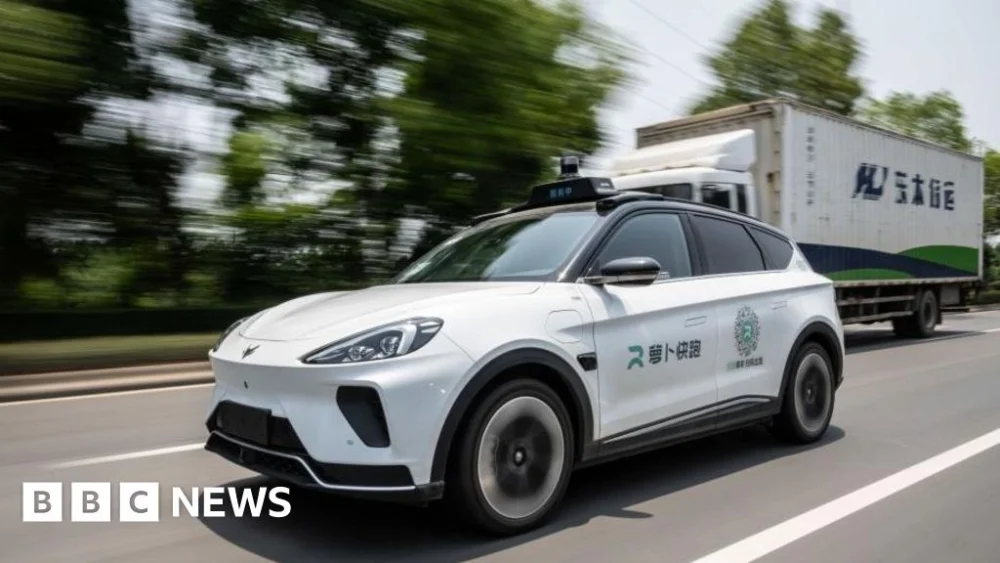
Baidu’s Apollo Go platform is no stranger to the autonomous driving landscape, boasting a proven track record of operation in numerous cities, predominantly across China. This service has already facilitated millions of passenger journeys without the necessity of a human driver at the helm, accumulating invaluable real-world data and operational experience. The prospect of this technology being deployed in a major European capital like London signals a significant global expansion and a testament to the maturity of Baidu’s self-driving capabilities.
The announcement has been met with cautious optimism from the UK government. Transport Secretary Heidi Alexander has publicly hailed the news as "another vote of confidence in our plans for self-driving vehicles," underscoring the nation’s ambition to be at the forefront of this transformative mobility revolution. Ms. Alexander further elaborated on the government’s proactive stance, stating in a post on X, "We’re planning for self-driving cars to carry passengers for the first time from spring, under our pilot scheme – harnessing this technology safely and responsibly to transform travel." This indicates a clear governmental push to establish a regulatory framework that supports the safe and responsible integration of autonomous vehicles into the transport ecosystem.
Uber, in particular, has demonstrated an accelerated commitment to the UK market. As early as June, the company indicated its intention to expedite its plans for trialling driverless cars in the UK. This move aligns with the government’s efforts to fast-track the development of a regulatory framework that would permit pilots of small-scale, autonomous commercial services, including "bus and taxi-like" operations, by 2026. Uber’s enthusiasm for the Baidu partnership was palpable, with the company stating, "We’re excited to accelerate Britain’s leadership in the future of mobility, bringing another safe and reliable travel option to Londoners next year." This suggests a strategic alignment with national objectives and a desire to capitalize on the UK’s progressive approach to autonomous technology.
Lyft, too, has signaled its European ambitions, announcing in August its intention to explore the deployment of driverless taxis in both the UK and Germany. This expansion is part of a broader European agreement with Baidu, indicating a coordinated effort to leverage Baidu’s technology across key international markets. Lyft already has operational experience with autonomous rides in Atlanta, USA, where Uber also operates a robotaxi service through its existing partnership with Waymo, another prominent player in the autonomous vehicle sector. This multi-pronged approach by Lyft underscores its commitment to establishing a global presence in the driverless taxi domain.
Lyft’s Chief Executive, David Risher, expressed his excitement about bringing Baidu’s Apollo Go vehicles to London passengers, tweeting on Monday, "London passengers would be ‘the first in the region to experience Baidu’s Apollo Go vehicles’." This statement highlights London’s potential to become a pioneering city in the widespread adoption of driverless ride-hailing services in Europe. Should the necessary regulatory approvals be secured, Risher indicated that Lyft’s initial fleet would comprise dozens of Baidu Apollo Go cars, with ambitious plans to scale up to hundreds in subsequent phases. This suggests a phased and strategic rollout, allowing for iterative learning and adaptation.
However, the path to widespread deployment is not without its hurdles, primarily concerning regulatory approval and public trust. Both Uber and Lyft will need to thoroughly convince a cautious regulatory environment and a skeptical public of the safety and reliability of their driverless offerings. The experiences of other autonomous vehicle operators, including Waymo, have provided valuable lessons about the complexities of real-world deployment.
Professor Jack Stilgoe, an expert in science and technology policy at University College London, offered a nuanced perspective on the scaling of autonomous technologies. He cautioned that driverless cars "can’t just scale up like other digital technologies," emphasizing the significant difference between a limited number of test vehicles operating on public streets and a fully developed, robust system capable of serving as a genuine transportation option for the masses. This highlights the critical need for extensive testing, validation, and a deep understanding of operational nuances before widespread adoption.
Despite the technological advancements and governmental support, a significant portion of the UK public remains uneasy about the safety of driverless taxis. A YouGov poll conducted in October revealed that almost 60% of UK respondents would not feel comfortable riding in a driverless taxi under any circumstances. Furthermore, a striking 85% of respondents expressed a lack of trust in the technology, stating they would opt for a traditional cab with a human driver if offered the same price and convenience. This data underscores the substantial challenge of building public confidence and overcoming ingrained preferences for human-operated vehicles.
Instances of autonomous vehicles encountering difficulties, such as trapping passengers, causing traffic disruptions, or being involved in accidents, continue to make headlines and contribute to public apprehension. A recent incident saw self-driving taxi operator Waymo reportedly suspend its service in San Francisco following vehicle malfunctions during a power outage, serving as a stark reminder of the potential vulnerabilities of these systems.
Professor Stilgoe further emphasized the importance of the UK taking a leading role in establishing robust standards for autonomous vehicle technology, especially in light of ongoing concerns about safety, privacy, and the potential for increased congestion. He pointed to London’s success in reducing car traffic in its city center as a precedent, suggesting that careful consideration must be given to the potential impact of zero-occupancy vehicles on urban mobility. The challenge, he articulated, lies in ensuring that the introduction of driverless cars does not inadvertently exacerbate existing traffic problems. The partnerships between Uber, Lyft, and Baidu represent a significant step in the journey towards a future of autonomous mobility in the UK, but the road ahead will require a delicate balance of technological innovation, regulatory foresight, and unwavering commitment to public safety and trust.




 Roy Suryo