Nana Banana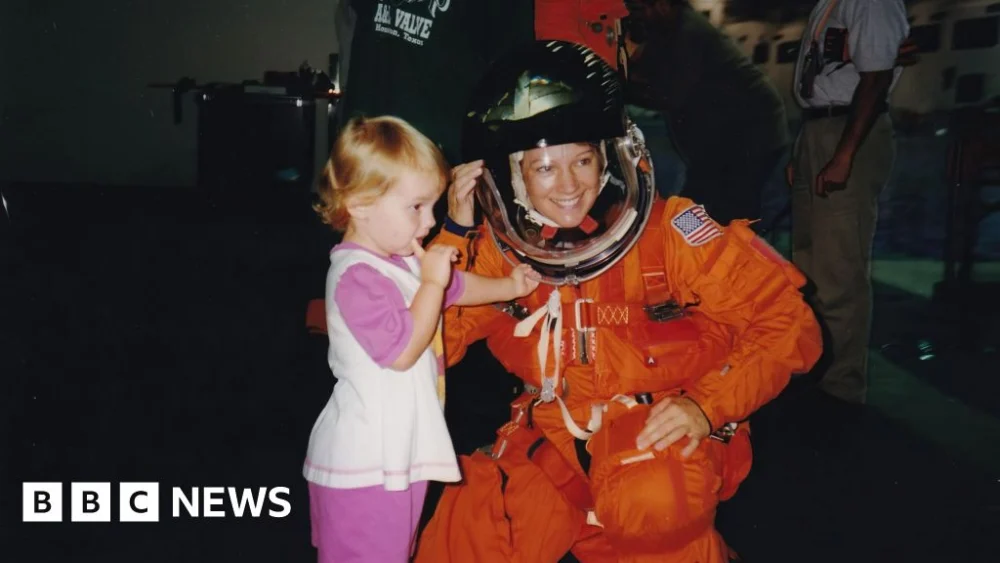
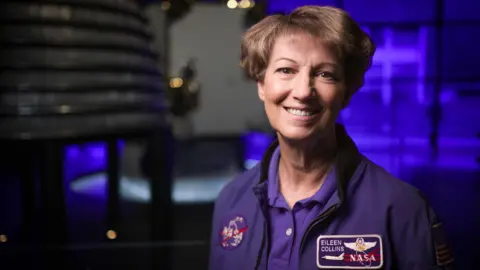
Meeting Collins at London’s Science Museum, one is immediately struck by her demeanor. She is softly spoken, radiating warmth and an approachable, down-to-earth quality. Yet, beneath this gentle exterior lies an undeniable core of focus and determination – an inner steel forged through years of rigorous training and high-stakes missions. Her journey into the cosmos began with a simple, yet profound, childhood dream. "I was reading a magazine article on the Gemini astronauts. I was probably nine years old, and I thought that’s the coolest thing. That’s what I want to do," she recalls, a spark still visible in her eyes. It was a dream born in an era where the concept of a "lady astronaut" seemed like pure fantasy, a distant ambition in a field entirely dominated by men. "Of course, there were no women astronauts back then. But I just thought, I’ll be a lady astronaut."
This unwavering conviction, born from the innocent aspiration of a nine-year-old girl, propelled her forward. She didn’t just want to be an astronaut; she set her sights even higher – she wanted to be at the controls of a spacecraft, a pilot. To achieve this seemingly impossible goal, Collins understood the only viable path was to join the military and become a test pilot, a profession at the very pinnacle of aviation, notorious for its extreme competitiveness and predominantly male roster.
Her exceptional skills and unflappable temperament quickly made her stand out within the Air Force. Her talent was undeniable, and it led to her selection for the coveted astronaut programme. She would fly the Space Shuttles, NASA’s revolutionary reusable "space planes," which promised routine access to Earth orbit.
Her first mission, STS-63 aboard the Space Shuttle Discovery in 1995, was historic. As the first woman to pilot a Space Shuttle, Collins carried an immense weight of expectation. The eyes of the world, and particularly those of aspiring women, were fixed on her. She felt the pressure acutely, understanding that her performance would not only define her but potentially influence the opportunities available to future generations of female pilots. "As the first woman to pilot the Space Shuttle, I worked very hard at that because I didn’t want people to say, ‘Oh look, the woman has made a mistake.’ Because it wasn’t just about me, it was about the women to follow me," she explains, her voice reflecting the gravity of that moment. "And I wanted there to be a reputation for women pilots that was: ‘Hey, they’re really good’." Her flawless execution of the mission cemented that reputation, not just for herself, but for all women who would dare to follow her path.
Her exceptional performance did not go unnoticed. Just four years later, in 1999, Eileen Collins broke yet another barrier, making history as the first woman to command a Space Shuttle mission, STS-93, also aboard Columbia. This mission was significant for deploying the Chandra X-ray Observatory, a powerful telescope that continues to contribute immensely to astrophysics.
Beyond her professional achievements, Collins was also a wife and a mother to two young children. This aspect of her life frequently became a topic of discussion in press conferences at the time, with many journalists expressing a seemingly astonished curiosity about how she managed to balance such a demanding career with her family life. Collins, however, viewed both roles with equal reverence, describing being a mum and a commander as "the two best jobs in the world." With a chuckle, she adds a surprising perspective: "But I’m going to tell you it is harder to be a parent than to be a space shuttle commander. The best training I ever had for being a commander was being a parent – because you have to learn how to say no to people." Her ability to draw parallels between the challenges of parenting and the complexities of commanding a multi-million-dollar spacecraft, underscoring the vital leadership skills required in both, speaks volumes about her practical wisdom and grounded nature.
NASA’s Space Shuttle programme, which operated for three decades from 1981 to 2011, was a testament to human ingenuity, reaching breathtaking heights of scientific discovery and engineering prowess. However, it was also marred by periods of unimaginable tragedy and profound lows. The catastrophic loss of the Space Shuttle Challenger in 1986, just seconds after launch, killing all seven crew members, cast a long shadow over the program’s early years. Then, in 2003, the nation and the world watched in horror as the Space Shuttle Columbia disintegrated in the skies over Texas during its re-entry, claiming the lives of its entire crew of seven.
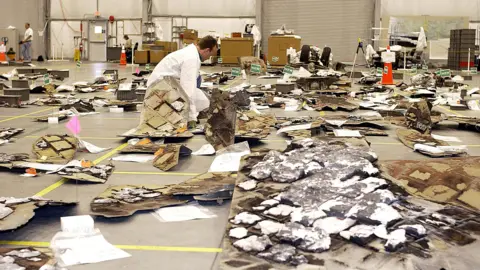
A subsequent exhaustive investigation revealed that a piece of insulating foam from Columbia’s external fuel tank had broken loose during launch, striking and damaging the orbiter’s heat shield. This seemingly minor incident proved devastating, compromising the integrity of the thermal protection system crucial for safe re-entry into Earth’s atmosphere. Columbia was unable to withstand the intense heat, tearing apart as it descended. Collins shakes her head visibly at the painful memory, the loss of friends, colleagues, and the palpable sense of grief that permeated NASA.
In the wake of such a profound disaster, the natural inclination for many might have been to step back, to question the inherent risks. But for Collins, the call of duty was paramount. As a commander, she had to pick up the mantle, tasked with leading the very next shuttle flight, the critical "Return to Flight" mission. The question of quitting, of walking away from the inherent dangers, naturally arises. "People throughout the shuttle programme were counting on the commander to stick with it," she states quietly, her voice tinged with the weight of responsibility. "I think quitting the mission would have been the opposite of brave… and I wanted to be a brave leader. I wanted to be a confident leader. I wanted to instill that confidence in other people." Her resolve, even in the face of such profound loss and risk, exemplified her extraordinary leadership and dedication to the program’s future.
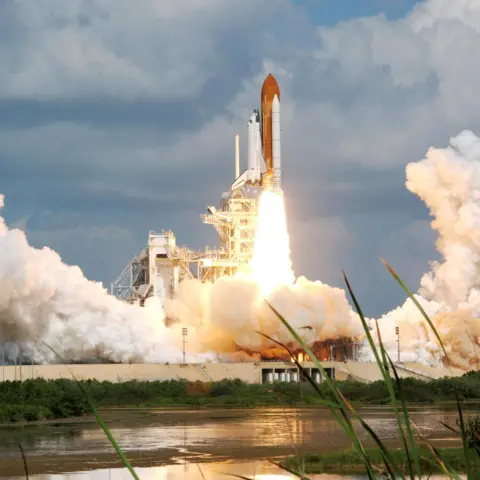
Her leadership was put to the ultimate test during the "Return to Flight" mission, STS-114, aboard Space Shuttle Discovery in July 2005. The entire world held its breath as Discovery launched. And then, the nightmare scenario unfolded again: a chunk of foam broke away from the external tank during ascent, precisely the cause of the Columbia disaster. Panic could have easily gripped the crew and mission control, but Collins, the commander, remained a beacon of calm.
This time, however, there was a plan, a critical protocol put in place after the Columbia investigation, to check for damage. But executing it meant undertaking one of the riskiest maneuvers in the history of spaceflight: the Rendezvous Pitch Maneuver (RPM). Collins had to pilot the massive shuttle through a precise 360-degree flip while flying directly beneath the International Space Station (ISS). This daring ballet in orbit allowed her colleagues on the orbiting laboratory to photograph Discovery’s underside with high-resolution cameras, meticulously checking for any breaches in the heat shield.
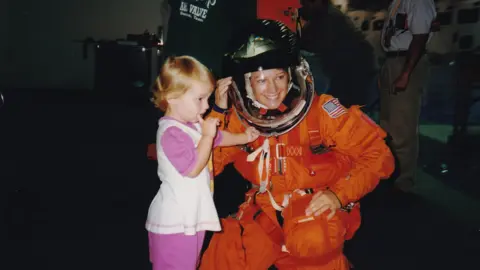
"There were engineers and managers saying it couldn’t be done, all these reasons why it was too dangerous," she recounts, acknowledging the significant opposition and skepticism she faced. "I listened to the discussion, they knew I was the commander, and I said: ‘It sounds like we can do it’." With her hands steady at the controls, her voice calm and assured as she communicated with mission control, Collins flawlessly executed the slow, graceful somersault. The images captured by the ISS crew quickly revealed the damage, allowing for an unprecedented spacewalk to repair the orbiter’s exterior. This critical intervention meant that Collins and her crew would make it safely home, marking a triumphant and ultimately successful "Return to Flight" for the Space Shuttle program.
STS-114 was Collins’s fourth and final spaceflight. She had always planned to conclude her astronaut career after her fourth mission, believing it was important to step aside and provide opportunities for others to experience the wonders of space. She has since watched countless astronauts follow in her footsteps, their paths made smoother by her groundbreaking achievements.
When asked for advice for the next generation dreaming of the stars, her counsel is characteristically straightforward and practical: "Do your homework, listen to your teacher, pay attention in class and read books, and that will give you something to focus on." It’s a testament to her belief in fundamental discipline and continuous learning.
Those who follow Eileen Collins to space will undoubtedly continue to learn not only from her incredible technical prowess but also from her quiet strength, unwavering leadership, and profound impact, not just as a woman in a male-dominated field, but as a truly formidable pilot and commander. She expresses no regrets about bringing her astronaut career to a planned conclusion, having made her decision and never looking back. Yet, a wistful look still dances in her eyes when contemplating a return to the cosmos. "Yes, I would love to go on a mission someday. When I’m an old lady, maybe I’ll get a chance to go back in space." Her dream, it seems, remains as boundless as the universe she once commanded.
Spacewoman is in selected cinemas now.



 Nakalama John
 George Anjay
 Ramos Leo
 atisusanti
 Roy Suryo