
 Roy Suryo
Royal Stoke University Hospital is poised to become the United Kingdom’s largest hub for robotic surgery, a significant advancement heralded by hospital leadership. This transformative development is fueled by a substantial £12 million investment from the Denise Coates Foundation, a philanthropic organisation known for its commitment to enhancing healthcare infrastructure. This generous funding is earmarked to dramatically broaden access to cutting-edge robotic surgical procedures for patients throughout Stoke-on-Trent and the wider Staffordshire region.
The impact of this expansion is projected to be profound, with an anticipated benefit to over 1,000 patients annually. The advanced robotic systems will facilitate a diverse array of complex surgical interventions, crucially including emergency procedures and intricate cardiac surgeries. Beyond simply increasing capacity, Royal Stoke is set to pioneer new technological frontiers within the UK. The hospital will be the first in the nation to implement novel technology that provides surgeons with real-time tactile feedback, allowing them to discern tissue resistance during operations. This haptic feedback capability is a game-changer, promising enhanced surgical control, a reduction in the application of unnecessary force, and ultimately, safer and more precise surgical outcomes. This strategic move is designed to propel Royal Stoke closer to its aspiration of becoming a globally recognised centre of excellence for robotic surgery.
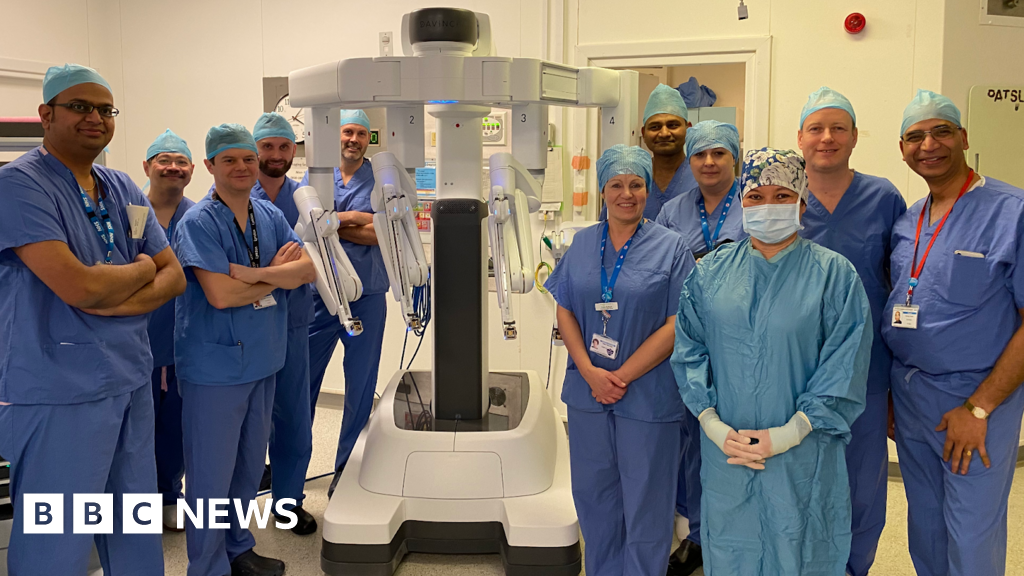
The benefits of robotic surgery at Royal Stoke are already demonstrably positive. Prior to this latest expansion, the hospital reported a remarkable 20% increase in surgical productivity, coupled with a significant reduction in the average patient hospital stay, shortening it by two days per case. This efficiency gain translates into substantial savings in healthcare resources, equivalent to approximately 3,000 bed days saved annually. With the current expansion, this figure is expected to soar to at least 5,000 bed days saved each year, underscoring the immense potential for improved patient flow and resource optimisation.
These advancements align with ambitious national objectives outlined by the NHS. Projections indicate that by 2035, the NHS aims to support 500,000 operations annually through this "trailblazing approach" to robotic surgery, a dramatic increase from the 70,000 operations facilitated in the 2023-24 period. Furthermore, the NHS anticipates a seismic shift in surgical practices, with a target of 90% of all keyhole surgeries, including complex procedures such as the removal of cancerous organs, being performed with robotic assistance within the next decade. This suggests that robotic surgery will become the standard of care for a multitude of operations.
Philip Varghese, a consultant colorectal surgeon at University Hospitals of North Midlands NHS Trust (UHNM), expressed his enthusiasm for the expansion, stating, "This expansion significantly strengthens our ability to deliver robotic surgery across a wider range of complex procedures." His sentiment highlights the trust’s commitment to leveraging advanced technology for improved patient outcomes. The recent £12 million donation from the Denise Coates Foundation is not an isolated act of generosity; it brings the total funding from the foundation to UHNM’s charitable arm to an impressive £29 million since 2014. This sustained support underscores a deep-seated commitment to enhancing healthcare services in the region.
Denise Coates herself commented on the significance of this investment, emphasizing its role in bringing world-class surgical care closer to home for local communities. "This investment will allow more patients across the region to benefit from world-leading surgical care closer to home," she stated. "Supporting projects that make a lasting difference to local communities remains a core focus of the foundation." Her words articulate the philanthropic vision behind this substantial contribution, focusing on tangible improvements in the lives of those in the immediate vicinity.
This significant investment in robotic surgery follows another groundbreaking technological adoption by Royal Stoke. In October, the hospital made headlines as the first in England to deploy the "Magic Leap" surgical system. This innovative technology allows surgeons to view highly detailed three-dimensional images of a patient’s spine during operations, projected through specially designed virtual reality goggles. This immersive visual aid provides unprecedented clarity and precision during complex spinal procedures, further solidifying Royal Stoke’s position at the forefront of surgical innovation. The integration of such advanced technologies underscores a strategic and forward-thinking approach to healthcare delivery, aiming to provide the most advanced and effective treatments available to patients. The designation of Royal Stoke as the UK’s largest robotic surgery centre signifies a major leap forward in surgical capabilities, promising enhanced patient care, increased efficiency, and a commitment to pushing the boundaries of medical technology.




 Nakalama John
 atisusanti
 Ramos Leo
