
 Nana Banana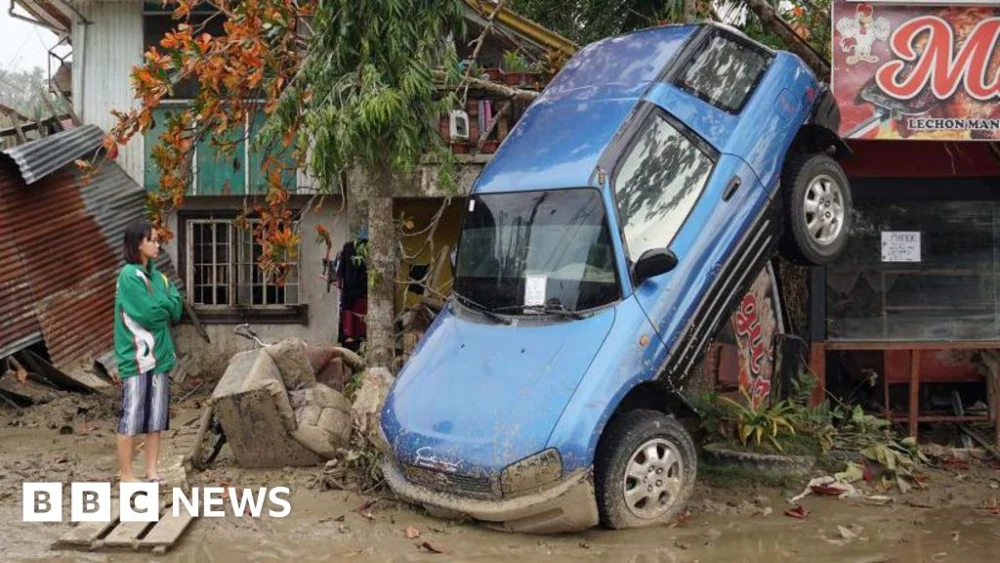
Typhoon Rai, locally known as Odette, tore through the central and southern Philippines just before Christmas in December 2021, leaving a trail of unimaginable destruction. With sustained winds reaching 120 mph (195 km/h) and gusts up to 170 mph (270 km/h), it was the most powerful storm to strike the archipelago that year, making landfall nine times across several islands. The storm triggered widespread flooding, landslides, and torrential rain, claiming the lives of approximately 400 people and displacing millions. Entire communities, particularly in the Visayas and Mindanao regions, were flattened, with around 2,000 buildings completely destroyed and critical infrastructure, including power lines and communication networks, severely damaged. The humanitarian crisis that followed saw hundreds of thousands of people left homeless, struggling for access to food, water, and shelter in the storm’s immediate aftermath. The Philippines, an archipelago highly vulnerable to the escalating impacts of climate change, frequently experiences extreme weather events, but Rai’s intensity and widespread devastation underscored the growing threat posed by a warming planet.
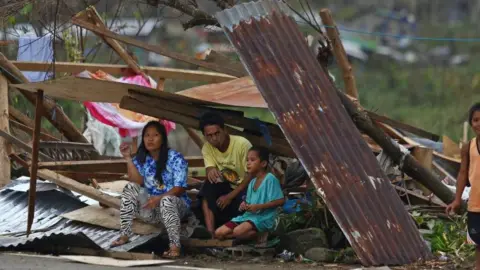
A group of 103 survivors, including Trixy Elle, a fish vendor from Batasan island, are spearheading this legal challenge. Elle vividly recounted her harrowing experience during the typhoon, telling BBC News from the Philippines how she and her family were forced to swim amidst towering waves, torrential rains, and fierce winds to escape their deluged home. Her father’s desperate plea, "we will hold our hands together, if we survive, we survive, but if we will die, we will die together," encapsulates the terror and helplessness faced by countless others. For Trixy and her fellow plaintiffs, this lawsuit represents a crucial fight for justice and accountability, asserting that Shell’s historical contribution to greenhouse gas emissions directly intensified the typhoon’s severity and impact on their lives and livelihoods.
The legal team representing the Filipino survivors has filed the claim in the UK courts due to Shell’s corporate domicile in London, a common strategy in transnational climate litigation. However, they intend for the case to apply the law of the Philippines, recognizing that the damage and suffering occurred in the plaintiffs’ home country. This approach navigates complex jurisdictional issues, aiming to hold a multinational corporation accountable under the legal framework relevant to the victims. Central to their argument is the assertion that Shell is responsible for approximately 2% of historical global greenhouse gas emissions, a figure derived from the Carbon Majors database. This comprehensive database meticulously tracks the historical production and emissions of the world’s largest fossil fuel and cement producers, providing a quantifiable basis for attributing cumulative emissions to specific entities.
The plaintiffs contend that Shell’s substantial contribution to human-driven climate change rendered Typhoon Rai more likely and significantly more severe. Beyond their direct emissions, the claim further alleges that Shell has a "history of climate misinformation" and was aware of the profound link between fossil fuel consumption and climate change as early as 1965. This accusation implies that Shell deliberately downplayed or obscured scientific findings concerning global warming while continuing to expand its fossil fuel operations for profit. Trixy Elle articulated this sentiment, stating, "Instead of changing their industry, they still do their business. It’s very clear that they choose profit over the people. They choose money over the planet." Such claims resonate with increasing public and legal scrutiny of fossil fuel companies’ historical knowledge and actions regarding climate change, often drawing parallels with litigation against tobacco companies.
Shell, in response, has vehemently denied the allegations, labelling the claim as "baseless." A spokesperson for the company stated, "This is a baseless claim, and it will not help tackle climate change or reduce emissions. The suggestion that Shell had unique knowledge about climate change is simply not true. The issue and how to tackle it has been part of public discussion and scientific research for many decades." This defense typically emphasizes the widespread understanding of climate change across society and science, implying that responsibility cannot be solely laid at the feet of individual companies. Shell also denies that its production of oil and gas specifically contributed to this individual typhoon, highlighting the inherent complexities of directly attributing a single extreme weather event to a specific emitter.
The case is bolstered by several environmental campaign groups, who underscore the advancements in climate attribution science. This evolving field now employs sophisticated models and data analysis to determine the extent to which human-induced climate change influences the probability and intensity of individual extreme weather events, such as heatwaves, droughts, and powerful storms like Typhoon Rai. While proving direct causation for damages suffered by individuals due to an extreme weather event, and linking it to the actions of a specific fossil fuel producer, has traditionally been a high legal bar, legal experts suggest that both scientific and legal methodologies have evolved to lower this threshold significantly. Harj Narulla, a barrister specializing in climate law and litigation unconnected to this case, noted, "It’s traditionally a high bar, but both the science and the law have lowered that bar significantly in recent years. This is certainly a test case, but it’s not the first case of its kind. So this will be the first time that UK courts will be satisfying themselves about the nature of all of that attribution science from a factual perspective."
The experience in other jurisdictions provides a mixed picture for the plaintiffs. In the United States, numerous efforts to bring climate liability cases against major oil and gas producers have often faced significant hurdles and failures. These challenges typically stem from complex jurisdictional arguments, the application of the "political question doctrine," and the difficulty of proving direct causation in tort law. However, Europe has seen more progressive rulings. Notably, in 2021, Dutch campaigners, led by Milieudefensie (Friends of the Earth Netherlands), achieved a landmark victory against Shell in the Hague District Court. The court ordered Shell to cut its absolute carbon emissions by 45% by 2030, a ruling that included both its operational emissions (Scope 1 and 2) and those from the use of its products by consumers (Scope 3). This was seen as a groundbreaking victory, establishing a corporate duty of care to mitigate climate change. However, this ruling was partially overturned on appeal last year. While the appeals court acknowledged Shell’s responsibility to mitigate dangerous climate change through its policies, it ruled there was no legal basis for a specific, judicially imposed emissions reduction target, effectively sending a message that such targets might be beyond the court’s purview.

Despite the complexities and mixed precedents, the filing of this claim at the Royal Courts of Justice marks a pivotal moment. It signifies the growing determination of climate-vulnerable communities to seek justice from major emitters in their home jurisdictions. This initial filing is merely the first step in what is expected to be a protracted legal battle, with more detailed particulars of the claim anticipated by the middle of next year. The outcome of this case could have profound implications, not only for Shell but also for the broader landscape of corporate accountability in the face of the climate crisis, potentially inspiring similar actions and shaping future climate policy and corporate responsibility.



 Roy Suryo

 Nakalama John
 atisusanti
 Ramos Leo
