Nana Banana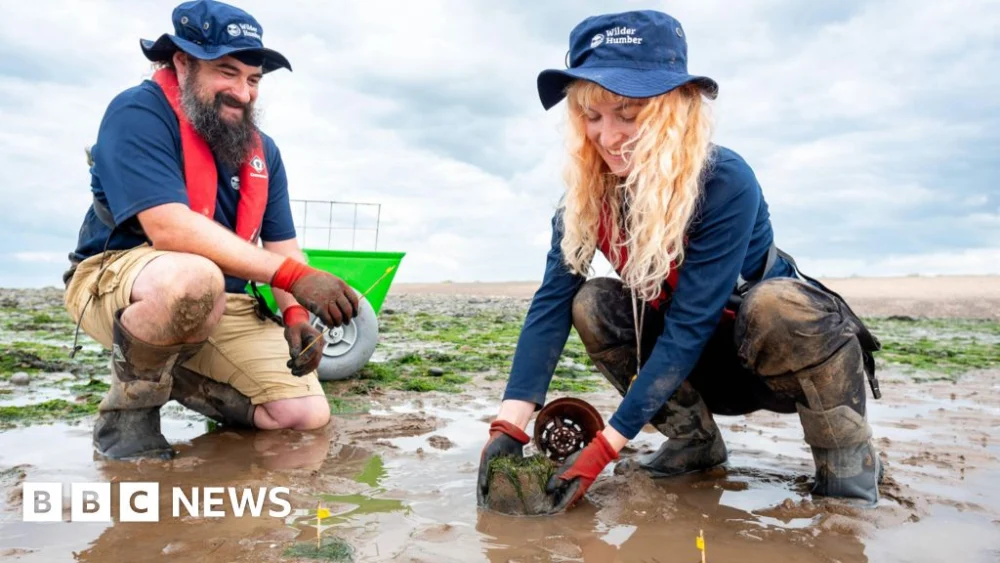
A pioneering initiative to re-establish extensive underwater meadows of a vital saltwater plant within the Humber Estuary has achieved a significant breakthrough, marking a pivotal moment for coastal resilience and marine biodiversity in the region. This ambitious undertaking, led by Wilder Humber – a dynamic partnership between the Yorkshire and Lincolnshire Wildlife Trusts – aims to reverse a century of ecological decline and harness one of nature’s most potent tools for climate change mitigation and shoreline protection.
The Humber Estuary, a sprawling tidal waterway on England’s east coast, is not merely a geographical feature; it is an ecological powerhouse and an economic artery. As one of the largest estuaries in the UK, it serves as a critical shipping lane, an industrial hub, and a haven for diverse wildlife, recognized internationally as a Ramsar site and a Site of Special Scientific Interest (SSSI). However, its low-lying landscape and extensive coastline render it acutely vulnerable to the escalating threats of climate change, including rising sea levels, increased storm frequency, and intensifying coastal erosion. Historically, vast expanses of the estuary floor were blanketed by lush seagrass beds, estimated to cover approximately 1,100 acres (445 hectares), forming an intricate tapestry of life beneath the waves.
Tragically, the 20th century witnessed a catastrophic collapse of these vital ecosystems. A confluence of factors, including severe marine pollution from industrial and agricultural run-off, the devastating "wasting disease" which decimated seagrass populations globally, and the relentless loss of natural coastal habitats due to development and dredging, led to a dramatic decline. By the turn of the millennium, the Humber’s once-thriving seagrass meadows had dwindled to a mere 12 acres (4.85 hectares) – a staggering loss of over 99% of its original extent. This ecological catastrophe not only stripped the estuary of a crucial habitat but also removed a natural buffer against environmental change, leaving the coastline more exposed and the marine ecosystem impoverished.
Dr. Andy van der Schatte Olivier, a leading expert from the Yorkshire Wildlife Trust and a driving force behind the Wilder Humber project, expressed profound optimism regarding the recent developments. "The results from our trial plantings have been immensely encouraging," he stated, his voice reflecting the culmination of years of dedicated effort. "They offer compelling evidence that, even in a dynamic and challenging environment like the Humber Estuary, we possess the knowledge and methodologies to successfully restore seagrass at scale. We are not just planting seeds; we are nurturing hope, giving these meadows the absolute best possible chance to recover, thrive, and in doing so, deliver tangible, far-reaching benefits for wildlife, for the climate, and for the resilience of our coastal communities."
The ecological prowess of seagrass, often dubbed the "lungs of the sea," is truly remarkable. Wilder Humber highlights its unparalleled capacity for carbon sequestration, noting that these submerged flowering plants can capture and store carbon up to 35 times faster than tropical rainforests. This extraordinary efficiency stems from their unique ability to trap organic carbon within their root systems and the surrounding anaerobic sediments, effectively creating vast "blue carbon" sinks that play a critical role in mitigating climate change. A healthy acre of seagrass can store an estimated 27 times more carbon than an equivalent area of terrestrial forest, making its restoration a powerful nature-based solution in the global fight against rising atmospheric CO2 levels.
Beyond its role as a carbon champion, seagrass is a cornerstone of marine biodiversity. Its dense, verdant blades create intricate three-dimensional habitats that serve as vital nursery grounds for numerous commercially important fish species, including cod, plaice, and pollock. Juvenile fish find shelter from predators and abundant food sources within the protective canopy of the meadows, significantly boosting fish stocks and supporting local fisheries. The meadows also provide essential foraging grounds for migratory birds, such as brent geese, and are home to a fascinating array of marine life, from delicate seahorses and elusive pipefish to a myriad of crabs, snails, and other invertebrates that form the base of a healthy food web. Moreover, seagrass acts as a natural water filter, absorbing excess nutrients and pollutants from the water column, leading to improved water clarity and overall ecosystem health.
Perhaps one of its most critical functions, particularly for the vulnerable Humber coastline, is its exceptional ability to protect against coastal erosion and storm surges. The extensive root and rhizome systems of seagrass anchor the seabed, stabilizing sediments and preventing their dispersal by strong currents and waves. Above ground, the flexible blades create friction that dissipates wave energy, effectively dampening the impact of storms and reducing the destructive forces that erode shorelines. This natural coastal defense mechanism offers a sustainable, living alternative to expensive and often less effective man-made sea defenses, providing a dynamic, self-repairing shield for communities and infrastructure along the estuary.
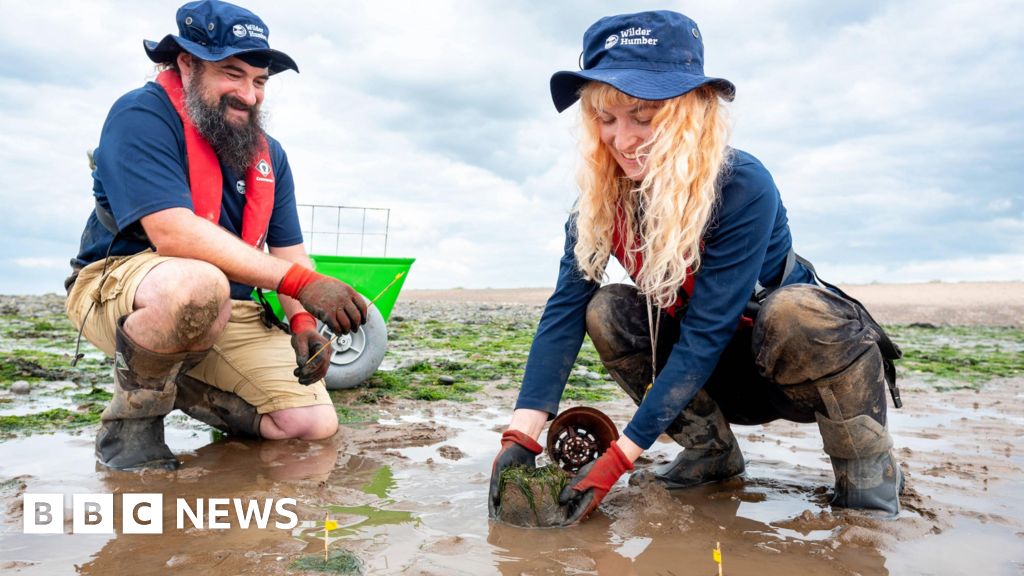
The recent trial, a meticulously planned and executed phase of the Wilder Humber project, represented a crucial test of various restoration techniques. Monitored rigorously over a full growing season, the trials aimed to identify the most effective and scalable planting methods suitable for the unique environmental conditions of the Humber Estuary, which include strong tidal currents, fluctuating salinity, and variable sediment types. Researchers tested several approaches, carefully tracking survival rates, growth patterns, and overall health of the newly planted seagrass.
The findings were definitive and highly encouraging. The trials revealed that two particular methods yielded the most promising results: the direct injection of seeds into the seabed and the careful transplanting of small, intact patches of established seagrass. Direct seed injection involves precisely placing seagrass seeds beneath the sediment surface, offering the advantage of minimal disturbance to the existing seabed and the potential for wide-scale dispersal with less labor intensity. This method proved particularly effective in areas with stable sediment and moderate currents. The transplanting of small, intact patches, on the other hand, involved carefully relocating established clumps of seagrass, complete with their root systems and surrounding sediment, from healthy donor sites. While more labor-intensive, this method provides the advantage of introducing already thriving plants, which often exhibit higher initial survival rates and faster establishment, especially in areas requiring more immediate ground cover.
Dr. van der Schatte Olivier emphasized the significance of these findings. "These successful trials provide a robust foundation for our future efforts," he noted. "They demonstrate unequivocally that we can overcome the challenges posed by a dynamic estuary like the Humber and successfully restore seagrass at scale, provided we employ the right, data-backed methods. This scientific validation is what allows us to confidently plan for the next, much larger phase of restoration."
The Wilder Humber project receives vital support from Orsted, a global leader in renewable energy. Orsted’s involvement underscores a growing trend of corporate environmental responsibility, particularly within industries that operate in marine environments. Their commitment to supporting seagrass restoration aligns with broader goals of biodiversity net gain and sustainable development, demonstrating how industrial innovation can go hand-in-hand with ecological recovery. This partnership provides crucial funding and resources, accelerating the pace of restoration and ensuring the project’s long-term viability.
Looking ahead, the successful trials pave the way for an ambitious large-scale recovery program across the Humber Estuary. Wilder Humber is now focused on scaling up these proven techniques, with plans to significantly expand the area covered by seagrass meadows in the coming years. This next phase will involve careful site selection, extensive community engagement, and continued scientific monitoring to ensure the sustained success and expansion of the restored beds. The vision is to transform the estuary into a thriving mosaic of habitats, where seagrass meadows flourish once again, providing a resilient and biodiverse future for one of the UK’s most important coastal regions.
This pioneering work in the Humber Estuary is part of a wider national and international effort to restore seagrass, with similar projects underway in locations like the Isle of Wight and Plymouth Sound. Each success contributes valuable knowledge and momentum to the global fight against marine degradation and climate change. The re-establishment of these vast seagrass meadows is more than just an ecological endeavor; it is an investment in the Humber’s future, a testament to the power of nature-based solutions, and a beacon of hope for a coastline shielded by the enduring strength of the sea itself.




 Roy Suryo