
 Ramos Leo
Sir Keir Starmer has agreed to release crucial government files pertaining to his decision to appoint Lord Mandelson as the United States ambassador. This development follows the launch of a police investigation into allegations that the former Labour minister illicitly transmitted sensitive government information to the disgraced financier Jeffrey Epstein. The move comes amidst intense political pressure from the Conservative opposition, who are actively pursuing a vote in the House of Commons to compel the full disclosure of all documents related to the peer’s recruitment and subsequent tenure.
The controversy surrounding Lord Mandelson escalated significantly with the recent revelations emerging from documents released by the US Department of Justice. On Friday, a tranche of emails came to light, suggesting that Mandelson, while serving as a cabinet minister in Gordon Brown’s New Labour government, allegedly forwarded an internal Downing Street memo in 2009 to Epstein. This memo reportedly contained discussions regarding potential government asset sales, information that could be highly market-sensitive. Further emails published in the same collection appear to indicate that Mandelson provided Epstein with advance notice of a substantial €500 billion bailout package initiated by the European Union in 2010, designed to stabilize the Eurozone amidst its financial crisis. Such disclosures, if proven, would represent a severe breach of public trust and official conduct.
Adding to the gravity of the allegations, other emails within the released documents suggest that Epstein made three separate payments of $25,000 each, totaling $75,000, to Lord Mandelson in 2003 and 2004. Lord Mandelson has publicly stated that he has no record or recollection of these specific payments. The Metropolitan Police have initiated an investigation into alleged misconduct in public office concerning these claims, a serious offence that questions the integrity of an individual holding public office. Misconduct in public office typically involves a public official wilfully neglecting to perform their duty, or wilfully misconducting themselves to such a degree as to amount to an abuse of the public’s trust in the office holder, without reasonable excuse or justification.
The scandal has had immediate and profound repercussions for Lord Mandelson’s political standing and his recent ambassadorial role. He was appointed by Sir Keir Starmer to the prestigious position of US ambassador in February 2025, a role he held for merely seven months before his dismissal in September. His sacking was prompted by a separate release of emails which revealed that he had sent supportive messages to Jeffrey Epstein in 2008, at a time when Epstein was facing legal proceedings and eventual conviction for sex offences. Epstein, a convicted sex offender, died in prison in 2019 while awaiting trial on further sex trafficking charges. Lord Mandelson has since expressed his regret for continuing his friendship with Epstein after the financier’s 2008 conviction, stating that he "believed lies he told me and so many others."
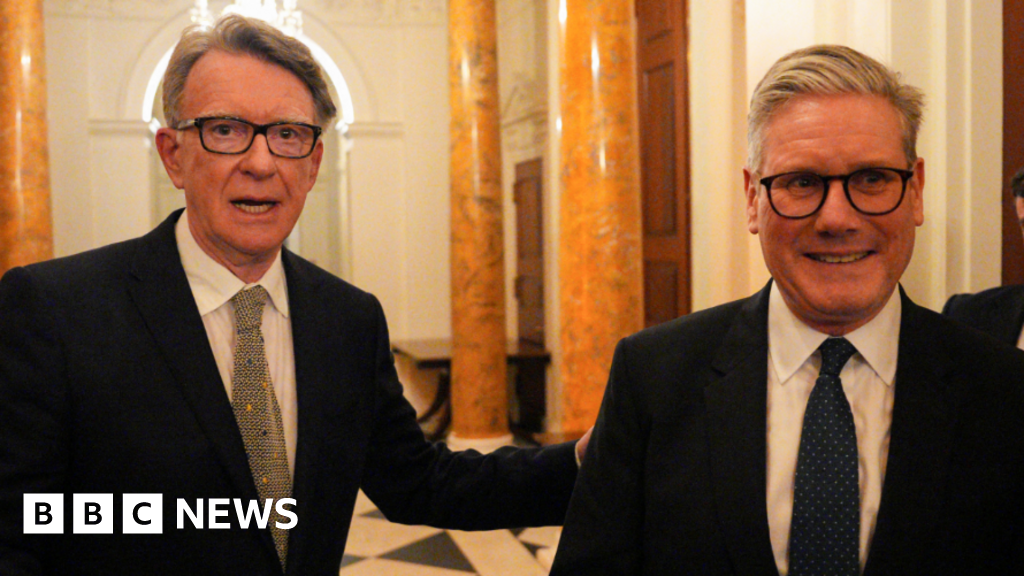
In response to the mounting pressure and the ongoing police probe, Lord Mandelson took the step of relinquishing his Labour Party membership over the past weekend. Furthermore, he is set to formally stand down from the House of Lords on Wednesday, marking a significant withdrawal from public life. The government is currently engaged in drafting the necessary legislation required to formally remove his peerage title, a procedural step that underscores the severity of the situation and the government’s intent to distance itself from the controversy.
The Conservative Party has seized upon the scandal, viewing it as a critical opportunity to challenge the integrity and judgment of Sir Keir Starmer and his Labour government. They have drafted a parliamentary motion specifically designed to force the government to release all documents pertaining to Mandelson’s appointment, including the "due diligence" processes undertaken by Downing Street prior to his selection. Their strategy extends beyond merely the appointment itself; the Tory motion also seeks to compel the release of a far wider range of material. This includes any emails and text messages exchanged between Lord Mandelson and ministers within the six months leading up to his appointment as ambassador. Crucially, it also demands the disclosure of communications between the peer and Morgan McSweeney, Sir Keir’s chief of staff. The Conservatives have publicly stated that Mr. McSweeney faces "serious questions to answer" regarding his role in Lord Mandelson’s controversial appointment, implying that the due diligence process was either inadequate or overlooked critical information.
In an effort to manage the fallout and demonstrate a commitment to transparency, Labour MPs have been instructed to vote for a government amendment to the Conservative motion. This amendment would agree to the release of documents but crucially include a caveat, allowing for the withholding of any information deemed "prejudicial to UK national security or international relations." The precise interpretation of this condition and the timeline for the eventual release of any documents remain unclear, prompting concerns among critics about the extent of the transparency that will genuinely be offered.
Speaking earlier to the BBC, Health Secretary Wes Streeting defended Sir Keir Starmer’s actions, asserting that the Prime Minister was "going for maximum transparency" in a bid to "reassure the public" regarding the integrity of his administration. Streeting also sought to defend the initial decision to appoint Lord Mandelson, claiming that Sir Keir "had not been given the whole truth" about the true extent of Lord Mandelson’s controversial friendship with Jeffrey Epstein. This statement suggests a potential failure in the vetting process or a lack of full disclosure from Mandelson himself during the appointment procedure. The unfolding events represent a significant test for Starmer’s leadership and his commitment to a new era of probity in government, as the public awaits the outcome of both the police investigation and the release of the promised files. The controversy threatens to overshadow other governmental priorities and raises fundamental questions about the standards of conduct expected from those holding the highest public offices.



 Roy Suryo

 Nakalama John
 atisusanti
