Ramos Leo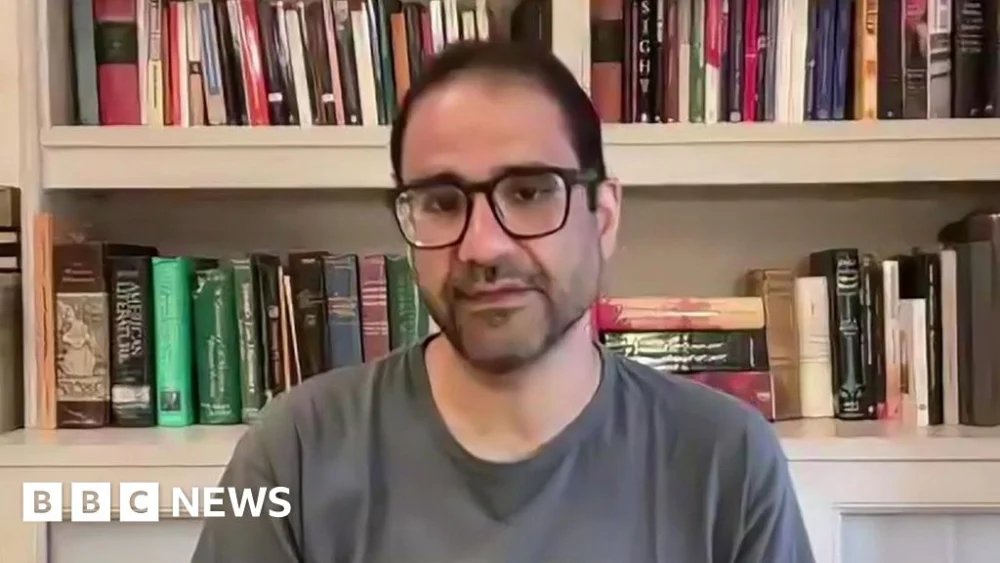
The controversy ignited after Starmer expressed his delight at Abdel Fattah’s safe arrival and reunion with his family. However, this welcome quickly drew sharp criticism, particularly from within political circles and Jewish community groups, who highlighted past tweets by Abdel Fattah. These messages, reportedly from 2012, were interpreted as endorsing violence against Zionists and police, casting a shadow over the otherwise celebratory return of a prominent human rights figure.
Shadow Justice Secretary Robert Jenrick was among the first to voice strong condemnation, labelling Sir Keir’s remarks a "serious error of judgement." In a letter, Jenrick explicitly referenced Abdel Fattah’s alleged messages, which he claimed "endorsed the killing of Zionists and police." He argued that the Labour leader’s message amounted to a "personal, public endorsement" of the activist, stating, "Nobody should be imprisoned arbitrarily, nor for peaceful dissent. But neither should the prime minister place the authority of his office behind someone whose own words cross into the language of racism and bloodshed."
The criticism was not limited to Jenrick. Other prominent Labour figures, including Foreign Secretary Yvette Cooper and Justice Secretary David Lammy, had also published messages of support for Abdel Fattah’s return, further widening the scope of the controversy. The Jewish Leadership Council, a prominent charity representing various Jewish organisations across the UK, added its voice to the chorus of disapproval. The Council criticised what it described as an "effusive welcome" from the UK government and political establishment, expressing deep concern over the apparent endorsement of an individual whose past statements were seen as promoting hate speech and violence.
Sources close to the Labour Party indicated that the activist’s controversial historical messages had not been brought to the attention of Sir Keir Starmer until they were highlighted in recent days. The government, through these sources, has since communicated that it considers the historical statements to be "abhorrent," attempting to distance the official welcome from any endorsement of the offensive content. This clarification suggests a reactive stance, underscoring the rapid shift in public perception once Abdel Fattah’s past social media activity came to light.
Alaa Abdel Fattah’s release in September marked the culmination of a tenacious and long-running campaign led by his dedicated family, particularly his sisters Mona Seif and Sanaa Seif, and his mother Laila Soueif. Their efforts gained significant international traction, drawing support from a wide array of celebrities, including esteemed actresses Dame Judi Dench and Olivia Colman, alongside numerous human rights organisations like Amnesty International and PEN International. The British government, under both Conservative and Labour administrations, had also consistently lobbied for his freedom, citing his status as a British citizen. A government spokesman reiterated this long-standing policy, stating, "He is a British citizen. It has been a long-standing priority under successive governments to work for his release from detention, and to see him reunited with his family in the UK."
The activist’s journey to freedom was protracted and arduous. He had spent more than a decade of his life behind bars in Egypt, facing a series of politically motivated charges. His most recent conviction in December 2021 saw him handed a five-year sentence for "spreading fake news," a charge stemming from sharing a Facebook post about alleged torture in Egyptian prisons. Human rights groups universally condemned his trial as grossly unfair, highlighting the lack of due process and the systematic crackdown on dissent under the current Egyptian regime. His imprisonment became a symbol of the broader struggle for human rights and free speech in Egypt.
Abdel Fattah, a renowned writer, intellectual, and software developer, first rose to prominence during the pivotal 2011 uprising that ultimately led to the resignation of former Egyptian president Hosni Mubarak. He was a leading voice in the Tahrir Square protests, advocating for democratic reforms and greater freedoms. His activism, however, came at a heavy personal cost, as he was repeatedly arrested and detained by successive governments, often without clear charges or fair trials.
The controversy surrounding his past tweets is not entirely new. In 2014, Abdel Fattah was nominated for the prestigious Sakharov Prize, a European human rights award. However, this nomination was subsequently withdrawn specifically due to tweets about Israel he had posted in 2012 – the same period from which the current contentious messages originate. At the time, Abdel Fattah defended his comments, explaining that they were part of a "private conversation" that took place during an Israeli offensive in Gaza and had been taken out of context. This defence, while offering some perspective, has done little to assuage the concerns of those who view the statements as inherently hateful.
After his release from jail, Abdel Fattah initially faced a three-month travel ban imposed by Egyptian authorities, which kept him in the country. Once this restriction was lifted, he was finally able to depart for the UK, where he has been joyfully reunited with his 14-year-old son, who lives in Brighton. Speaking to the BBC from Cairo in October, shortly after his release from prison, a reflective Abdel Fattah shared his feelings about adjusting to freedom. "I’m learning how to get back into life," he remarked, acknowledging the profound impact of his long incarceration. He added, with a sense of cautious optimism, "I’m doing much better than I would have expected. Much better than most people would have expected."
The situation underscores the complex ethical dilemmas faced by political leaders when welcoming individuals who are simultaneously celebrated as human rights heroes and criticised for controversial past statements. While the imperative to advocate for British citizens arbitrarily detained abroad is clear, the political ramifications of appearing to endorse or overlook hateful rhetoric are equally significant. The debate surrounding Starmer’s welcome highlights the fine line between defending universal human rights and condemning speech that crosses into racism or incitement to violence, particularly in an increasingly scrutinised digital age where past comments can resurface with immediate and powerful consequences. The incident serves as a stark reminder of the challenges in navigating global human rights advocacy in a politically charged environment, where every public endorsement is weighed against the full spectrum of an individual’s history.


 Roy Suryo