Ramos Leo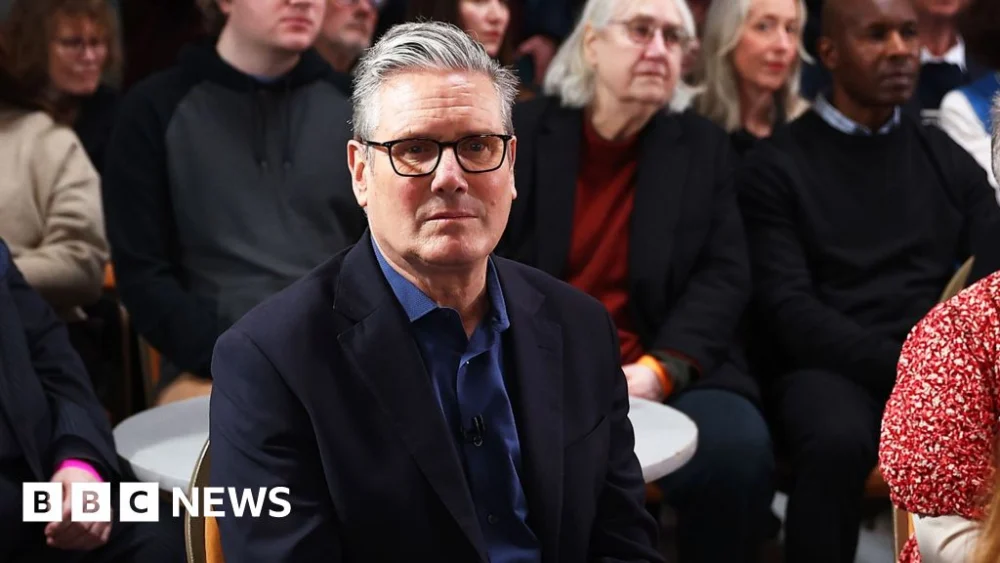
From the moment the departure of the prime minister’s chief of staff, Morgan McSweeney, was announced, a palpable shift in the political atmosphere became evident. Conversations with numerous Labour figures, from the highest echelons of the cabinet down to newly elected MPs, immediately revealed an intense mood of uncertainty and, crucially, a frantic speculation about what might unfold next. We are undeniably in one of those rare periods of intense fluidity and volatility where almost anything seems possible, where no development, however dramatic, would be entirely surprising.
The allocation of blame for the current governmental turmoil varies widely depending on who is asked within Labour circles. Similarly, the intensity of the anger felt by party members shows considerable divergence. However, one point of absolute consensus remains: the almost universal acceptance that Sir Keir Starmer’s predicament is undeniably dire, and he now confronts immense, potentially career-ending, peril.
Those who engaged with the Prime Minister over the preceding weekend describe a man acutely aware of the precarious situation in which he finds himself. He reportedly remains seething with anger at what he vehemently describes as "the lies" disseminated by Lord Mandelson, which he believes he was misled by. Compounding this external frustration is a profound self-reproach for the immense gravity of the misjudgement he made in appointing the peer as ambassador to the United States. "He hates the idea that he’s let people down, and that cuts very deep. He knows he’s made a very big mistake," one senior figure confided, underscoring the personal toll of the unfolding crisis.
Starmer now approaches the critical week ahead in an unprecedented and profoundly exposed position. For the entirety of his political journey, both in his pursuit of leadership and during his tenure in office, he has had the unwavering presence and strategic counsel of Morgan McSweeney at his side. McSweeney was the architect and indispensable force behind Starmer’s successful Labour leadership campaign six years prior. He remained a constant throughout Starmer’s demanding years as Leader of the Opposition – navigating the profound lows, such as the devastating by-election loss in Hartlepool that nearly prompted Starmer’s resignation, to the exhilarating highs of a landslide general election victory in the summer of 2024. From that triumph, McSweeney seamlessly transitioned with Starmer into Downing Street and the machinery of government.
The two men, fundamentally, are very different personalities and political animals. McSweeney, a political operative to his very fingertips, boasts decades of deep immersion in Labour politics, understanding its intricate dynamics and internal machinations like few others. Starmer, by contrast, arrived in Westminster relatively late in his fifties, often perceived as travelling light ideologically, more pragmatic than dogmatic. The defining question now looms large: What kind of leader will Starmer prove to be without McSweeney’s constant, guiding presence? The political landscape is poised to reveal the answer.
We are also about to discover the consequences when the "lightning conductor" is abruptly removed from a building, yet the stormy weather persists. McSweeney, whether entirely fairly or not, frequently bore the brunt of the blame for the numerous foul-ups and missteps that Labour MPs attributed to Downing Street in recent months. The inherent danger for the prime minister is stark: with McSweeney gone, the next political lightning strike now has a direct and unobstructed path to Starmer himself, threatening to take him out instead.
Among Labour MPs, reactions to McSweeney’s departure are sharply divided. Some are genuinely bereft, lamenting his loss. "Brilliant, dynamic, nimble, motivating; he got us here," extolled one of Labour’s vast intake of MPs first elected in 2024, highlighting his instrumental role in their electoral success. "This was looking inevitable, but you are losing a lot of politics from the building, and that is not necessarily a good thing," a long-standing MP reflected, acknowledging the political vacuum created. Others, however, argue with equal conviction that for all his undeniable successes in making Labour electable once more, McSweeney was also unequivocally "in the room" when the significant mistakes were repeatedly occurring within government. Variations of this fundamental disagreement are expected to play out prominently and publicly in the days and weeks to come.
However, the key questions that now dominate the political discourse are no longer about the former chief of staff, but squarely about the prime minister himself. The language emanating from Starmer’s allies and his internal critics within the party – and, notably, some figures are simultaneously both – is remarkably similar in its undertones. So too is the tone, demeanour, and prevailing mood of so many individuals consulted: an almost unmaskable, pervasive sense of gloom hangs heavy over the party.
"This is one of his last rolls of the dice," a supportive senior figure candidly admitted, underlining the high stakes. "He’ll have to get out there and pretty quickly and like never before set out what he’s all about and what he wants to do," another added, emphasizing the urgent need for Starmer to reassert his vision and leadership.
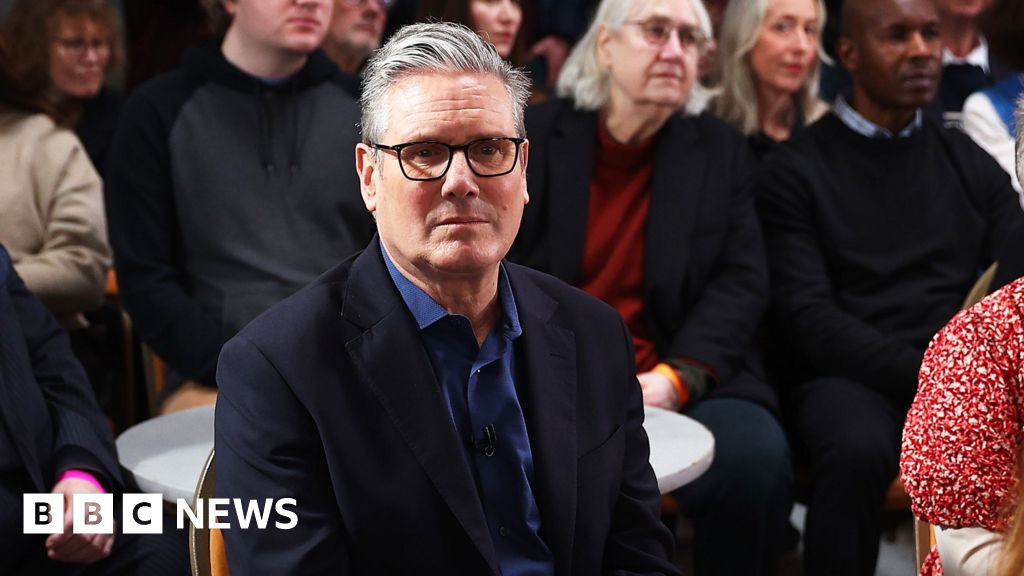
The Prime Minister is expected to address the weekly private meeting of the Parliamentary Labour Party (PLP) on Monday evening. As things currently stand, he is not anticipated to appear in front of the cameras following this address, though that plan remains subject to potential change given the volatile nature of the crisis. It is crucial to remember that the PLP now constitutes his most important and immediate electorate: a prime minister who cannot command the consistent authority and loyalty of their parliamentary party, as Starmer visibly struggled to do last week, does not typically last long in office. One only needs to recall the rapid downfall of Liz Truss, whose inability to secure the backing of her own MPs ultimately sealed her fate.
Another MP starkly described the situation as the "last chance saloon." Very few of these pronouncements are delivered with any discernible relish; indeed, many within the party have long desperately wished for Starmer to succeed and achieve his mandate. "Getting rid of McSweeney has bought him time. But maybe only a week. Then loads of MPs will be jittery again," observed a prominent critic, highlighting the fragile and temporary nature of any respite. And indeed, plenty of MPs are already deeply jittery, their nerves frayed by the unfolding drama.
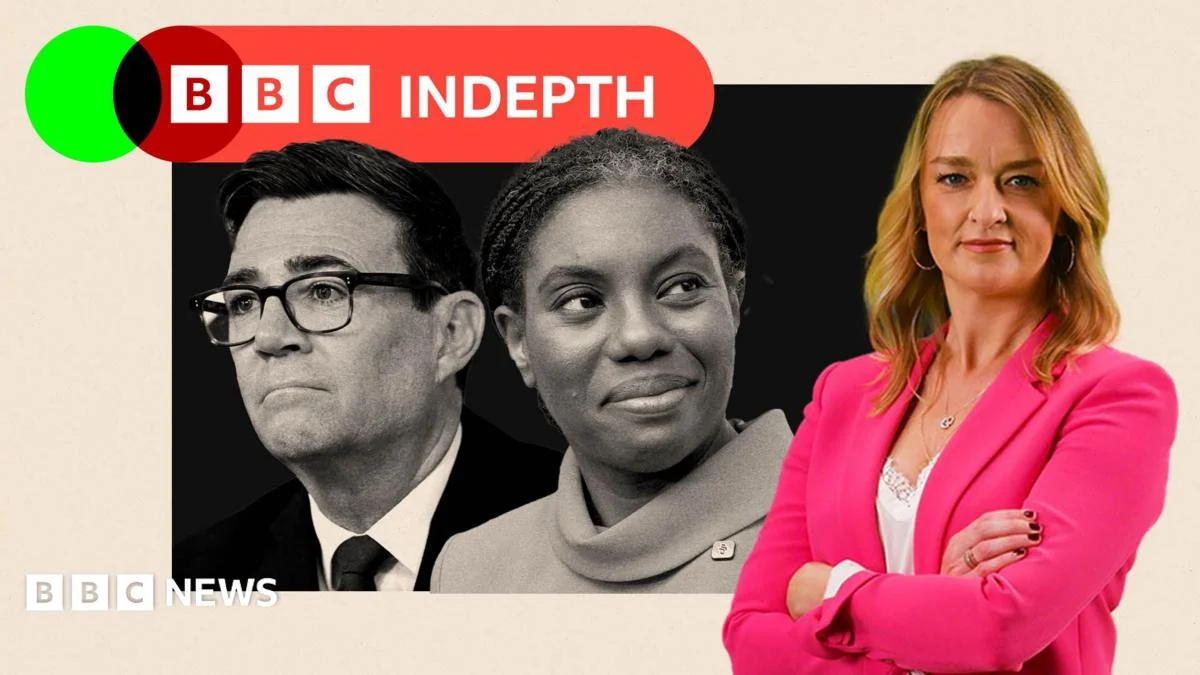
One MP reflected on the arbitrary and often cruel nature of luck and timing in politics. They pondered a hypothetical scenario: imagine, they mused, that the recent deluge of damaging news concerning Lord Mandelson and the catastrophic political fallout for the prime minister had broken a mere fortnight earlier, and the news of the upcoming by-election in Gorton and Denton in Greater Manchester was only just emerging now. In such a situation, would the prime minister, they speculated, have possessed the necessary authority, the political capital, to effectively block Andy Burnham from standing in the by-election? Probably not, they concluded. And, crucially, would Burnham’s path to a leadership challenge have appeared significantly clearer, given the acute jeopardy Starmer now faces? Yes, it almost certainly would have. Instead, the current Mayor of Greater Manchester’s route to Westminster is presently blocked, as are, for the time being at least, his long-held ambitions for higher office.
This complex interplay of events also impacts other potential contenders. The former Deputy Prime Minister, Angela Rayner, remains under intense scrutiny as her tax affairs are meticulously pored over by HM Revenue and Customs, creating a significant impediment. Health Secretary Wes Streeting, meanwhile, is widely perceived as a protégé of Lord Mandelson, even if Streeting has been publicly criticising the peer in the strongest possible terms in recent days to distance himself from the scandal.
All these factors contribute to a situation where "there is absolutely no consensus on what comes next," as one keen internal observer of the mood among Labour MPs acutely noted.
Furthermore, the prime minister retains several significant arguments in his favour, which he can, and likely will, deploy. He can rightly point out that it was he who secured a decisive mandate from the electorate at the general election, a mandate that no potential successor would possess. It is he who has diligently built crucial international alliances and cultivated relationships with other world leaders, not least with US President Donald Trump, a significant diplomatic achievement. And a substantial part of Labour’s broad appeal at the recent election was the promise of escaping the chaotic merry-go-round of prime ministers that characterised the latter, tumultuous years of the Conservatives’ time in office.
This intricate web of factors is precisely how we arrive at what one figure ominously described as a "Mexican standoff situation." "Stalemate might be the worst possible scenario," another conceded, while acknowledging that this precisely what could well transpire.
And all this unfolds with the crucial by-election in Gorton and Denton just over a fortnight away, and a significant set of devolved elections in Scotland and Wales, alongside local elections across many parts of England, scheduled for just a few months hence. Are either, or indeed both, of those impending electoral moments survivable for Starmer if the results prove to be detrimental for Labour? "Starmer and Mandelson will be appearing on election leaflets, that’s for sure. Just not ours," was the sardonic, yet pointed, observation of one Labour MP, highlighting the potential for opponents to weaponize the ongoing crisis.
So now, the political world awaits with bated breath to see precisely how the coming days, weeks, and months will unfold. Sir Keir Starmer holds the unenviable distinction of being the sixth prime minister in the last decade. Were he to depart office in the coming months, the United Kingdom would face the unprecedented prospect of having its fifth prime minister in just four years. And that, unequivocally, is now a very live and unsettling possibility.
But let us pause, for just a moment, on a counterpoint. Several influential figures have consistently emphasised the prime minister’s considerable resolve, for now at least, and his unshakeable "self-belief," as one individual succinctly put it. He is reportedly desperate not to be the instigator, or indeed the author, of yet another blast of extraordinary and damaging turbulence in British politics. If he continues to possess the will to stick around, and if the party remains deeply divided and unable to decisively make up its mind about what course of action to pursue next, there could yet be a considerably long tail to this unfolding and unpredictable story. Even the key players positioned at the very heart of all this acknowledge, with a degree of frankness, that they simply do not know how this complex and volatile situation is ultimately going to play out.


 Roy Suryo
 Nakalama John
 atisusanti