Nana Banana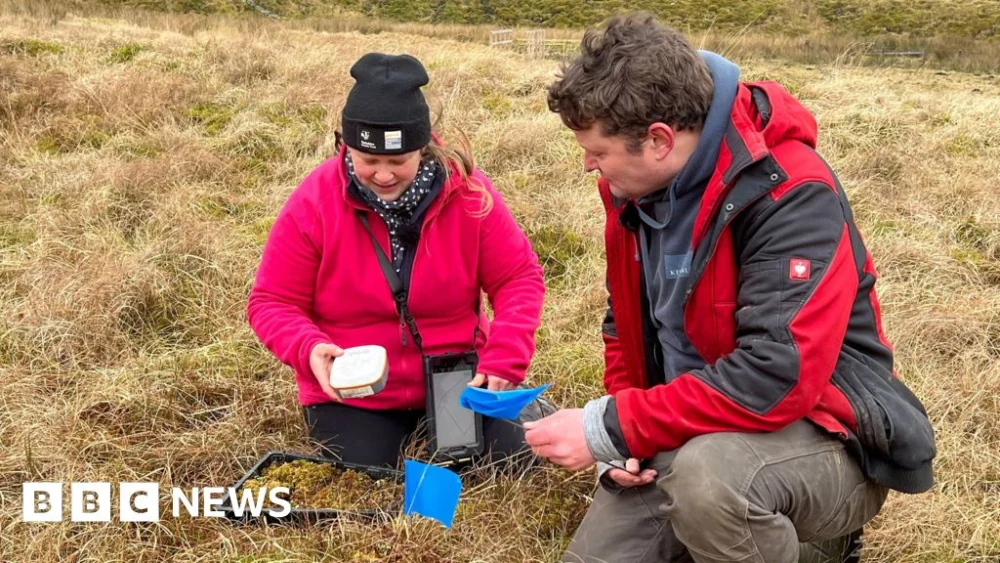
Across the sweeping, often dramatic landscapes of Yorkshire’s moors, a silent revolution is underway, spearheaded by an unassuming hero: sphagnum moss. This remarkable plant, capable of holding up to 20 times its own weight in water, is at the forefront of vital ecological restoration projects aimed directly at combating the escalating climate crisis. By re-establishing this keystone species, conservationists are not merely restoring lost flora; they are rebuilding entire ecosystems, creating resilient peat bogs that serve as powerful carbon sinks and diverse habitats for myriad wildlife. This ambitious effort spans two key locations: the ancient, windswept Yorkshire Dales and the historically scarred Marsden Moor, near Huddersfield, each presenting unique challenges and opportunities in the fight for a greener future.
The power of sphagnum moss lies in its unique biological properties. Unlike most plants, sphagnum lacks true roots and absorbs water through specialized, dead cells that can swell to enormous sizes, acting like miniature sponges. As these mosses grow, their lower parts die back but do not fully decompose due to the waterlogged, acidic, and oxygen-deprived (anaerobic) conditions they create. This slow decay process leads to the accumulation of organic matter, forming peat. Peatlands, globally, are the largest terrestrial carbon store, holding more carbon than all other vegetation types combined. When peatlands are healthy, they continuously draw carbon dioxide from the atmosphere and lock it away, acting as a crucial natural brake on climate change. Conversely, damaged peatlands dry out, releasing vast quantities of stored carbon, contributing significantly to greenhouse gas emissions. Beyond carbon sequestration, healthy peatlands provide essential ecosystem services, including natural flood mitigation by slowing down water runoff and filtering water, improving its quality.
One of the most significant initiatives is taking place at Kingsdale Head Farm in Ingleton, within the breathtaking Yorkshire Dales. Here, experts from the Yorkshire Peat Partnership are engaged in the meticulous reintroduction of Sphagnum austinii, a species that has been entirely absent from Yorkshire’s landscape for hundreds of years. The disappearance of S. austinii from the Dales is a stark reminder of humanity’s historical impact on the environment. Beth Thomas, Data and Evidence Manager for the Yorkshire Peat Partnership, explains that centuries of extensive land drainage for agriculture, coupled with the atmospheric pollution from the burgeoning industrial revolution, drastically altered the delicate hydrology and chemical balance of these sensitive ecosystems, leading to the local extinction of this vital species. "Austinii is a real peat forming species," Thomas emphasizes, highlighting its crucial role. "When you look through the peat cores that exist in this landscape for about the last 6,000 years, the peat formed after the last ice age, you can see that austinii is the real dominant sphagnum here." Reintroducing this historically dominant species is therefore not just about adding a plant back; it’s about reinstating a fundamental ecological process.
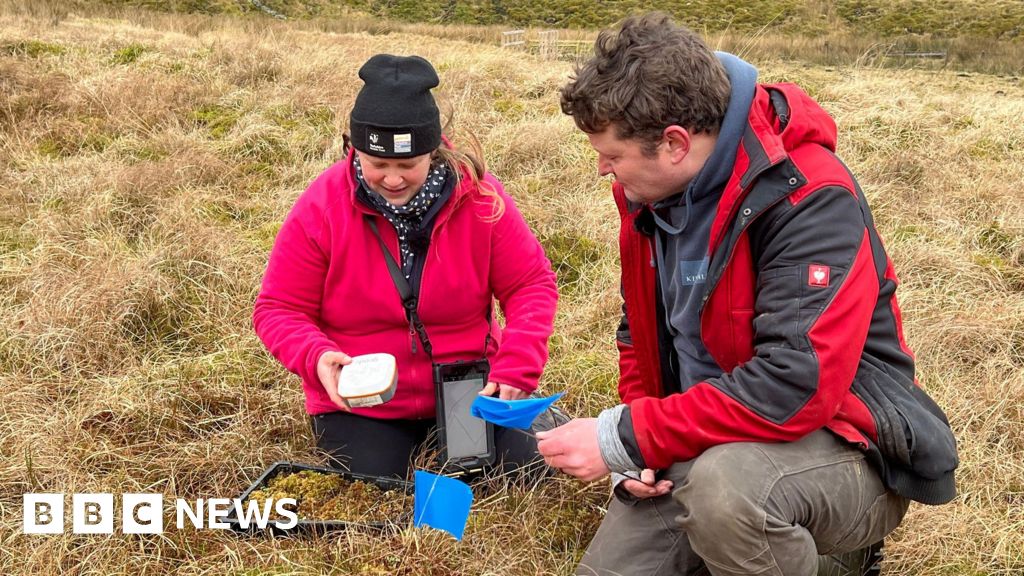
The reintroduction process for Sphagnum austinii is a testament to careful scientific planning and dedicated conservation work. The moss has been sourced from resilient populations still thriving in Scotland, then transported to Yorkshire. Before planting on the expansive blanket bogs, it undergoes a crucial propagation phase in local nurseries, allowing it to acclimate and multiply. Once ready, the moss is meticulously planted across the moorland. To ensure the success and monitor the spread of the reintroduction, each planting location is precisely logged using GPS trackers, enabling conservationists to observe its growth and adaptation over time. At Kingsdale Head, a vast 610-hectare site where two-thirds of the land consists of blanket bog, farm manager Jamie McEwan is already witnessing promising early results from the restoration efforts. "Huge landscapes and huge parts of the landscape are made up of blanket bogs and peat lands but a lot of the interest happens at this tiny little scale," McEwan observes, acknowledging the long-term vision required for such projects. "Whether I’m there to see the full results of what we’re doing today or not I don’t know, but we’ll certainly find out more about it." This forward-looking perspective underscores the generational commitment inherent in peatland restoration.
Further east, on Marsden Moor, a different yet equally crucial battle is being fought. Situated between the historically industrial heartlands of Huddersfield and Manchester, Marsden Moor’s peatlands suffered immense degradation not from outright extinction of sphagnum, but from centuries of intense industrial pollution. Airborne contaminants like sulphur and lead, spewed from factories and mills, settled on the moss, proving toxic to its delicate biology. Sphagnum mosses derive their nutrients directly from the air and water, making them highly susceptible to atmospheric changes. As area ranger Ian Downson explains, "Sphagnum moss gets all its nutrients from the air, from the water. And what happens is if that is poisonous – a lot of sulphur and lead from industrial pollution – that then settles on the moss and it doesn’t like that." This historical blight decimated much of the moor’s original sphagnum species.
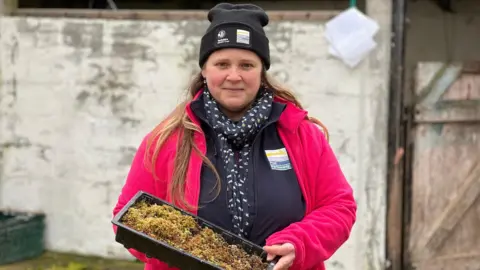
Now managed by the National Trust, Marsden Moor has been the focus of intensive re-wetting efforts for the past two decades. Recognizing its ecological significance, the moor has been designated a Site of Special Scientific Interest (SSSI) and a Special Area of Conservation (SAC), affording it legal protection and highlighting its importance for national and European biodiversity. Downson and his team are not only restoring the moor but also engaging the public, inviting them to the National Trust moss nursery to learn firsthand about sphagnum’s extraordinary properties. Over the last decade, hundreds of thousands of sphagnum "moss plugs" have been painstakingly planted across the moor. This concerted effort has yielded staggering results: it has helped to capture and store more than 1 million tonnes of carbon, an amount equivalent to the emissions from approximately 150,000 round-trip flights from London to Sydney. This powerful statistic illustrates the immense capacity of healthy peatlands to mitigate climate change on a truly global scale. Downson elaborates on the continuous process: "The peatlands form roughly about a millimetre per year. So it’s growing all the time, it’s laying down that peat as the sphagnum is kind of decaying. In that peat formation, you’re drawing down and you’re storing carbon, you’re storing CO2, which is the main thing in terms of climate resilience."
The benefits of sphagnum restoration extend far beyond carbon sequestration. The re-wetting of Marsden Moor is a vital tool in the fight against wildfires, a threat that has become increasingly prevalent with changing climate patterns. Marsden Moor itself suffered multiple devastating wildfires last summer, underscoring the urgency of these interventions. Downson highlights sphagnum’s critical role: "If a fire hits a blanket bog, it doesn’t burn. If you’ve got lots of sphagnum up there, if your bog’s made up of 80-90% sphagnum, then when a fire gets there it’s pretty much going to stop it." By creating a continuously moist environment, healthy peat bogs act as natural firebreaks, protecting vulnerable ecosystems and nearby communities. Furthermore, the restored peatlands create diverse and thriving habitats for rare and specialized wildlife. The return of healthy bog conditions supports species like the curlew, a wading bird whose distinctive call is an iconic sound of the uplands, alongside a myriad of unique insects, amphibians, and other specialized bog flora that depend on these wetland environments.
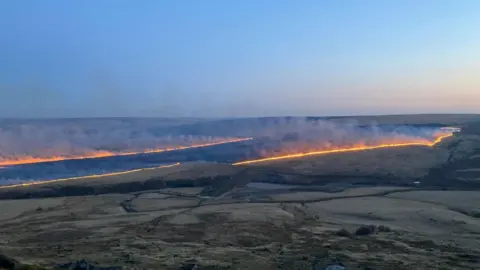
According to the National Trust, a healthy cubic metre of peat can store between 30kg and 70kg of carbon, making these ecosystems invaluable natural assets. This capacity is paramount for our collective future, as Beth Thomas eloquently articulates. "We’re not trying to bring the moors back to what they were 1,000 years ago," she clarifies, emphasizing a forward-looking approach. "We’re looking forward to a future of climate change. We want to try to produce the diversity of plant life there because the more diversity we have, the more resilient they’re going to be through climate change and if we can bring back these species that have been lost we can see if we will get resilient habitats that will survive the next 100, 1,000 or millennia in these places." This holistic vision recognizes that ecological resilience, built through species diversity and robust ecosystem function, is the best defense against an uncertain climatic future. The collaborative efforts of organizations like the Yorkshire Peat Partnership and the National Trust, working hand-in-hand with landowners such as Kingsdale Head Farm, exemplify a united front against climate change, proving that even the smallest plants can have the most profound impact on our planet’s health. These initiatives in Yorkshire are not just local conservation stories; they are powerful demonstrations of how nature-based solutions can play a critical role in shaping a sustainable and resilient future for all.



 Roy Suryo