Nana Banana
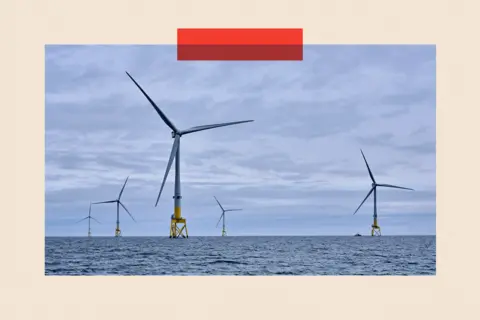
Consider the early hours of 3 June, specifically 1am. A strong, near-gale force wind was sweeping across Scotland, conditions that would naturally lead one to assume peak performance from the Moray East and West offshore wind farms. These colossal wind farms, situated 13 miles off Scotland’s north-east coast, boast some of the UK’s largest turbines, standing at an impressive 257 meters. Under such conditions, they should ideally be operating at maximum capacity, generating enough electricity to power well over a million homes, as claimed by their developer, Ocean Winds. Yet, the reality was starkly different.

The fundamental flaw lies in the perception that any electricity generator, once connected to the national grid, can seamlessly transmit its power wherever it’s needed across the country. This is a misconception. The existing electricity grid was predominantly constructed in an era dominated by coal and gas-fired power plants, strategically located close to major cities and industrial hubs. It was not designed to efficiently transport vast quantities of renewable energy generated in remote, resource-rich areas like the wild Scottish seas or rural expanses to distant urban centres. Consequently, despite an abundance of wind, the transmission lines often lack sufficient capacity to carry all the generated power, leading to significant and costly consequences.
The current system dictates that companies like Ocean Winds receive "constraint payments" – essentially compensation – when the grid cannot accommodate the electricity their wind turbines are generating, forcing them to reduce their output. On that specific half-hour period on 3 June, Ocean Winds was paid a staggering £72,000 not to generate power from its Moray Firth wind farms because the system was overloaded. This was not an isolated incident; output was restricted on multiple occasions throughout that day. In a bizarre twist of the system, simultaneously, 44 miles east of London, the Grain gas-fired power station on the Thames Estuary was paid £43,000 to increase its electricity production to meet demand.

Such payments are not anomalies but a near-daily occurrence, illustrating the deep-seated inefficiencies of the present system. Analysis by Octopus Energy reveals that Seagreen, Scotland’s largest wind farm, was compensated £65 million last year alone to restrict its output 71% of the time. This system of grid balancing has already cost the UK over £500 million this year. The National Electricity System Operator (NESO), the body responsible for managing the grid, warns that this annual cost could skyrocket to almost £8 billion by 2030 if no significant changes are made. These escalating costs are inevitably passed on to consumers, driving up energy bills and casting a shadow over the government’s promise that its net-zero agenda would ultimately lead to cheaper electricity.
The paradox of paying firms to stop producing cheap, clean power while simultaneously paying others to start producing more expensive, often fossil-fuel-based power, is central to Britain’s energy bills problem. Renewable energy sources like wind and solar have very low marginal costs once built – the fuel (wind, sun) is free. However, the antiquated grid infrastructure, designed for a different energy landscape, prevents this inherent cost-effectiveness from fully reaching consumers. The grid’s inability to cope with the geographical mismatch between generation and demand necessitates these expensive balancing acts.

In response to this growing crisis, the government is reportedly contemplating a radical overhaul: moving away from a single, national electricity market to a series of smaller, regional markets, a concept known as "zonal pricing." The government is betting that this could significantly enhance system efficiency and ultimately reduce bills. However, this is far from a guaranteed outcome, and many fear it could lead to a postcode lottery where some areas benefit while others pay more.
The proposals have ignited an intensely bitter debate within the energy sector, described by one senior industry executive as "the most vicious policy fight" he has ever witnessed, claiming he has "lost friends" over it. This contentious reform also provides ample ammunition for political opponents who lambast net-zero policies as an expensive dead end. The Prime Minister himself has reportedly requested a review of the "postcode pricing" plan, highlighting the political sensitivity of such a drastic market restructuring, the most significant since the UK electricity market was privatised 35 years ago. The crucial question remains: what will this truly mean for household energy bills across the nation?

The Energy Secretary, Ed Miliband, finds himself in a difficult position. His aggressive clean energy policies, which promised to cut average electricity bills by £300 by ensuring 95% of the country’s electricity comes from low-carbon sources by 2030, are under unprecedented scrutiny. The Conservative party has voiced opposition, green politicians argue it’s not delivering for ordinary people, and even former Prime Minister Tony Blair has weighed in against certain aspects. Reform UK, led by Richard Tice, has seized upon net-zero as a key vulnerability for the Labour government, with Tice famously stating, "The next election will be fought on two issues, immigration and net stupid zero… And we are going to win." With poll after poll indicating that the cost of living, and specifically rising energy prices, is a primary concern for most people, the pressure on Miliband to deliver tangible cost reductions is immense.
The potential for renewables to deliver cheaper energy simply isn’t translating into lower consumer bills. Despite renewables now generating over half of the country’s electricity, grid limitations mean that even on the windiest days, some gas-fired generation is almost always required to stabilise the system. And because gas tends to be more expensive, it frequently sets the wholesale price for electricity, keeping overall costs high.
Supporters of the government’s proposed "zonal" pricing argue that as long as prices are set nationally, gas will continue to dictate electricity costs. With regional pricing, this dynamic could change. Take Scotland, for example, which possesses vast wind resources but a relatively small population of 5.5 million. Under a zonal system, the argument goes, it would no longer be necessary to pay wind farms to curtail production simply because transmission cables couldn’t carry the power south. Instead, on windy days like 3 June, these farms would have to sell their excess power to local consumers. The theory suggests that prices in Scotland could plummet, potentially even offering free electricity on some days.
Other regions rich in renewable power, such as Yorkshire and the North East for wind, and parts of Wales, would also stand to benefit from significantly lower prices. As solar investment expands in areas like Lincolnshire and other parts of eastern England, these regions could also see their electricity costs tumble. Such cheap, abundant power could revitalise local economies, attracting energy-intensive businesses like data centres, chemical companies, and other manufacturing industries seeking to reduce operational costs.

While London and much of the south of England might experience higher electricity prices at times under this model, proponents argue that a portion of the hundreds of millions of pounds saved annually by the system could be reallocated to ensure no one pays more than they currently do. Moreover, these higher prices in demand-heavy regions could incentivise investors to build new wind and solar plants closer to consumption centres. This would not only lead to lower prices in the long run but also reduce the need for extensive new transmission infrastructure, meaning fewer pylons scarring the countryside and further savings for everyone.
Greg Jackson, CEO of Octopus Energy, a major UK energy supplier, is a vocal advocate for zonal pricing. He asserts that it "would make the energy system as a whole dramatically more efficient, slashing this waste and cutting bills for every family and business in the country." Research commissioned by Octopus Energy estimates that zonal pricing could yield savings exceeding £55 billion by 2050, potentially reducing average household bills by £50 to £100 annually. Octopus points to Sweden’s successful transition to regional pricing in a mere 18 months as evidence of its feasibility. NESO, Citizens Advice, and the head of the energy regulator Ofgem also support regional pricing, and a House of Lords committee recently recommended its adoption.

However, many businesses involved in constructing and operating renewable energy plants vehemently oppose the move. Tom Glover, UK chair of the giant German power company RWE, expressed deep concerns about the financial uncertainty zonal pricing could introduce. "We’re making billions of pounds of investments in renewable power in the UK every year," Glover stated. "I can’t go to my board and say let’s take a bet on billions of pounds of investment." He fears that altering the pricing mechanism could undermine existing contracts and make future revenues highly unpredictable, potentially jeopardising the government’s ambitious green energy targets.
The primary cost of wind and solar plants lies in their initial construction. Consequently, the price of the energy they produce is closely tied to these capital expenditures and, crucially, to the interest rates at which developers borrow money. The government anticipates power companies will invest £40 billion annually over the next five years in UK renewable projects. Glover warns that even a marginal increase in perceived investment risk, leading to higher interest rates, could have a devastating impact on the amount of renewable infrastructure built and the eventual cost of the power it generates.

Stephen Woodhouse, an economist with AFRY, a consultancy that has studied regional pricing for power companies, concurs, stating, "Those additional costs could quickly overwhelm any of the benefits of regional pricing." This concern is amplified by current market conditions, where already high interest rates, combined with rising prices for steel and other materials, have pushed up the cost of developing renewables. This was starkly illustrated last month when plans for a massive wind farm off the coast of Yorkshire were cancelled due to developers deeming it no longer economically viable.
Furthermore, critics point out that National Grid, which owns the pylons, substations, and cables, is already implementing a substantial £60 billion investment programme over the next five years to modernise and upgrade the system for clean power. This new infrastructure, they argue, will significantly increase capacity to transmit electricity from northern coastal wind farms southwards, thereby naturally reducing constraint payments and diminishing the future savings offered by a regional pricing system.
Other objections include the time and complexity involved in implementing regional pricing, which could take years. There’s also the argument that energy-intensive businesses like British Steel cannot simply relocate to areas with cheaper electricity, and that the system would inherently be unfair, creating a two-tier pricing structure for customers across the country.
Greg Jackson of Octopus, however, dismisses these counter-arguments, suggesting that opposing power companies and their financial backers are merely seeking to protect their substantial profits derived from the current "absurd system." Yet, the power companies retort that Octopus itself has a vested interest, being the UK’s largest energy supplier with some seven million customers and owning a sophisticated billing system it licenses to other suppliers. They claim Octopus stands to gain significantly from changes to electricity pricing.

The clock is ticking. The government’s ability to meet its clean power targets hinges on the rapid construction of new wind farms and solar plants. The companies tasked with building this essential infrastructure demand certainty regarding the future of the electricity market to commit their vast investments. A decision is expected in the coming weeks. The ball, Mr Miliband, is firmly in your court.



 George Anjay
 Ramos Leo