
 Ramos Leo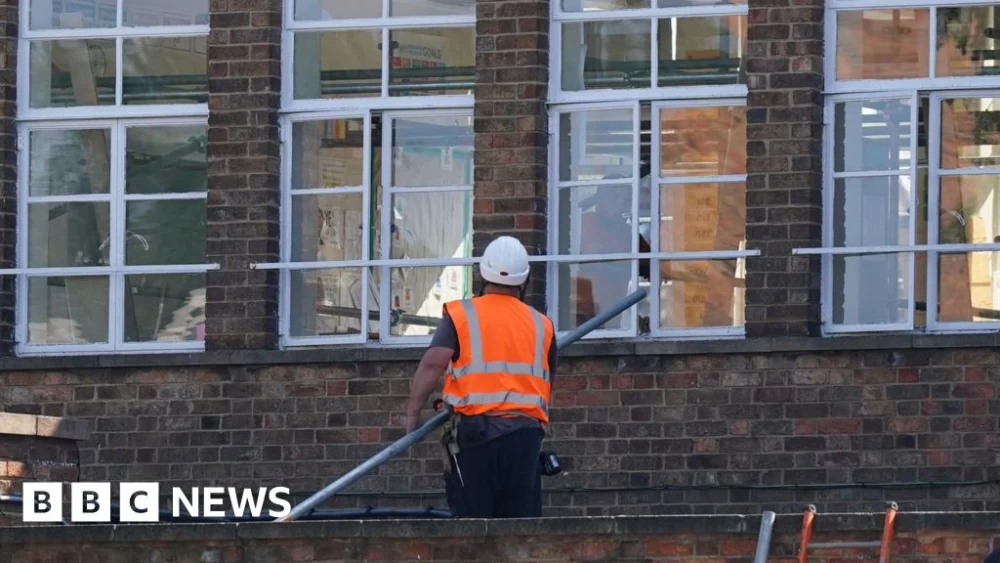
Many school buildings across England remain in a perilous state, described by a new report from Members of Parliament as "ageing and fragile," despite significant strides in addressing the immediate crisis caused by reinforced autoclaved aerated concrete (Raac). The cross-party education committee’s findings underscore a deeper, systemic issue of dilapidation within the nation’s educational infrastructure, even as the government commits to a comprehensive 10-year strategy to overhaul the school and college estate.
The Raac crisis, which dramatically escalated in late summer 2023, forced dozens of schools to partially or fully close just days before the start of the academic year. This sudden disruption led to a scramble for alternative teaching spaces, with pupils often relocated to temporary classrooms, marquees, or even remote learning, profoundly impacting their education and overall wellbeing. Raac, a lightweight, "bubbly" form of concrete, was widely used in construction between the 1950s and 1990s as a cheaper alternative to traditional concrete panels. However, its inherent limitations, including a typical lifespan of only about 30 years, meant that many structures built with it were well past their safe operational period, becoming prone to sudden collapse. The material’s susceptibility to moisture and structural fatigue, particularly in roof and wall panels, posed a critical safety risk that could no longer be ignored.
While the government has stated an ambitious target to have all Raac-affected schools either fully remediated or in the process of a complete rebuild by the end of the current parliamentary term in 2029, the education committee’s report highlights the lingering consequences of the initial chaos. Many institutions continue to operate under challenging conditions, with some sections of buildings remaining out of bounds and temporary structures still a common sight. This ongoing disruption not only affects academic progress but also strains school resources, diverts staff attention from teaching, and can create a less conducive learning environment for students. Parents and communities, too, have borne the brunt of logistical challenges, adapting to altered school schedules and locations.
Recognising the gravity of the situation, and seemingly spurred by the Raac emergency, the government is now launching a long-term, 10-year plan aimed at transforming school and college buildings across the country. Education Secretary Bridget Phillipson hailed this initiative as a "turning point," signalling a departure from decades of what many critics describe as reactive, piecemeal maintenance. "For too long, schools and colleges have been forced to patch and mend buildings that have already deteriorated," Phillipson stated, acknowledging the pervasive issue of underinvestment. She emphasised that educators’ time should be spent on delivering quality education, not on "worrying about leaking roofs," a sentiment that resonates deeply within the teaching profession.
The education committee’s report, while commending the government’s progress in identifying and addressing the immediate Raac threat, also pointed to significant "gaps in the information available on the wider school estate in England." This lack of comprehensive data on the overall condition of school buildings makes it challenging to plan effectively for future maintenance and investment, suggesting that Raac might just be the most visible symptom of a much larger underlying problem. Beyond Raac, schools across the nation grapple with a litany of structural deficiencies: outdated heating and ventilation systems, inadequate insulation, persistent leaks, crumbling facades, and general disrepair that impacts everything from energy efficiency to student comfort and safety. These issues collectively contribute to a suboptimal learning environment, affecting attendance, concentration, and the overall educational experience.
To support this ambitious transformation, the government has allocated a substantial £2.4 billion for the 2025/26 financial year specifically for improving the condition of the school and college estate. This commitment is intended to kickstart a sustained period of investment, moving beyond the emergency response to Raac towards a proactive strategy for infrastructure renewal. Helen Hayes, the chair of the education committee, underscored the profound impact of physical surroundings on learning. "While this may require a great deal of work to fix, the quality of school buildings has a significant impact on pupils’ learning and every child deserves to be taught in a safe, secure and fit for purpose school environment," she asserted. Her comments reflect a consensus that modern, well-maintained facilities are not merely a convenience but a fundamental requirement for effective education.
A particularly significant element of the government’s 10-year plan is its explicit focus on inclusivity, especially for children with special educational needs and disabilities (SEND). The committee’s report highlighted the critical need for school building improvements to incorporate efforts to make them more accessible and supportive for SEND pupils. In response, the government has announced that all secondary schools will, in future, be expected to have an "inclusion base." These dedicated spaces, currently known as SEND units or pupil support units in many schools, are designed to provide a tailored environment where pupils with SEND can access specialised support away from the potentially overwhelming environment of busy mainstream classrooms.
School Standards Minister Georgina Gould elaborated on the rationale and anticipated benefits of these inclusion bases during an interview on BBC Radio 4’s Today programme. "I’ve seen the difference this makes, allowing people that have previously been educated in corridors or had been out of school, to be educated within their community, linked in with their friends," Gould explained. She emphasised that these nurturing support spaces aim to foster a sense of belonging and provide the necessary interventions that can eventually enable more pupils to transition successfully into more mainstream educational settings. This initiative forms part of a broader governmental drive to enhance SEND provision within mainstream schools, aiming to reduce the reliance on separate special schools where appropriate and promote greater integration.
The timing of this announcement aligns with the anticipated release of wider reforms outlined in the long-awaited schools white paper. Originally expected in autumn last year, the publication of this pivotal document was subsequently pushed back to early 2026. Responding to queries about these delays, Minister Gould reassured the public that the white paper would be "coming out soon." The white paper is expected to detail comprehensive changes across the education system, with the focus on SEND provision in mainstream schools likely to be a central pillar. The push for inclusion bases is a concrete example of the direction these reforms are taking, aiming to address the increasing demand for SEND support and ensure that all children, regardless of their needs, have access to high-quality education in appropriate environments.
Ultimately, the Raac crisis served as a stark, undeniable wake-up call, exposing the profound vulnerability of England’s school infrastructure. The new 10-year plan represents a significant, if belated, commitment to rectify decades of neglect and underinvestment. Its success will hinge not only on the allocated funding but also on rigorous oversight, effective implementation, and a sustained political will to prioritise the safety and wellbeing of pupils and staff, ensuring that every child learns in a secure, modern, and inclusive environment fit for the 21st century.




 Roy Suryo

 Nakalama John
 atisusanti
