Nana Banana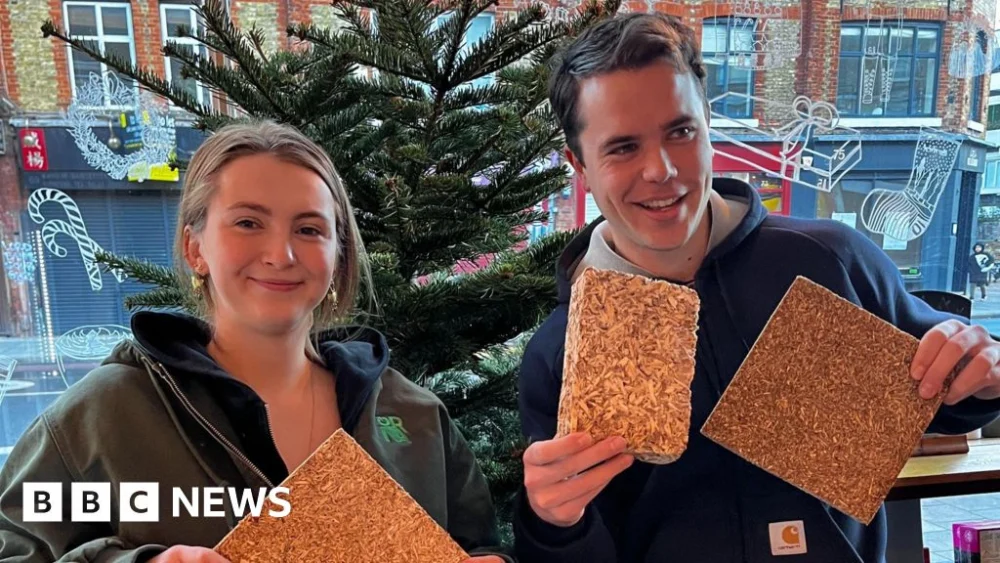
As the festive sparkle fades and the final remnants of Christmas cheer are packed away, London’s streets present a familiar, albeit somewhat melancholy, sight: countless real Christmas trees, stripped of their ornaments, lying forlornly on pavements, awaiting collection. This annual post-holiday ritual has long raised pertinent questions about environmental impact and the sheer volume of waste generated by a season of joy. Industry estimates paint a stark picture, revealing that approximately seven million Christmas trees across the UK are condemned to landfill each year, contributing significantly to greenhouse gas emissions. However, a vibrant and growing movement across the capital is now offering innovative and sustainable alternatives, transforming this traditional end-of-year problem into a beacon of ecological ingenuity.
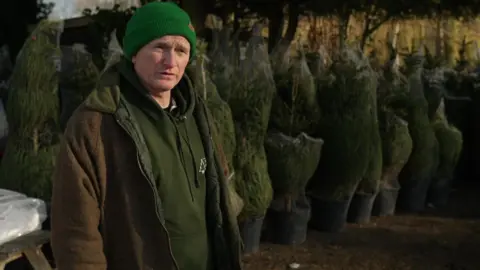
Among the pioneering solutions gaining traction is the concept of renting a living Christmas tree, a stark contrast to the conventional practice of purchasing a cut one destined for disposal. At London Christmas Tree Rental, the model is elegantly simple yet profoundly impactful: all trees are supplied in pots, meticulously cared for, and returned after the festive season to be grown on, ready for reuse the following year. "Just simply, rent, water, return," explains Jonathan Mearns, the visionary founder of the company. He elaborates on the seamless customer experience: "You can rent via our website, pick your dates, come along to one of the hubs to choose your tree, water it, bring it back, and then it grows on."
The logistics are designed for urban convenience, with trees available from four strategically located hubs across London, including a popular spot in Dulwich, south-east London. Once Christmas is over, these potted evergreens embark on a journey back to a dedicated farm, where they are nurtured and allowed to flourish for another year. This unique approach fosters a surprising emotional connection between customers and their temporary festive companions. Mearns recounts heartwarming anecdotes: "Sometimes people come back and say, ‘is that really my tree?’ We get pictures and we’ll compare, and they’ll say actually it is, it’s just grown a little bit, so people love it." This continuity not only enhances the sustainable aspect but also creates a cherished tradition for many families. One loyal customer, speaking to BBC London, affirmed the scheme’s appeal, stating, "We’ve been doing it about four years now. I just like the idea, it’s more environmentally friendly." Beyond the obvious reduction in landfill waste, these living trees continue to absorb carbon dioxide and support local biodiversity while at the farm, offering a truly circular and eco-conscious celebration.
While the rental model champions prevention, a separate, equally innovative scheme in Peckham, south-east London, focuses on the transformative power of repurposing. The ORNA Group is at the forefront of a groundbreaking initiative, working to convert discarded Christmas trees into valuable construction materials. The inspiration for this venture stemmed directly from first-hand experience, as Hugo Knox, one of ORNA’s co-founders, vividly recalls. "Back in November 2019, I left my first job coming out of university," he begins. "I rang up one of my close friends, Max. I said, look, ‘it’s Christmas, Christmas trees, shall we give it a go?’"
The entrepreneurial duo initially went door-to-door in Camberwell, offering trees and even installation services, quickly scaling their seasonal business. However, it was during this period that Knox confronted the stark reality of post-Christmas waste. "From that I learned a lot about Christmas tree waste and saw all of the waste first-hand in the streets of London, and that’s what led to ORNA Group," he explains. This direct observation ignited a passion to find a better, more sustainable fate for these once-loved symbols of festivity.
The environmental implications of discarded trees are, indeed, significant. The Carbon Trust highlights that, on average, a real Christmas tree, when properly disposed of through recycling or composting, produces approximately 3.5kg of carbon dioxide emissions. However, the picture darkens considerably when a 2-meter tree is sent to landfill without its roots. In this scenario, its carbon footprint skyrockets to an alarming 16kg of CO2. The primary culprit for this increase is the anaerobic decomposition that occurs in landfills, where the absence of oxygen leads to the release of methane, a potent greenhouse gas that is many times more effective at trapping heat than carbon dioxide over the short term. This makes the ORNA Group’s mission particularly crucial in mitigating such harmful emissions. For comparison, the trust also notes that an artificial tree, though having a higher initial manufacturing footprint, can offer lower overall emission levels if reused consistently over several years.
Recognizing the scale of the problem, most London boroughs have implemented schemes for tree recycling, primarily through mulching, composting, or biomass energy conversion, which are certainly preferable to landfill. Information on specific council schemes is readily available via platforms like London Recycles. However, ORNA Group’s approach offers a higher-value proposition.
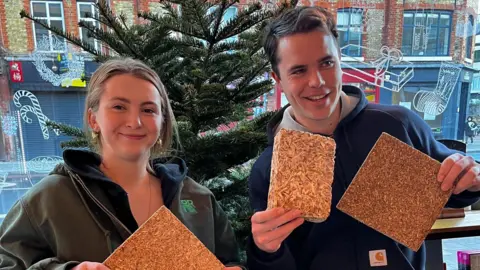
At the ORNA workshop, a hub of material innovation, real trees collected from homes and businesses undergo a meticulous transformation. "When it arrives here, it’s mostly unprocessed," explains material scientist Caelo Dineen Vanstone, another of the start-up’s co-founders, highlighting the raw state of the incoming material. "The trees have come straight out of houses or businesses in different forms, but it comes here chipped up into the right consistency." This initial chipping process is vital, breaking down the bulky trees into manageable fragments.
Dineen Vanstone elaborates on the subsequent, more complex stages: "The process involves cooking and modifying natural ingredients before combining them with the tree waste to create a homogenous wet material." This proprietary method ensures that the tree shavings are bound together effectively, forming a cohesive and robust composite. The result is a versatile new material that can be pressed into various forms, opening up a plethora of possibilities for sustainable construction. Imagine interior cladding, acoustic panels, furniture components, or even temporary structural elements derived entirely from what was once considered waste. This innovative upcycling not only diverts waste from landfill but also offers a renewable, bio-based alternative to traditional, resource-intensive building materials.
Beyond the material science, the ORNA Group also nurtures a profound educational and community engagement aspect. They actively work with young people, demonstrating how seemingly small actions can culminate in significant positive change. Dineen Vanstone articulates this broader vision with humility and conviction: "We’re not trying to change the world quite yet. But it’s just about trying to make our street corner a little bit nicer and trying to do something positive rather than doing something that’s going to impact our future generations in a negative way." This focus on local impact and inspiring the next generation is integral to their mission, fostering a sense of environmental stewardship from the ground up. Workshops and educational visits to their Peckham facility allow young minds to witness the circular economy in action, understanding the value in what others discard.
London, a city known for its dynamic spirit and embrace of innovation, is increasingly becoming a crucible for urban sustainability initiatives. The combined efforts of schemes like London Christmas Tree Rental and the ORNA Group represent a paradigm shift in how we view and manage post-holiday waste. They embody a dual approach: preventing waste at its source through reuse and transforming waste into valuable resources through ingenious upcycling. As public awareness of environmental issues continues to grow, so too does the demand for conscious consumerism and sustainable alternatives. These initiatives demonstrate that the festive season’s environmental legacy need not be one of waste, but rather one of renewal and resourcefulness, inspiring a greener, more responsible future for London and beyond.


 George Anjay
 Ramos Leo