
 atisusanti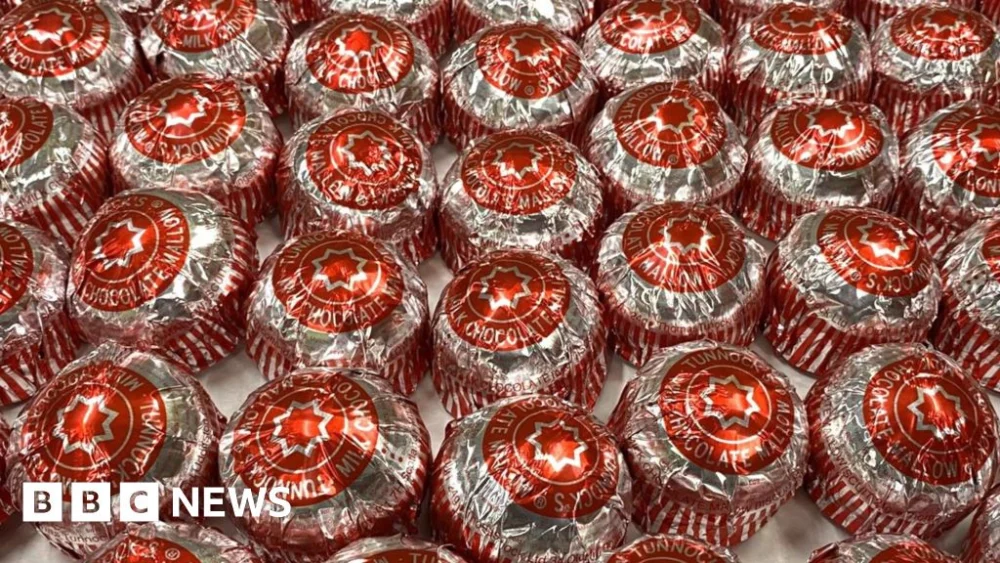
A stream of hot, molten caramel, the very essence of a Tunnock’s wafer biscuit, flows through the factory just outside Glasgow. This sticky, sweet river, a central component of their iconic confectionery, travels from its creation on the second floor via an intricate network of conveyor belts down to the first. The journey is accompanied by a warm, inviting aroma, a signature scent of the Tunnock’s operation. Yet, the precise handling of this viscous ingredient is a testament to the enduring blend of human expertise and technological advancement. It requires experienced workers to meticulously assess its consistency, a crucial step in ensuring the perfect texture and flavour. The assembly of the Tunnock’s wafer biscuit itself is a finely tuned operation, involving a dedicated team of twelve individuals who expertly spread the caramel in five distinct layers, a process that highlights the delicate balance between automation and skilled craftsmanship.
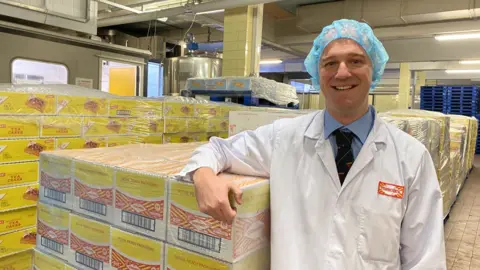
Stuart Louden, the firm’s engineering and transport manager, and a proud fifth-generation member of the Tunnock family, reveals the sheer scale of their caramel production. "We’re making roughly 20 tonnes of caramel a day," he states, a figure that underscores the industrial might behind this traditional treat. The reliance on human touch for quality control is evident. "Operators do a lot of caramel testing, just on sight and on feel. So basically, they walk up to the caramel and just give it a squeeze." This tactile assessment, honed over years of experience, is vital for gauging the caramel’s readiness. Once prepared, the conveyor belt transports the caramel to the floor below, where the spreading team awaits. "Spreading caramel onto wafers is very, very difficult because it’s so sticky," Mr Louden elaborates, a statement that hints at the challenges faced in automating such a delicate task.
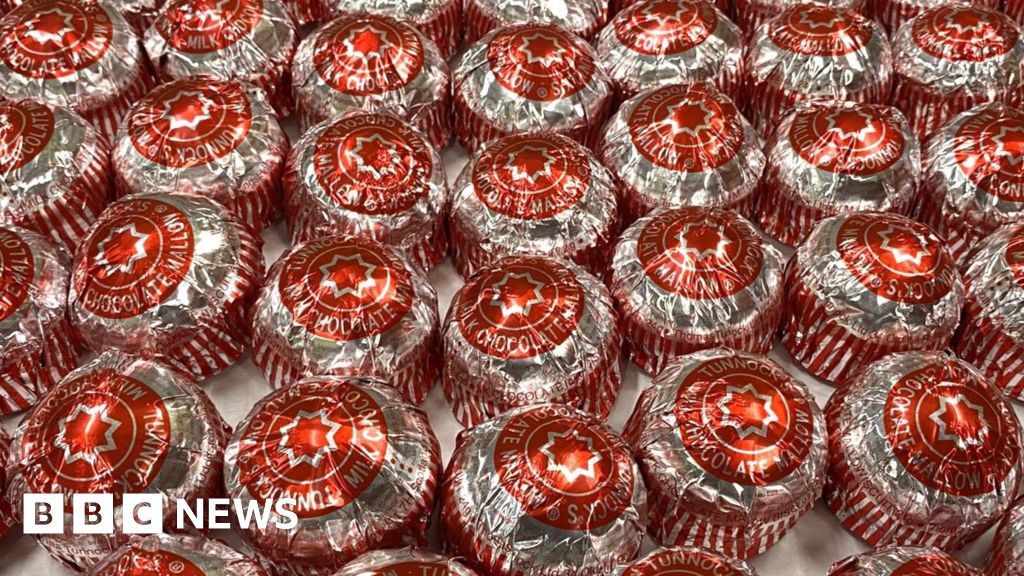
Despite the labour-intensive nature of caramel spreading, a significant portion of the Tunnock’s factory operates with a high degree of automation. The company has a long-standing commitment to embracing the latest technology, a strategic imperative to remain competitive in a market dominated by giants like McVitie’s and Fox’s. "We are a small fish in a big pond, and to try and keep up with some of these bigger companies that we are competing against, you’ve got to have the good machines there to get the output," Mr Louden explains. While machines are employed for caramel spreading, operating primarily at night, the human workforce offers an invaluable flexibility and a more compact operational footprint. Together, this synergistic approach between man and machine enables Tunnock’s to produce an impressive output of approximately seven million wafer bars and 4.5 million tea cakes annually.
The company navigates a continuous balancing act between preserving its cherished traditions and the drive for increased production. This duality is further exemplified in their marshmallow production, which, much like the caramel, is meticulously overseen by human operators. Even the wrapping of the wafer bar adheres to a time-honoured method, with the paper folded around the product rather than sealed at the ends. While switching to a sealed end could expedite production, Tunnock’s prioritises the nostalgic touch. "It’s a nice thing. If you give people a caramel wafer, and somebody’s not had one for 20 or 30, years, they go, ‘I remember having one of these when I was a kid’," Mr Louden reflects, highlighting the emotional connection consumers have with their products, a sentiment that technology alone cannot replicate.
Bridging the gap between the demand for speed and the preservation of tradition is precisely the ambition of Unifiller, a Canadian company that is part of Coperion, a major player in food production equipment. They have dedicated years to developing HIRO, a sophisticated robot arm designed to automate cake decoration. This innovative technology is capable of handling a wide array of toppings, including the notoriously challenging caramel. "If you can squeeze it through a pastry bag… then it will go through our equipment and the the decorating tips," explains Derek Lanoville, the research and development manager at Coperion. However, the food industry presents unique hurdles for automation, paramount among them being hygiene. "You have to make things easy to take apart, so that people clean them. The bottom line is, if it’s not easy to take apart, you don’t clean it." To address this, Unifiller’s robot arm is sourced from the Swiss robotics firm Stäubli, known for its easily cleanable designs.
Another significant complication lies in the inherent variability of food products like cakes. Unlike components in many other manufacturing sectors, which are often uniform to within fractions of a millimetre, cakes on a production line can vary in shape, size, and even doming. This subtle, yet crucial, inconsistency can pose a challenge for robotic precision. "The cake may not be perfectly centered on the cardboard it’s sitting on. It may be a little bit oval, may be a little bit higher or slightly domed. So, our solution has to accommodate that," Mr Lanoville points out, emphasizing the need for robots that can adapt to these natural variations.
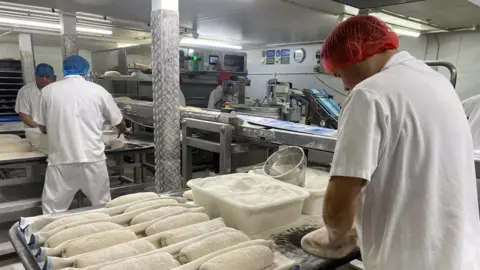
For Anomarel Ogen, the head baker at The Bread Factory, a facility responsible for producing goods for the Gail’s café chain, human hands remain indispensable to the art of baking. This bustling bakery in northwest London operates around the clock, 365 days a year, supplying sourdough loaves not only to Gail’s but also to supermarkets, shops, and restaurants. The operation is substantial, utilising approximately 16 tonnes of flour daily to produce up to 40,000 loaves. While this output is significant, it positions The Bread Factory as a medium-sized business in comparison to baking behemoths. The initial stages of dough mixing and division into loaf-sized portions are automated. However, the subsequent shaping of the dough into loaves is a testament to the skill and dexterity of their bakers.
The Bread Factory prides itself on using a range of flours cultivated through sustainable farming methods that prioritise soil health. This commitment to quality ingredients results in a dough that is notably delicate. Observing a baker at work, Mr Ogen highlights the nuanced technique involved: "Look at his hands, and look how gentle he actually is with the movement, how little pressure he is actually putting in. That requires years of skill. This is not fully replaceable by machines just yet." The presence of skilled staff also imbues the production process with a crucial flexibility. If a recipe is modified, human bakers can readily assess the impact on the dough and adjust the baking process accordingly, a level of adaptive oversight that automation struggles to replicate. "You can automate more, but you still need to put in gatekeeping right along the path, to make sure that you can safeguard the process," Mr Ogen stresses, underscoring the importance of human vigilance in maintaining quality.
Introducing new technology into a production line, particularly in the food sector, is invariably a delicate balancing act. Craig Le Clair, a principal analyst at the research firm Forrester and author of "Random Acts of Automation: How to Fight Back When Automation Threatens Your Work, Your Life, and Everything You Do," articulates this challenge. "The key in food as well as other industries is developing a hybrid model that integrates automation without losing the ‘soul’ of a handcrafted product, like a decorated cake," he advises. Le Clair further elaborates on the strategic application of automation: "Process transformation must apply automation only to areas that benefit from consistency, speed, and volume, while keeping core value-add elements strictly human."
Back at Coperion, Mr Lanoville and his team are focused on refining their HIRO robot arm. "What we’re focused on this year is really nailing down our scanning, vision and and safety systems so that, so that our our customers can work the way that they work, without the robot being intrusive," he states, indicating a commitment to seamless integration rather than outright replacement. Meanwhile, in Glasgow, Mr Louden at Tunnock’s is contemplating further upgrades to his production line, but acknowledges that such investments are heavily contingent on the prevailing financial climate. The volatility of cocoa prices over the past two years has significantly impacted his company. "When it comes to investing another two-and-a-half million pounds in equipment, we just need to wait, because the last couple of years just have not been the right time, and we don’t want to put ourselves financially in a position that it could hurt us." This pragmatic approach highlights that the adoption of cutting-edge technology is not solely driven by innovation, but also by economic realities and a deep-seated respect for the enduring legacy of traditional baking.



 Roy Suryo

 Nakalama John
 Ramos Leo
