George Anjay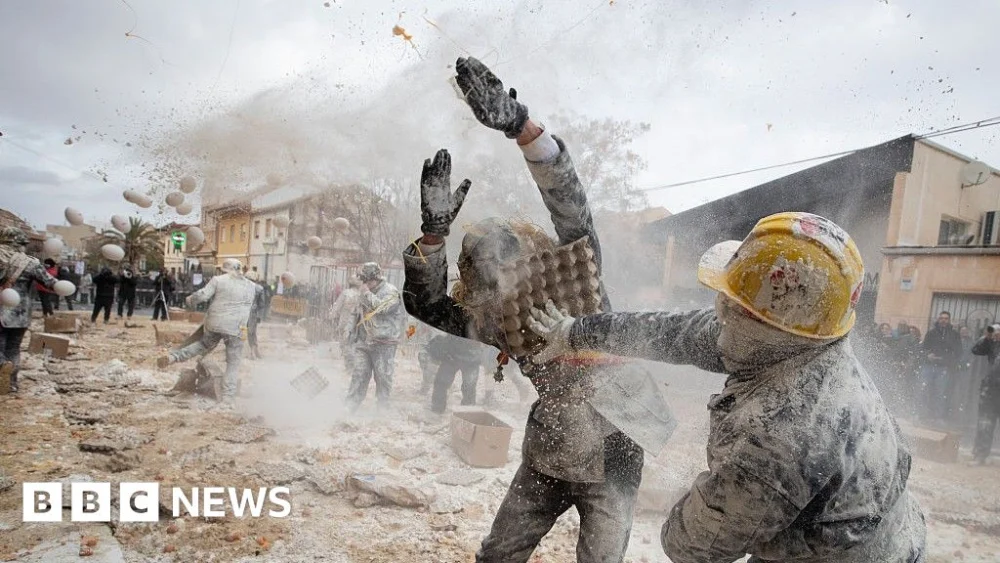
The tranquil streets of Ibi, a picturesque town nestled in the province of Alicante, Spain, transformed into a chaotic, yet joyous, battlefield on December 28th, as the ancient tradition of "Els Enfarinats" (The Floured Ones) unfolded with its characteristic fervor. For over two centuries, this unique festival has captured the imagination of locals and visitors alike, culminating in a vibrant spectacle of flour, eggs, and firecrackers, all in the name of good-natured mock rebellion and charitable giving. This year, as in decades past, the town found itself enveloped in a powdery white cloud of flour and a mosaic of shattered eggshells, a testament to the enduring spirit of this peculiar and beloved Spanish custom.
The genesis of Els Enfarinats is deeply rooted in the historical context of Spanish society, tracing its origins back to a time of political and social upheaval. While the exact origins are shrouded in the mists of time, it is widely believed to have emerged as a satirical commentary on the corruption and abuses of power prevalent in earlier centuries. The festival, which takes place on December 28th, the Day of the Innocents, Spain’s equivalent of April Fools’ Day, provides a unique platform for a ritualistic, albeit playful, subversion of authority. The choice of date is significant; it allows for a day of mirth and merriment, where societal norms can be temporarily suspended and a spirit of lighthearted defiance can take hold.
The core of the festival revolves around the "Enfarinats," participants who don elaborate military-style costumes, complete with mock uniforms and insignia. These "soldiers" represent a fictional, albeit authoritarian, regime that descends upon the town to impose their will. Their primary objective is to enact a playful coup, seizing control of the town square and initiating a series of mock decrees and pronouncements. Armed with their unconventional weaponry – sacks of flour, crates of eggs, and an array of firecrackers – they create an atmosphere of boisterous chaos that is both entertaining and symbolic.
A key element of the Els Enfarinats ritual is the imposition of "taxes." The Enfarinats, in their assumed roles of oppressive rulers, roam the streets, demanding "donations" from the townsfolk. These "taxes," however, are not for the benefit of the fictional regime but are, in fact, channeled towards charitable causes. This charitable aspect is a cornerstone of the festival, infusing the mock tyranny with a benevolent purpose. Local businesses and residents are encouraged to contribute, and those who resist or refuse to "pay their dues" are met with a playful, yet firm, pelting of eggs and flour. It’s a whimsical form of enforcement, where being covered in a sticky, powdery mess is the penalty for non-compliance, a far cry from the severe repercussions of actual tyranny.
The festival is a meticulously orchestrated performance, with roles clearly defined. The Enfarinats represent the "oppressors," while the "Alias," a counter-group, act as the "oppressed," attempting to resist the flour-laden onslaught. This dynamic creates a visual and auditory spectacle, with flour clouds billowing, eggs cracking against makeshift shields, and the crackle of firecrackers adding to the cacophony. The " Alias" often use improvised defenses, such as upturned barrels and strategically placed tarpaulins, to ward off the flour and egg attacks. The ensuing "battle" is a testament to the creativity and resourcefulness of the participants, transforming everyday objects into props for this ancient drama.
Beyond the immediate spectacle, Els Enfarinats serves as a powerful vehicle for social commentary and community bonding. The act of playfully defying authority, even in a simulated context, allows for a cathartic release of pent-up frustrations or a general commentary on the power dynamics that exist in society. It’s a day where the ordinary citizens, through their participation, can temporarily invert the established order and engage in a form of collective storytelling. The shared experience of being pelted with flour and eggs, of laughing at the mock pronouncements, and of contributing to a worthy cause, fosters a strong sense of camaraderie and shared identity within the community of Ibi.
The historical significance of Els Enfarinats cannot be overstated. Having survived for over two centuries, it stands as a living testament to the resilience of tradition and the enduring human need for expression and catharsis. In a world often characterized by rapid change and evolving social norms, the continuation of such an ancient ritual provides a tangible link to the past, allowing younger generations to connect with their heritage in a visceral and engaging way. The festival is not merely a tourist attraction; it is an intrinsic part of Ibi’s cultural fabric, a tradition passed down through generations, each one adding its own unique flair while preserving the essence of the original celebration.
The preparations for Els Enfarinats are as integral to the festival as the event itself. Weeks in advance, the community begins to gather supplies: vast quantities of flour, thousands of eggs, and an assortment of firecrackers. The military costumes are meticulously crafted, often passed down from year to year or lovingly recreated. The town square becomes the central stage, where makeshift barricades are erected and the "government building" – often a symbolically adorned structure – is prepared for the mock takeover. The anticipation builds as December 28th draws nearer, with the air in Ibi buzzing with excitement and the underlying sense of playful subversion.
On the day of the festival, the atmosphere is electric. As the clock strikes a designated hour, the Enfarinats emerge, their white-clad figures a stark contrast against the crisp winter air. The "coup" commences with a dramatic flourish, and the town square quickly becomes a swirling vortex of flour and a symphony of cracking eggs. The laughter of participants and onlookers fills the air, a joyous sound that underscores the lighthearted nature of the proceedings. The "taxes" are collected with a theatrical flair, and the "Alias" valiantly, yet comically, attempt to defend themselves against the floury onslaught.
The charitable aspect of Els Enfarinats is a crucial element that elevates it beyond mere revelry. The funds raised are typically donated to local charities, supporting various causes within the community. This altruistic dimension imbues the festival with a deeper meaning, transforming a day of playful chaos into an act of collective goodwill. It demonstrates that even in the midst of mock rebellion, the spirit of generosity and community support remains paramount. The success of the festival is measured not only by the amount of flour thrown or eggs smashed but also by the generosity of the donations collected.
The visual spectacle of Els Enfarinats is striking. The town, dusted in white, resembles a winter wonderland, albeit one with a distinctively Spanish flavor. The contrast between the pristine white flour and the vibrant colors of the participants’ costumes creates a surreal and memorable image. The photographs and videos captured during the festival often depict scenes of pure, unadulterated joy, with faces smeared with flour and smiles radiating from ear to ear. The use of firecrackers, while adding to the sensory experience, is carefully managed to ensure the safety of all participants.
In recent years, Els Enfarinats has garnered increasing attention from international media, drawing curious visitors eager to witness this unique Spanish tradition firsthand. While the core of the festival remains deeply rooted in the local community, the influx of external interest has brought a new dimension to the celebration. However, efforts are consistently made to ensure that the festival’s authentic spirit and charitable purpose are preserved, preventing it from becoming solely a spectacle for tourists. The organizers are committed to maintaining the integrity of this age-old tradition, ensuring that its cultural and social significance continues to resonate.
The legacy of Els Enfarinats is one of playful defiance, enduring tradition, and unwavering community spirit. It is a festival that reminds us that even in a world that can often feel serious and regimented, there is ample room for mirth, satire, and collective action for the greater good. The flour may wash away, the eggshells may be swept up, but the memories of this unique "battle" and the spirit of solidarity it embodies will undoubtedly endure for generations to come in the charming town of Ibi. The video, edited by Zahra Fatima and Jack Burgess, serves as a captured testament to this vibrant and unforgettable annual event, preserving its energy and spectacle for those who were unable to witness it firsthand.



 Roy Suryo