Nakalama John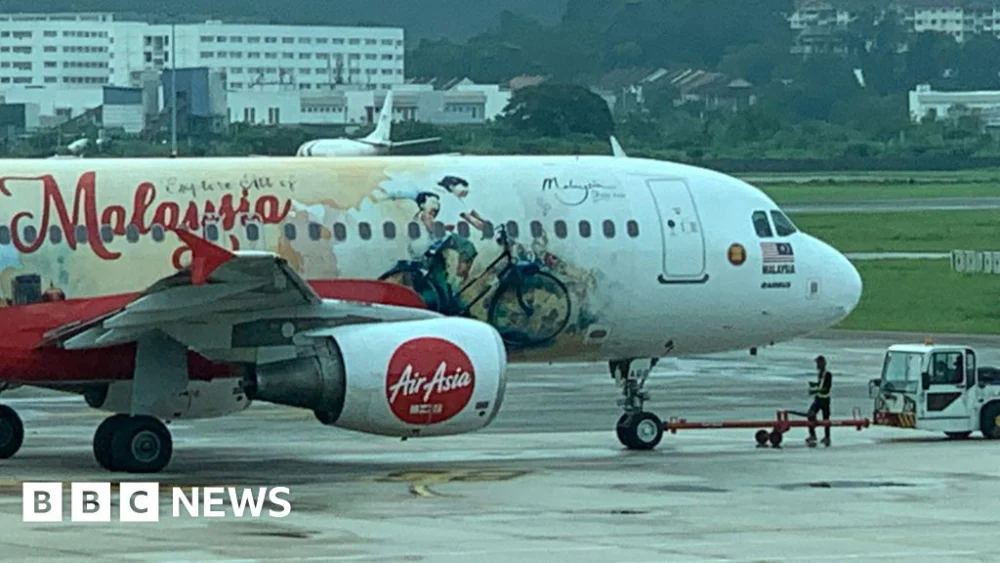
A significant legal challenge has been mounted against Malaysian budget airline AirAsia and its parent company, Capital A Berhad, by renowned Lithuanian-born artist Ernest Zacharevic. Based in Penang, Malaysia, Zacharevic has filed a lawsuit alleging the unauthorized reproduction and display of his iconic 2012 street mural, "Kids on Bicycle," as part of a distinctive livery on one of AirAsia’s operating aircraft in late 2024. This action, according to Zacharevic, was undertaken without any form of consent, authorization, or licensing agreement, constituting a blatant infringement of his intellectual property and moral rights. The controversy has sparked discussions about copyright protection for artists, especially in the context of commercial exploitation by large corporations.
Ernest Zacharevic has cultivated a reputation as a pivotal figure in the global street art scene, particularly within Southeast Asia. Having established his base in Penang for over a decade, his work is characterized by a unique blend of fine art and public intervention, often incorporating real-world objects into his murals to create interactive and thought-provoking pieces. His art has not only beautified urban landscapes but has also become a significant cultural draw, attracting tourists and art enthusiasts from around the world.
Among his most celebrated creations is "Kids on Bicycle," a vibrant and endearing mural painted in 2012 as part of the "Mirrors George Town" art commission for the George Town Festival. Located in the heart of George Town’s UNESCO World Heritage site, this particular artwork depicts two laughing children, painted onto a wall, seemingly riding a real bicycle affixed to the mural. The ingenious integration of the physical bicycle with the painted figures creates a three-dimensional illusion, inviting passersby to interact with the artwork by posing with it. Over the years, "Kids on Bicycle" has transcended its origins as a street art piece to become an unofficial symbol of Penang, a major tourist attraction, and a widely recognized image synonymous with Malaysian cultural vibrancy. Its fame has led to countless photographs, reproductions in travel guides, and its status as a beloved landmark.
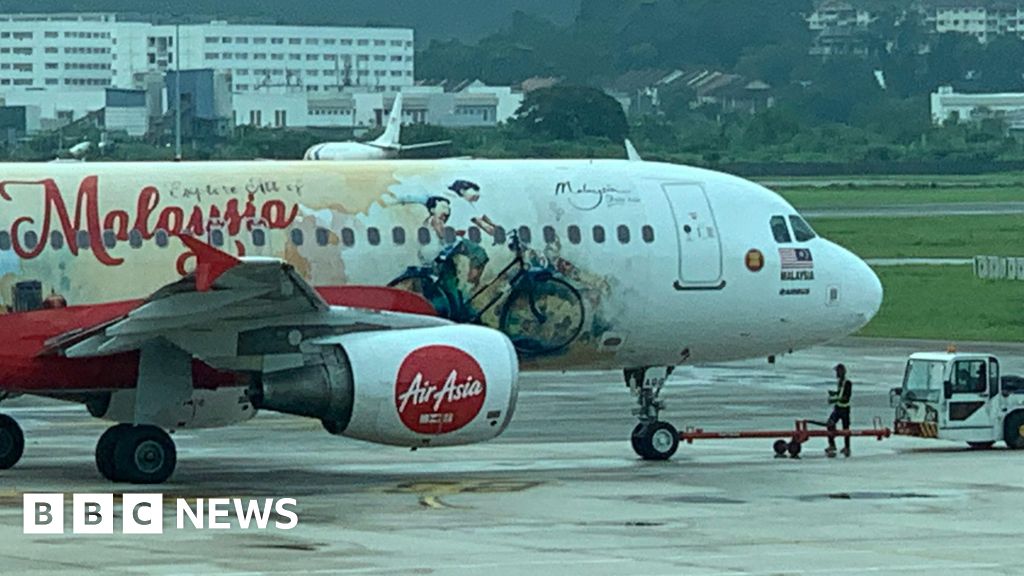
Zacharevic first became aware of the alleged infringement in October 2024. He recounted the moment he personally witnessed an AirAsia aircraft bearing a livery that undeniably featured artwork strikingly similar to his "Kids on Bicycle" mural. The sight of his original creation, meticulously crafted and deeply personal, emblazoned across the fuselage of a commercial airliner operating on a global stage, was profoundly unsettling. "It felt a little offensive," Zacharevic stated, articulating the sense of violation and disrespect he experienced. For an artist, seeing their work appropriated by a commercial entity without permission can be akin to a theft of identity and creative livelihood. The scale of an aircraft livery meant that his art was being displayed to thousands of passengers and onlookers daily, generating significant commercial exposure for the airline without any attribution or compensation to the original creator.
His immediate response was to take to social media, posting a photograph of the aircraft and directly tagging AirAsia, publicly raising his concerns and demanding a conversation about the unauthorized use of his artwork. This public call-out quickly garnered attention, highlighting the artist’s distress and the perceived injustice. Following his public denouncement, the disputed livery was reportedly removed from the aircraft. While the removal might be interpreted as an acknowledgment of the validity of his concerns, Zacharevic confirmed that subsequent discussions with the airline failed to yield a satisfactory resolution or agreement on terms, leaving him with no recourse but legal action.
The lawsuit filed by Zacharevic against AirAsia and Capital A Berhad is not merely about financial compensation; it underscores fundamental principles of intellectual property law. His core allegations center on copyright infringement, which protects original artistic works from unauthorized reproduction, distribution, and display. Beyond copyright, Zacharevic also asserts that the airline willfully infringed his moral rights. Moral rights, often overlooked but crucial for artists, include the right of attribution (the right to be identified as the author of the work) and the right of integrity (the right to object to any distortion, mutilation, or other modification of the work that would be prejudicial to the artist’s honor or reputation). The reproduction of a street mural, designed for a specific urban context, onto an airplane livery without the artist’s input could be seen as a violation of this integrity.
Adding another layer of complexity to the dispute, Zacharevic claims this is not the first instance of his work being used in connection with AirAsia’s campaigns and products. He alleges that his artwork had previously been used on delivery bags for the airline’s food services arm, AirAsia Food. Furthermore, court documents reveal that Zacharevic had engaged in discussions with AirAsia as far back as 2017 regarding potential collaborations, including an offer to create art for their jets and a mural in one of their offices. During these discussions, the artist explicitly made the airline fully aware of his distinctive body of work and his standard business rates for licensing and commissions. This prior interaction is critical, as it suggests that AirAsia was not only familiar with Zacharevic’s art but was also cognizant of the proper protocols for engaging with his intellectual property, making the alleged subsequent unauthorized use even more problematic. Despite this awareness, Zacharevic’s claim adds, "the airline proceeded to reproduce and publicly display one of the plaintiff’s principal works in a prominent setting, thereby wilfully infringing the plaintiff’s copyright and moral rights."
The BBC has reached out to AirAsia for comment regarding the lawsuit, but the airline has yet to issue a public statement, which is a common practice when facing ongoing legal proceedings.
This case carries significant implications for the broader creative industry and highlights the ongoing struggle artists face in protecting their intellectual property from commercial exploitation by large corporations. For Zacharevic, the issue goes beyond mere financial compensation. It is about the principle of respecting an artist’s creation and their ownership of it. His firm declaration, "I do not accept any characterisation of this use as merely a reference to cultural or geographical associations," directly challenges any potential defense that the airline might raise, such as claiming the artwork is a generic representation of local culture. He emphasizes, "The artwork in question is a distinct artistic creation. It is not a natural or generic feature, but the result of many years of professional training, skill and labour." This statement underscores the fact that "Kids on Bicycle" is not merely a public landmark but a specific, copyrighted artistic expression deserving of legal protection.
AirAsia, as Asia’s largest low-cost carrier, operates an expansive network of over 200 jets serving more than 100 destinations across the globe. The airline’s prominent market position and extensive reach mean that any alleged intellectual property infringement carries substantial commercial weight and visibility. Ironically, the airline recently announced ambitious plans to resume flights from Kuala Lumpur to London via Bahrain, marking a significant return to the British capital after more than a decade. This move signals AirAsia’s global aspirations, yet this lawsuit serves as a stark reminder of the importance of adhering to international intellectual property laws, even as the airline expands its footprint.
Zacharevic has stated his intention to leave the determination of the compensation amount to the court, signaling a comprehensive pursuit of justice rather than a simple settlement. This legal battle is poised to be a landmark case, potentially influencing how corporations engage with artists and their work in the future. It serves as a crucial reminder that artistic creations, whether on a gallery wall or a city street, are valuable assets deserving of legal protection and respect, and that their commercial use must always be predicated on proper authorization and fair compensation. The outcome of this lawsuit will undoubtedly resonate throughout the creative community, reaffirming the rights of artists against unauthorized appropriation.



 George Anjay
 Ramos Leo
 Nana Banana