Nakalama John
The White House, in championing this rollback, characterized it as the "largest deregulation in American history," asserting that it would usher in substantial economic benefits. Proponents claimed the reversal would significantly reduce manufacturing costs for automakers, potentially making cars $2,400 cheaper per vehicle, and ultimately save the American economy more than $1 trillion. Speaking from the Oval Office on Thursday, President Trump vehemently denounced the 2009 ruling as "a disastrous Obama-era policy that severely damaged the American auto industry and massively drove up prices for American consumers." He further lambasted it as the "legal foundation for the Green New Scam, one of the greatest scams in history," directly referencing the ambitious climate agenda proposed by Democrats.
Unsurprisingly, the decision ignited immediate and fierce opposition from environmental organizations, which unequivocally labeled it the most profound and far-reaching climate change rollback attempted to date. These groups have pledged swift and robust legal challenges, setting the stage for protracted court battles. Former President Barack Obama, who typically refrains from commenting on the policies of his successors, issued a rare and pointed rebuke via X (formerly Twitter), stating that repealing the finding would leave Americans "less safe, less healthy and less able to fight climate change — all so the fossil fuel industry can make even more money." His statement underscored the deep partisan divide on climate policy and the perceived motivations behind the Trump administration’s actions.
The EPA’s original "endangerment finding" in 2009 marked a watershed moment in American environmental law. Following years of scientific assessment and a Supreme Court directive in Massachusetts v. EPA (2007) that confirmed the EPA’s authority to regulate greenhouse gases under the Clean Air Act if they were deemed a danger, the agency definitively concluded that six key planet-warming gases—carbon dioxide, methane, nitrous oxide, hydrofluorocarbons, perfluorocarbons, and sulfur hexafluoride—endangered public health and welfare. This scientific consensus provided the legal mandate for the EPA to regulate these emissions, a crucial step given the gridlock in a divided Congress that repeatedly failed to pass comprehensive climate legislation. Meghan Greenfield, a former attorney for both the EPA and the Department of Justice, highlighted the finding’s indispensable role, stating, "The endangerment finding has really served as the lynchpin of US regulation of greenhouse gases." She elaborated on its extensive reach, noting, "So that includes motor vehicles, but it also includes power plants, the oil and gas sector, methane from landfills, even aircraft. So it really runs the gamut, all of the standards for each of the sectors is premised on this one thing."
Administration officials reiterated their economic justifications for the reversal, claiming that it would ease the financial burden on industries and consumers alike. Diana Furchtgott-Roth, who served in the US Department of Transportation during the first Trump term, articulated this perspective to the BBC, arguing that stringent environmental regulations had imposed "an economic strain" resulting in "higher prices and manufacturing has left." She contended that forcing manufacturing to relocate to countries like China and India, where production is often "made in a dirtier way," does not genuinely reduce global emissions but merely shifts the problem. This argument posits that domestic deregulation could bring manufacturing back to the U.S., paradoxically framed as a global environmental benefit.
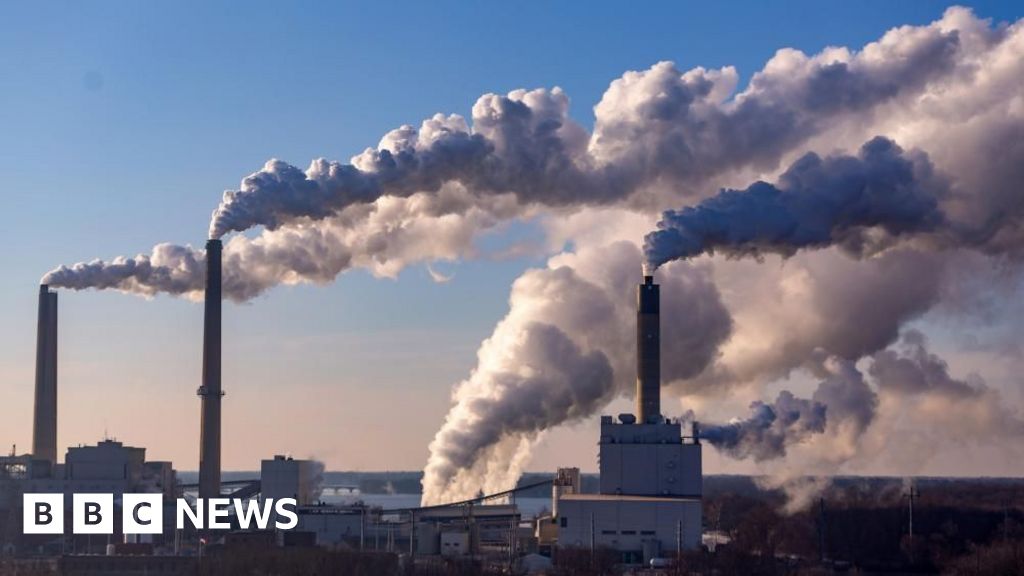
However, environmentalists and many independent economists remain deeply skeptical of the touted cost savings and vehemently dispute the administration’s economic and health impact analyses. Peter Zalzal from the Environmental Defense Fund presented a starkly contrasting view, asserting that the rollback would, in fact, "force Americans to spend more money, around $1.4 trillion in additional fuel costs to power these less efficient and higher polluting vehicles." He further painted a grim picture of the health consequences, stating, "We’ve also analyzed the health impacts and found that the action would result in up to 58,000 additional premature deaths, 37 million more asthma attacks." These figures underscore the profound human cost that critics believe will accompany the deregulation.
Beyond domestic implications, the reversal introduces significant uncertainty for the US car industry. Michael Gerrard, a climate law expert from Columbia University, pointed out the potential "bind" for automakers. While the rollback might reduce immediate compliance costs domestically, manufacturing less fuel-efficient vehicles could severely limit their competitiveness and sales in international markets, many of which are moving towards stricter emissions standards. "This rollback is sort of cementing things that have already been done, such as the relaxation of the fuel economy standards," Gerrard observed. "But it really does put the US automakers in a bind, because nobody else is going to want to buy American cars." This raises concerns about the long-term viability and global standing of American automotive manufacturing.
Intriguingly, while the Trump administration aims to dismantle climate change regulations, some observers note potential unintended consequences. The 2009 endangerment finding, by vesting federal authority over warming gases, had also been utilized by the Trump administration itself to preempt states from enacting stricter carbon emission laws. Furthermore, the finding had been instrumental in suppressing "nuisance" lawsuits brought by individuals or organizations seeking redress for climate change impacts. Meghan Greenfield, now with the Washington law firm Jenner & Block, elaborated on this aspect: "The endangerment finding decision has blocked any number of lawsuits, and has been pretty powerful in keeping plaintiffs’ claims out of court." She anticipates a surge in legal activity following the reversal, stating, "I would expect states and non-profit groups to bring suits, probably primarily in our state courts, to try to figure out where the contours of this new law are."
A central pillar of any legal challenge will undoubtedly revolve around the scientific basis—or lack thereof—for overturning the original endangerment finding. Last year, the Department of Energy convened a panel of scientists to produce a report that directly challenged widely accepted climate science regarding the warming impact of greenhouse gases. This report subsequently formed the intellectual underpinning for the initial proposal to reverse the 2009 finding. However, this panel faced widespread condemnation from the scientific community, with many climate experts criticizing its composition as unrepresentative, heavily skewed with individuals skeptical of human influence on climate change, and its findings as inaccurate and misleading. Compounding this, a federal judge recently ruled that the Department of Energy had violated the law in the formation of this hand-picked team, casting a significant shadow over the scientific credibility of the reversal.
Indeed, legal experts widely believe that the Trump administration might be actively seeking a court challenge to this reversal, specifically aiming for a definitive ruling from the Supreme Court before the end of Trump’s term. Their strategic goal appears to be to secure a permanent legal victory that would effectively consign the endangerment finding to history. As Meghan Greenfield explained, "This is really different as the EPA is exiting the space entirely and wants to do it on a permanent basis." She added, "If they were to win that issue as they framed it before the Supreme Court, a new presidential administration could not change that position, in the absence of new legislation." Such a ruling would fundamentally alter the landscape of federal environmental regulation for generations, making it incredibly difficult for future administrations, even those committed to climate action, to reinstate comprehensive federal controls on greenhouse gas emissions without new, specific legislation from Congress. This high-stakes legal gambit underscores the profound and lasting implications of Trump’s latest move in his ongoing effort to reshape America’s environmental and energy policy.



 George Anjay
 Ramos Leo
 Nana Banana