Roy Suryo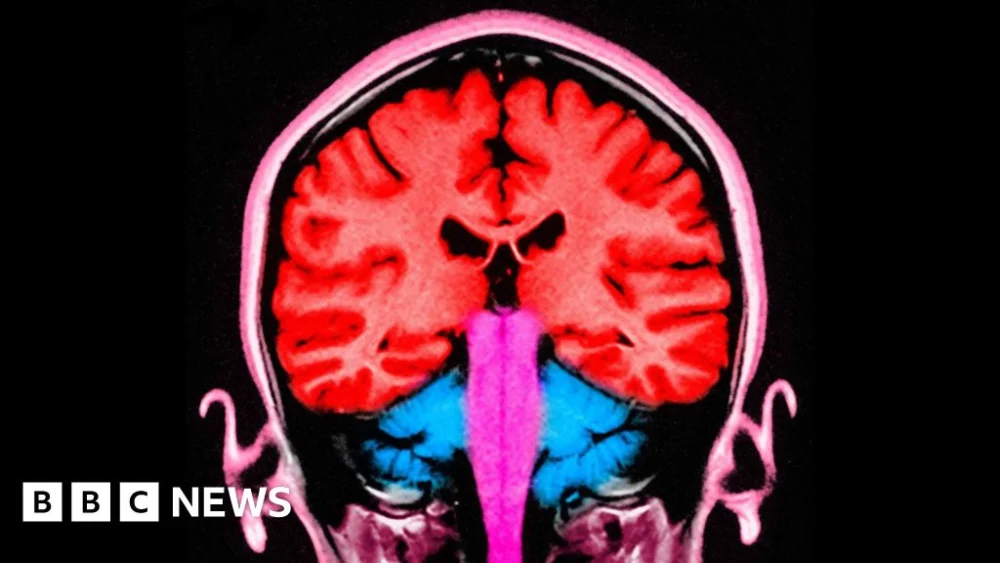
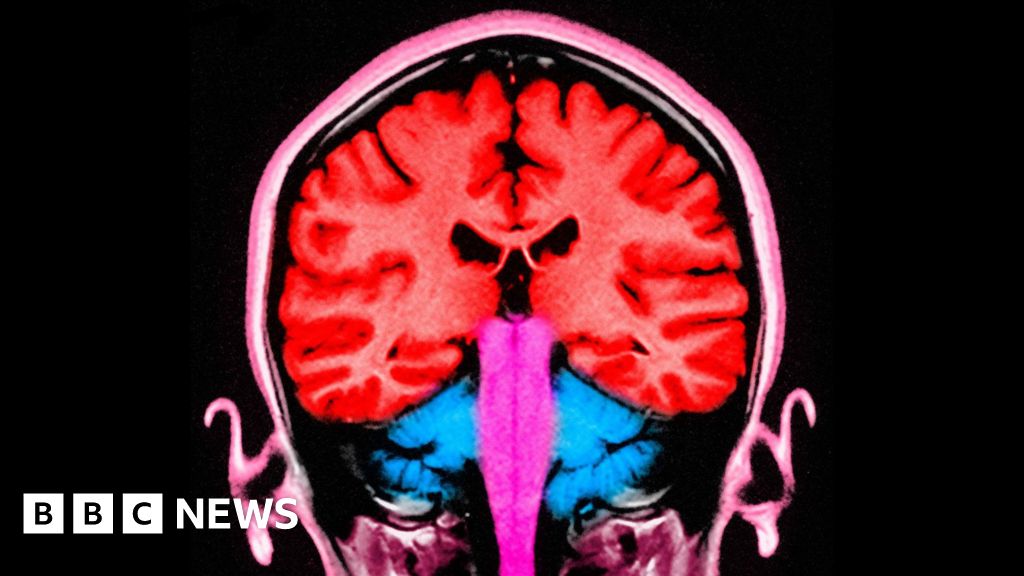
In a groundbreaking study conducted at the University of Zurich, scientists have unveiled a remarkable method to temporarily reduce selfishness in individuals by precisely stimulating two key areas of the brain. This innovative approach, utilizing non-invasive electrical currents, has demonstrated a statistically significant increase in participants’ willingness to share resources, offering profound insights into the neural underpinnings of altruism and potential therapeutic avenues for social behavior disorders. The research, led by Professor Christian Ruff and Dr. Jie Hu, builds upon previous investigations into the brain’s decision-making and empathy networks, providing compelling evidence of a causal link between specific brain activity and selfless behavior.
The study involved 44 volunteers who were presented with a financial decision-making task: splitting a sum of money between themselves and an anonymous partner. During this crucial task, a mild electrical current was applied to the frontal and parietal lobes of the brain – regions known to be integral to executive functions and social cognition. The simultaneous stimulation of these two interconnected areas resulted in participants generously allocating a larger portion of the money to their partners. While Professor Ruff described the observed effects as "not huge," he emphasized their consistency, noting that "statistically, we really see an increase in their willingness to pay." This finding suggests that the delicate balance between self-interest and prosocial behavior can be subtly modulated through targeted brain intervention.
Beyond shedding light on fundamental human behavior, these findings hold significant promise for clinical applications. Professor Ruff articulated the potential benefits for individuals struggling with severe social behavior disorders, stating, "There are people who have profound problems with social behavior, because they can’t take other people’s perspective into account and are constantly behaving selfishly. That’s when we could use this." For these individuals, whose empathy and understanding of others’ perspectives are compromised, this neurostimulation technique could offer a pathway to improved social interaction and integration.
The current study’s effects were observed to be temporary, a characteristic Professor Ruff likened to physical fitness. Just as a single gym session doesn’t dramatically alter one’s physique, he explained, "To really change behaviour in the longer term, you would have to do it repeatedly." He elaborated, "but if you go to the gym twice weekly for a period of two months, your body changes. This is the same." This analogy highlights the potential for sustained behavioral modification through repeated, consistent application of the neurostimulation technique, mirroring the principles of neuroplasticity.
This latest research builds directly on a prior study by the same team, which meticulously monitored brain activity as participants engaged in the same money-sharing game. In that earlier investigation, researchers identified two specific brain regions that exhibited synchronized electrical activity – essentially "talking to each other" at the same frequency – when individuals made more generous decisions. These identified regions were already known to play critical roles in decision-making processes and empathy, the ability to understand and share the feelings of others, distinguishing their emotional states from one’s own. The critical observation was that when participants opted for a more selfless choice, there appeared to be heightened communication between the empathy-related region and the decision-making region.
Driven by this observation, the researchers designed the current experiment to test whether they could actively influence and promote more selfless decisions by artificially "nudging" these neural pathways using electrical stimulation. The experience for participants undergoing the stimulation was described as remarkably subtle. One anonymous volunteer reported the sensation as akin to "a warm shower or small drops of rain" on their scalp, adding, "Immediately after starting the stimulation, I was making the decisions displayed on a screen. At no time did I have the sensation that the stimulation was impacting my decisions." This subjective experience of minimal conscious awareness of the intervention underscores the nuanced and perhaps subconscious nature of the brain’s response to the stimulation.
The consistent identification of this specific pattern of brain activity associated with selfless decision-making across multiple individuals strongly suggests that altruism is not merely a learned behavior but is, in fact, deeply embedded within our neural architecture – an evolved mechanism that facilitates cooperation and mutual care within social groups. Professor Ruff further elaborated on the clinical significance of being able to influence and potentially modify this inherent mechanism, emphasizing, "is what makes this discovery clinically relevant."
Dr. Jie Hu, a co-author of the study from East China Normal University, highlighted the novelty of the current findings: "What’s new here is evidence of cause and effect. When we altered communication in a specific brain network using targeted, non-invasive stimulation, people’s sharing decisions changed – shifting how they balanced their own interests against others." This experimental manipulation provides a direct demonstration of how altering neural communication can lead to observable changes in complex social behaviors, moving beyond mere correlation to establish a clear causal relationship.
In addressing potential public apprehension regarding an experiment that influences behavior, Professor Ruff offered a reassuring perspective. He stated, "But should we be concerned – or unsettled – by an experiment that influences behaviour in this way? Prof Ruff says ‘absolutely not.’" He emphasized the rigorous ethical oversight governing such research: "This is medically regulated specifically for these experiments. It goes through an ethics committee and people give informed consent, which they can withdraw at any time." Furthermore, he drew a stark contrast between this controlled scientific intervention and the pervasive, often unconscious influences exerted by social media and advertising. "The neuroscientist compared that to the influences on our behaviour from social media and advertising. ‘There you have no control over what you’re exposed to [and how your brain responds to it],’ he said." This comparison underscores the ethical transparency and individual agency inherent in the scientific research presented, differentiating it from the often opaque and manipulative forces shaping public behavior in the digital age. The implications of this research are far-reaching, paving the way for a deeper understanding of human altruism and the development of novel therapeutic interventions for a range of social and behavioral challenges.




 Nakalama John
 atisusanti
 Ramos Leo