
 Ramos Leo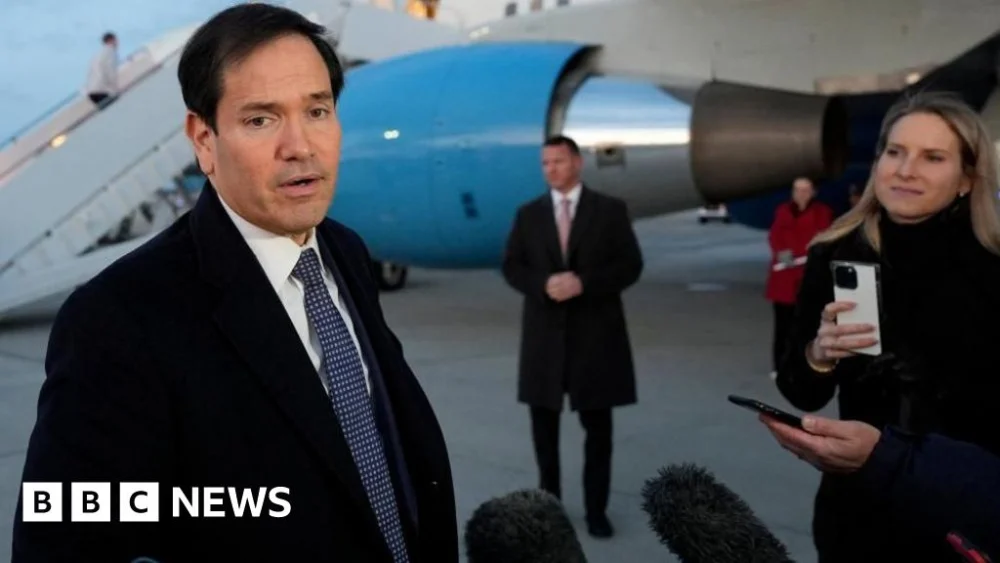
The conference convenes at a time when European leaders are grappling with the implications of an increasingly unpredictable United States. French President Emmanuel Macron has been vocal, insisting that Europe must strategically prepare for greater independence from the US, advocating for enhanced European sovereignty and defense capabilities. Conversely, NATO Secretary General Mark Rutte has consistently underscored the enduring strength and indispensable importance of transatlantic bonds. These contrasting perspectives highlight the profound internal debate within Europe regarding its strategic future and its relationship with its most significant traditional ally.
Beyond the strains in transatlantic relations, the conference agenda is packed with pressing global challenges. The ongoing war in Ukraine continues to demand international attention and resources, with President Volodymyr Zelenskyy present to advocate for further support. Tensions with China, encompassing economic competition, technological rivalry, and geopolitical influence, are also high on the list. Furthermore, the delicate possibility of a new nuclear deal between Iran and the US looms, carrying significant implications for Middle East stability and global non-proliferation efforts. "The world is changing very fast right in front of us," Rubio told reporters, reflecting on the urgency of the moment and whether his message to Europeans would strike a more conciliatory tone than previous US administrations. He emphasized, "We live in a new era in geopolitics, and it’s going to require all of us to sort of re-examine what that looks like and what our role is going to be."
This sentiment directly contrasts with the tenor of last year’s conference, where US Vice-President JD Vance delivered a sharply critical speech, lambasting Europe, including the UK, for its policies on free speech and immigration. That address ignited a year of unprecedented transatlantic tension, leaving many European leaders questioning the reliability and long-term commitment of their American partners. The echoes of Vance’s abrasive approach still resonate, making Rubio’s current mission particularly sensitive.
Approximately 50 world leaders, alongside defense ministers, diplomats, and security experts, are congregating in Munich. European defense capabilities and the future trajectory of the transatlantic relationship are central themes, especially as US commitments to NATO have been repeatedly called into question by the current administration. The rhetoric from Washington has prompted widespread unease, compelling Europe to confront its strategic vulnerabilities and consider greater self-reliance.
Danish Prime Minister Mette Frederiksen wasted no time in addressing the core issue, telling reporters on Friday that she planned to meet directly with Rubio to discuss the US threats to seize Greenland. This extraordinary diplomatic incident, where a NATO ally’s territorial integrity was openly questioned by the US, has been widely viewed by European leaders as a watershed moment. It has profoundly eroded trust and forced a fundamental reassessment of the nature of the alliance. The threat, though eventually dismissed as hypothetical by some US officials, underscored a perceived transactional approach to foreign policy that prioritizes perceived American interests above established norms and alliances.
In a proactive effort to reinforce the bedrock principles of the Western alliance, eight former US ambassadors to NATO and eight former American supreme commanders in Europe issued an open letter ahead of the conference. They collectively urged Washington to maintain unwavering support for the Western defensive alliance, articulating that NATO is "far from being a charity." Instead, they argued, it functions as a "force-multiplier" that empowers the US to project its power and influence globally "in ways that would be impossible – or prohibitively expensive – to achieve on its own." Their intervention aimed to remind the US administration of the strategic dividends yielded by a strong alliance system.
The transatlantic relationship has been under increasing strain since the Republican president’s introduction of protectionist tariffs, which sparked trade disputes, and particularly following a suggestion in the US national security strategy that European nations might not remain "reliable allies" in the long term. These actions and statements have fostered an environment of uncertainty and distrust, forcing Europe to re-evaluate its strategic dependencies.
Dutch Foreign Minister David van Weel, speaking to the BBC on Friday, acknowledged the stark reality that "the world has changed." He expressed a hopeful desire that the "transatlantic bond" would remain "solid" despite the current challenges. Van Weel candidly admitted that the Netherlands, and by extension Europe, needed to "step up" when it came to its own security. He highlighted that his country was already making a "big sacrifice" to increase its defense spending significantly, aligning with NATO’s 2% of GDP target. However, he also issued a pragmatic warning: "It will take time before we can really take over [the security] burden from the Americans in Europe." This statement encapsulates the dilemma facing many European nations – a recognition of the need for greater autonomy versus the practical limitations and immense costs involved in rapidly achieving it.
Rubio is widely expected to steer clear of the abrasive, confrontational style adopted by Vance last year. When pressed on whether he intended to be more conciliatory, Rubio articulated a desire to provide clarity: Europeans "want to know where we’re going, where we’d like to go, where we’d like to go with them." This suggests an attempt to re-establish a dialogue built on shared objectives, even if the path to achieving them is now more complex.
Hours before German Chancellor Friedrich Merz was scheduled to officially open the Munich conference, Foreign Minister Johann Wadephul conveyed Germany’s perspective on national public television. He stated that a primary aim for Europe at the conference was to jointly define what truly holds NATO together and, crucially, to demonstrate to the US that it, too, needs Europe. This reflects a European desire to reassert their value and indispensable role within the alliance, moving beyond a purely supplicant position.
French President Macron is also slated to address the conference on Friday. His remarks will be keenly watched, especially after his forceful declaration at the World Economic Forum in Davos last month that now was "not a time for new imperialism or new colonialism." This statement, interpreted by many as a veiled critique of certain US foreign policy approaches, underscores France’s commitment to a multilateral world order based on respect for sovereignty and international law.
After a week of turbulent domestic politics, Sir Keir Starmer, the leader of the UK’s Labour Party, will also travel to Munich. He is anticipated to hold significant meetings with both Chancellor Merz and President Macron, before delivering his own address to the summit on Saturday morning. Starmer’s presence signals the UK’s continued engagement with European security, even post-Brexit, and his discussions will likely touch upon strengthening UK-European cooperation within the broader transatlantic framework.
Conference chairman Wolfgang Ischinger, a former German diplomat, provided a sobering assessment in a report preceding the event. He noted that "For generations, US allies were not just able to rely on American power but on a broadly shared understanding of the principles underpinning the international order." However, he starkly concluded, "Today, this appears far less certain, raising difficult questions about the future shape of transatlantic and international co-operation." Ischinger’s analysis highlighted that the White House’s current foreign policy "is already changing the world, and it has triggered dynamics whose full consequences are only beginning to emerge." This emphasizes the profound and potentially irreversible shifts underway.
Upon his arrival in Munich, Ukraine’s President Volodymyr Zelenskyy reiterated the critical importance of the conference, expressing hope that it would bring "new steps toward our shared security – that of Ukraine and Europe." The ongoing conflict in Ukraine remains a stark reminder of the fragile security environment in Europe and the continued need for robust Western unity.
On Friday, Russian media, quoting Kremlin spokesman Dmitry Peskov, reported that another round of talks between Russia, Ukraine, and the US, aimed at de-escalating and potentially ending the war, would take place in Geneva on 17 and 18 February. Neither Kyiv nor Washington has yet commented on this reported development. These potential talks follow recent discussions held in Abu Dhabi, the capital of the United Arab Emirates (UAE), which concluded without any apparent major breakthrough. However, a glimmer of hope emerged shortly after the US-brokered discussions ended, when Ukraine and Russia carried out a rare exchange of prisoners of war, demonstrating a limited but significant channel for communication and cooperation amidst the broader conflict. The Munich Security Conference, therefore, serves as a crucial forum not only for addressing immediate crises but for fundamentally redefining the architecture of global security in this rapidly evolving "new era."



 Roy Suryo

 Nakalama John
 atisusanti
