
 Ramos Leo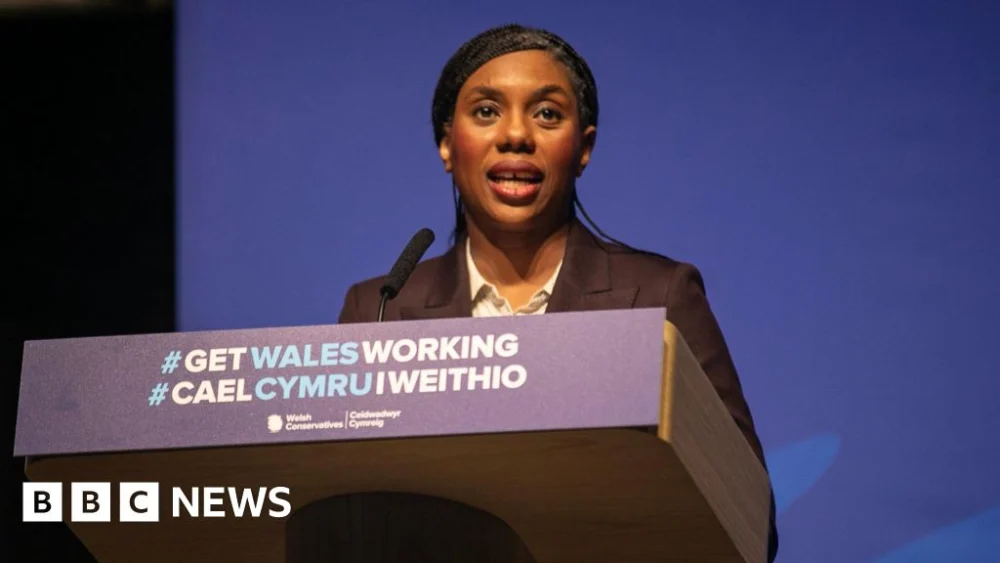
Badenoch’s appearance came at a particularly demanding juncture for the Conservative Party in Wales, a sentiment she openly acknowledged when she thanked members and officials for their steadfast commitment. "I know it’s not an easy time for Conservatives here," she conceded, referencing the prevailing national political climate and the party’s struggles to gain traction in devolved Welsh politics. Recent opinion polls paint a stark picture, suggesting the party is currently projected to secure only fourth place in the upcoming Senedd elections, scheduled for May. This challenging forecast underscores the uphill battle the Welsh Conservatives face in convincing voters that they offer a credible alternative to the long-standing Labour administration.
Adding to the party’s internal challenges, the Welsh Conservative leader in the Senedd, Darren Millar, used his speech to address the resilience of the party, even in the face of potential setbacks. Millar declared that his party would "never be beaten," a statement that seemed to implicitly acknowledge not only electoral losses but also the possibility of internal dissent or even defections, a phenomenon that has affected the broader Conservative Party in Westminster. He confidently asserted that his party had "credible" policies designed to stimulate the Welsh economy and improve public services, arguing that the country had become "broken" after 27 years under Labour government. This stark characterisation set a confrontational tone, directly challenging Labour’s record since the advent of devolution.
Badenoch’s speech echoed Millar’s criticisms of the incumbent Labour-led Welsh Government, lambasting First Minister Eluned Morgan for what she termed "bottling it" by not demanding Prime Minister Sir Keir Starmer’s resignation in the wake of the Lord Mandelson scandal. While the specific details of this alleged scandal requiring Starmer’s resignation were not elaborated, Badenoch framed it as an example of Labour’s perceived weakness and hypocrisy. She also took aim at Labour’s long-standing practice of attributing Wales’ economic woes to former Conservative Prime Minister Margaret Thatcher. Badenoch countered this historical narrative with a contemporary example, stating, "It’s not Mrs Thatcher who cancelled the M4 relief road, it’s Welsh Labour." The M4 relief road, a highly contentious project aimed at alleviating congestion around Newport, was a flagship infrastructure proposal that the Welsh Government ultimately scrapped, much to the frustration of businesses and commuters, and its cancellation remains a potent symbol of perceived Labour misgovernance for the Conservatives.
Beyond Labour, Badenoch extended her critique to other political rivals in Wales. She labelled Plaid Cymru as "economically illiterate," specifically targeting their advocacy for Welsh independence. Badenoch argued that an independent Wales "would collapse the benefits system and wreck the pension system," a common unionist argument against devolution that highlights the perceived economic vulnerabilities of a standalone Welsh state. She stressed the interdependency of the UK’s financial and social security structures, suggesting that separation would lead to severe instability for ordinary Welsh citizens.
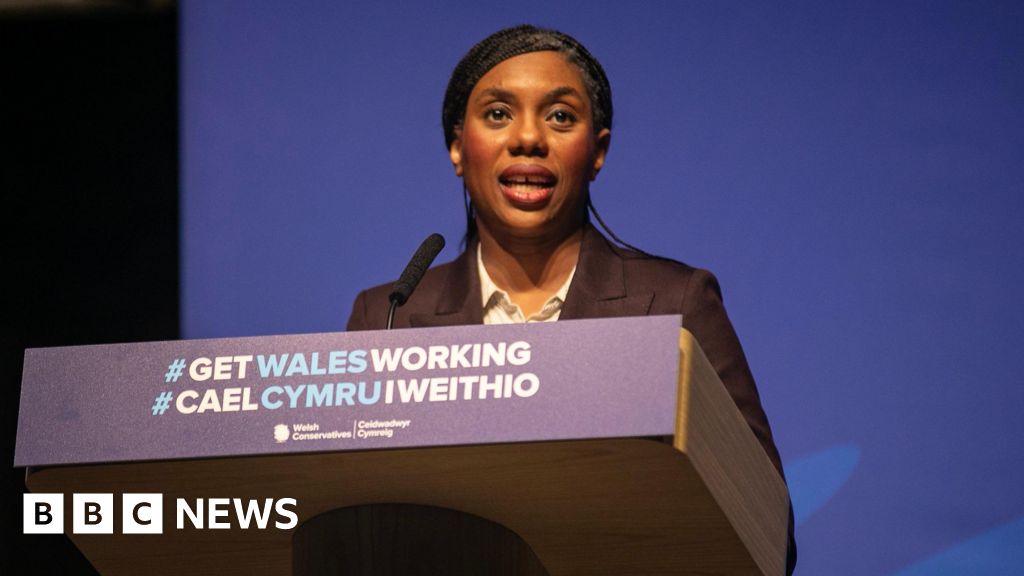
Her criticism also fell upon the burgeoning Reform UK party, which she accused of superficial patriotism and self-interest. Badenoch claimed Reform "wave their union flags around" but are primarily concerned with "getting into power" rather than genuine national interest. She went further, delivering a stinging indictment: "They are grifters more interested in lining their own pockets than standing up for the UK." This aggressive rhetoric aimed to undermine Reform’s populist appeal, positioning the Conservatives as the true custodians of British unionism and responsible governance, in contrast to what she portrayed as Reform’s opportunistic motives.
Shifting to a more constructive tone, Badenoch outlined key policy areas where the Conservatives would seek to deliver improvements. She vowed to invigorate British industry by ensuring access to cheaper energy, a cornerstone of the Conservative government’s economic strategy. Furthermore, she pledged to cut excessive regulation and foster a pro-growth environment that encourages development and construction. "We need to fall in love with building again and building things well," she declared, signalling a commitment to infrastructure development and a more dynamic economy. This vision aligns with the UK government’s broader agenda of boosting productivity and creating jobs through investment and deregulation.
When directly challenged by BBC Wales on the feasibility of a Conservative victory in Wales, Badenoch remained optimistic, stating that "anything can happen." She highlighted Wales’s new Senedd voting system, a mixed-member proportional representation system that she argued makes "every vote counts." This system, she explained, diminishes the need for tactical voting, allowing Conservative supporters across Wales to cast their ballots without concern for their vote being "wasted" in areas where the party traditionally struggles. This strategic point aims to reassure voters and activists that their participation can collectively shift the political landscape.
Interestingly, Badenoch displayed a more nuanced stance on the notion of Wales being "broken" compared to her Senedd group leader, Darren Millar, and former Conservative MP Robert Jenrick, who had previously used similar language about Britain before defecting to Reform. When pressed on whether she agreed with Millar’s assertion, she described it as "a loose framing." She elaborated, "All of this is semantics. Everyone knows there are some things that aren’t working very well, but we need to also remain positive." This subtle distinction suggests a careful balancing act, acknowledging public frustrations without adopting overly negative rhetoric that might alienate potential voters or be perceived as defeatist.
Regarding potential post-election alliances in the event of a hung Senedd, Badenoch maintained a degree of flexibility. She stated that it would be "up to local people" within her party "to decide what coalition is going to work best with them." This pragmatic approach suggests that while the party has strong ideological positions, it would be open to working with other parties if it meant forming a stable government and implementing its policies, rather than adhering to rigid pre-election commitments.
Darren Millar, in his own robust conference speech, reinforced the message of Conservative resilience. He acknowledged that the party "may suffer the odd setback from time to time," including "the occasional election loss" and even "the odd defection," but he defiantly concluded, "but we will never be beaten." This powerful declaration aimed to steel the resolve of party members and project an image of unwavering determination despite current difficulties.
Millar reiterated his assertion that Wales was "broken" after more than a quarter-century of Labour dominance, extending his criticism to include Labour’s "counterparts in Westminster" who he claimed were "failing us too." He accused Labour of having "betrayed the public," citing a range of grievances: "Farmers sold out, pubs and post offices forced to close. Business and charities hit with tax rises. Energy bill-payers clobbered." These points tapped into widespread concerns among rural communities, small businesses, and households struggling with the cost of living crisis, painting Labour as out of touch and detrimental to ordinary Welsh lives.
To counter this negative assessment, Millar presented a "raft of credible and fully costed positive policies" designed to address Wales’s challenges. Key among these proposals was a pledge to cut income tax by a penny in the pound, a move intended to stimulate the economy and provide immediate relief to taxpayers. He also vowed to tackle the pressing issue of NHS waiting lists by declaring a "health emergency," a symbolic and practical step aimed at prioritising healthcare reform and accelerating patient treatment. Such a declaration would likely unlock emergency funding and streamline decision-making processes to address the backlog of appointments and procedures.
On the contentious issue of post-election deals, Millar adopted a cautious stance, declaring, "The only deal I’m interested in is a deal with the people of Wales." While this statement did not explicitly rule out working with other parties like Reform or Plaid Cymru, it underscored his commitment to the electorate’s mandate above all else. However, he did not shy away from criticising these potential partners, accusing Plaid of wanting to "rip Wales apart from the rest of the UK" through their independence agenda, and dismissing Reform as not "serious" players in Welsh politics.
The Welsh Conservative conference, therefore, served as a crucial opportunity for the party to consolidate its message, energise its base, and present a united front. Despite acknowledging the "tough times," both Kemi Badenoch and Darren Millar projected an image of a party determined to fight for its vision of a prosperous and well-governed Wales, positioning themselves as the only credible alternative to the long-serving Labour administration and dismissing other parties as either economically misguided or politically unserious. The challenge now lies in translating this conference rhetoric into tangible electoral support in the months leading up to the Senedd elections.




 Roy Suryo

 Nakalama John
 atisusanti
