Nana Banana
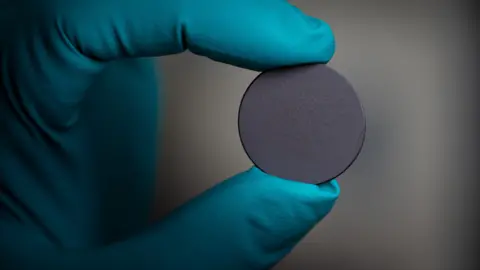
The concept of factories orbiting hundreds of kilometers above Earth, churning out materials with unprecedented purity, has long been a staple of futuristic visions. Space Forge is now turning this vision into a tangible achievement. Their innovative microwave-sized satellite, part of the ForgeStar series (specifically ForgeStar-0), is designed to leverage the unique conditions of space – primarily microgravity and vacuum – to create materials that are superior to anything currently manufacturable on Earth. The immediate focus for this cutting-edge facility is the production of advanced semiconductors, vital components found in a vast array of electronic devices, from high-speed communications infrastructure to next-generation computing and electric vehicles.
The core of this orbital factory is its powerful furnace, which has been successfully activated and brought to temperatures around 1,000C. This is a critical step, as the precise heating and cooling of materials are fundamental to crystal growth and alloy formation. The ability to maintain such extreme temperatures in the harsh vacuum of space, while precisely controlling the manufacturing environment, is a testament to the sophisticated engineering behind Space Forge’s design. The company’s Cardiff headquarters served as the mission control, where engineers monitored the satellite’s systems and validated the furnace’s performance, receiving crucial telemetry and imagery from orbit.

The inherent advantages of space for manufacturing certain materials are profound. Semiconductors, for instance, rely on a highly ordered, three-dimensional atomic structure for optimal performance. On Earth, gravity introduces imperfections: convection currents can disrupt crystal growth, and sedimentation can lead to uneven distribution of elements. In the microgravity environment of space, these disruptive forces are virtually eliminated. Atoms can arrange themselves with unparalleled precision, leading to crystals with fewer defects and superior structural integrity. Furthermore, the ultra-high vacuum of space acts as an ultimate cleanroom, preventing contaminants from infiltrating the manufacturing process, a challenge that requires immense effort and expense to mitigate in terrestrial facilities. The synergy of microgravity and vacuum results in materials that are not just incrementally better, but fundamentally superior.
Josh Western, CEO of Space Forge, articulates the transformative potential of this purity. "The work that we’re doing now is allowing us to create semiconductors up to 4,000 times purer in space than we can currently make here today," he stated. This staggering improvement in purity translates directly into enhanced performance and reliability for end products. These advanced semiconductors are not merely an upgrade; they could unlock entirely new capabilities. Imagine 5G towers with dramatically improved signal integrity, electric vehicle chargers that are significantly more efficient, or avionics systems in the latest aircraft that are orders of magnitude more reliable and powerful. Such materials could also accelerate advancements in fields like quantum computing, artificial intelligence, and advanced sensing technologies, which demand the absolute pinnacle of material science.
The journey of the mini-factory began with its launch aboard a SpaceX rocket in the summer. Since then, the dedicated team at Space Forge’s mission control in Cardiff has been meticulously testing and validating its various systems. Veronica Viera, the company’s payload operations lead, shared her excitement about receiving critical data from orbit. She highlighted an image beamed back from inside the furnace, which vividly showed plasma – gas heated to approximately 1,000C – glowing brightly. "This is so important because it’s one of the core ingredients that we need for our in-space manufacturing process," Viera explained, describing the moment of seeing the image as "one of the most exciting moments of my life." This visual confirmation not only validated the furnace’s operation but also provided invaluable data on the heating and material processing environment within the satellite, a crucial step towards repeatable and scalable production.
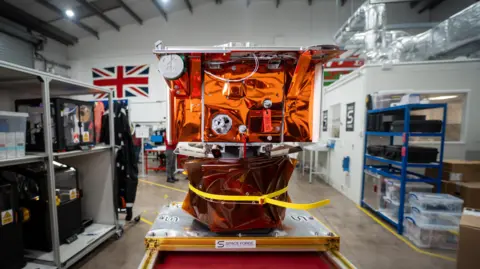
Looking ahead, Space Forge is already charting a course for expansion. The immediate success of ForgeStar-0 paves the way for the development of a larger, more ambitious space factory. This next-generation facility is envisioned to produce enough semiconductor material for as many as 10,000 chips per mission, a substantial increase in output that hints at the commercial viability of the venture. However, producing materials in space is only half the equation; bringing them safely back to Earth is equally critical and presents its own set of engineering challenges.
To address this, Space Forge plans to test advanced re-entry technology. A key component of this will be a specialized heat shield, aptly named Pridwen, after the legendary shield of King Arthur. This heat shield is designed to protect the spacecraft and its precious cargo from the extreme temperatures and immense aerodynamic forces encountered during re-entry into Earth’s atmosphere. The ability to safely and reliably return manufactured materials to Earth is paramount for the economic model of in-space manufacturing. It requires precise navigation, robust thermal protection, and controlled descent mechanisms to ensure the delicate, high-value products remain intact and uncontaminated. The development of reusable re-entry systems is also crucial for reducing costs and increasing the frequency of missions, making the entire process more sustainable and accessible.
Space Forge is not alone in recognizing the vast potential of in-space manufacturing. A growing number of companies worldwide are exploring the possibilities of orbital production for a diverse range of materials. From pharmaceuticals, where microgravity can facilitate the growth of larger, purer protein crystals for drug discovery, to specialized fiber optics with superior transmission properties, and even artificial tissues for medical research, the applications are broad and impactful. The International Space Station (ISS) has already hosted numerous experiments demonstrating these capabilities, providing a foundation for commercial ventures. Companies like Varda Space Industries and Redwire (formerly Made In Space) are also pushing the boundaries, developing their own orbital factories for various products, indicating a rapidly expanding and competitive market.
Libby Jackson, head of space at the Science Museum, succinctly captures the significance of these developments. "In-space manufacturing is something that is happening now," she affirms, highlighting the transition from theoretical concept to practical application. While acknowledging that these are still early days, with initial production volumes remaining small, Jackson emphasizes the crucial role of proving the technology. "By proving the technology it really opens the door for an economically viable product, where things can be made in space and return to Earth and have use and benefit to everybody on Earth. And that’s really exciting." This economic viability is the ultimate goal, transforming niche scientific experiments into a new industrial frontier that can generate significant economic activity, create jobs, and deliver tangible benefits for global society, pushing the boundaries of what is technologically possible.
The successful demonstration by Space Forge marks a pivotal moment. It underscores the innovative spirit of the UK’s burgeoning space sector and its ambition to be at the forefront of the global space economy. As the company progresses from validating core technologies to scaling up production and perfecting re-entry systems, the prospect of routinely manufacturing advanced materials in orbit moves ever closer to becoming a mainstream reality. This pioneering work promises not just purer semiconductors, but a new paradigm for industrial production, where the unique environment of space can be harnessed for the betterment of life on Earth.



 Ramos Leo
 atisusanti
 Roy Suryo
 George Anjay