Nana Banana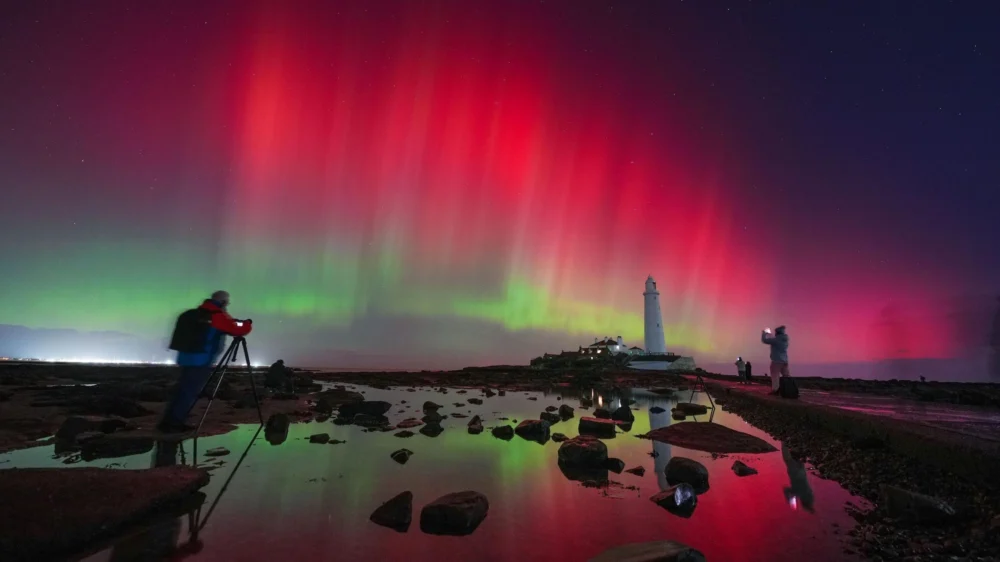
The celestial ballet of the Aurora Borealis, with its ethereal greens, reds, and purples dancing across the night sky, has captivated humanity for millennia. For skygazers in the UK and other mid-latitude regions, 2026 is shaping up to be a year of significant promise for witnessing these breathtaking displays, despite the Sun moving past its solar maximum. The past couple of years have seen the Sun in a heightened state of activity, part of its natural, approximately 11-year cycle, setting the stage for continued geomagnetic excitement.
To understand why 2026 looks so bright for aurora sightings, one must first grasp the mechanics of our star’s rhythm. The Sun operates on a well-documented solar cycle, which oscillates between periods of minimal activity, known as solar minimum, and intense activity, termed solar maximum. This cycle is driven by the Sun’s magnetic field, which periodically reverses its polarity. During solar maximum, the Sun’s surface is riddled with sunspots – cooler, darker regions of concentrated magnetic flux. These sunspots are the birthplaces of powerful solar flares and colossal coronal mass ejections (CMEs).
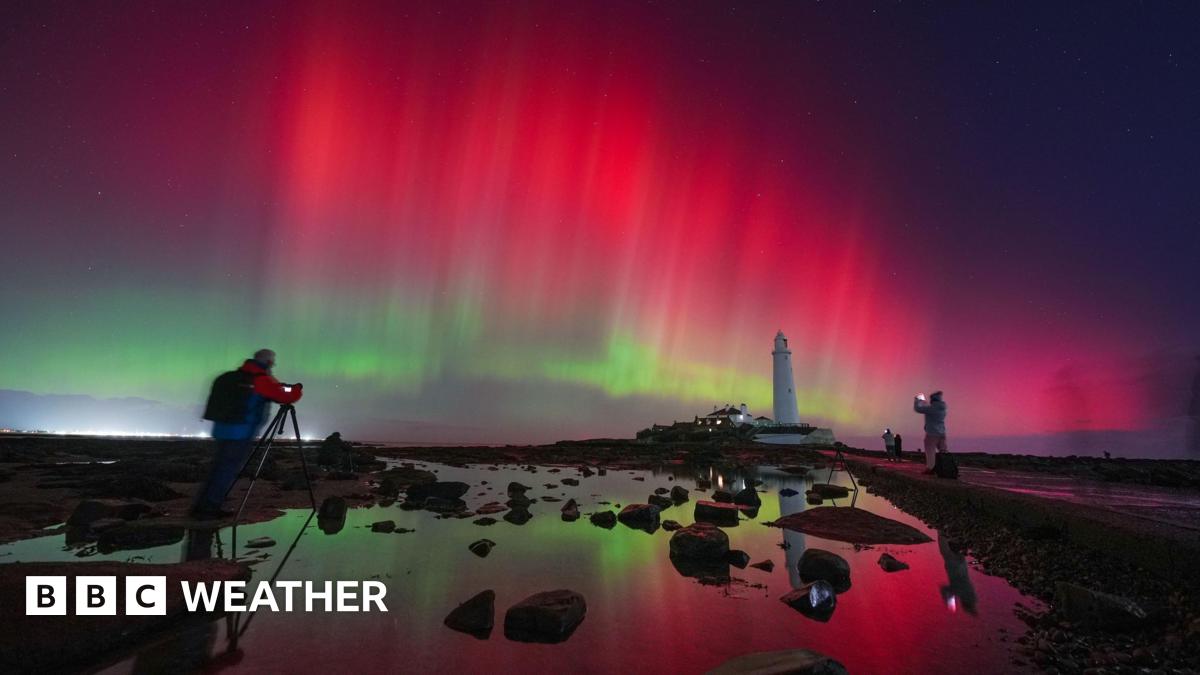
Solar flares are sudden, intense bursts of radiation emanating from the Sun’s surface, travelling at the speed of light. CMEs, on the other hand, are vast expulsions of plasma and magnetic field from the Sun’s corona, moving slower but carrying immense amounts of charged particles. When these charged particles are directed towards Earth and interact with our planet’s magnetosphere, they excite atoms and molecules in the upper atmosphere, causing them to emit light – the stunning phenomenon we know as the aurora. The colours observed – vibrant greens, reds, blues, and purples – depend on the type of gas atoms struck (oxygen for green/red, nitrogen for blue/purple) and the altitude at which the collision occurs.
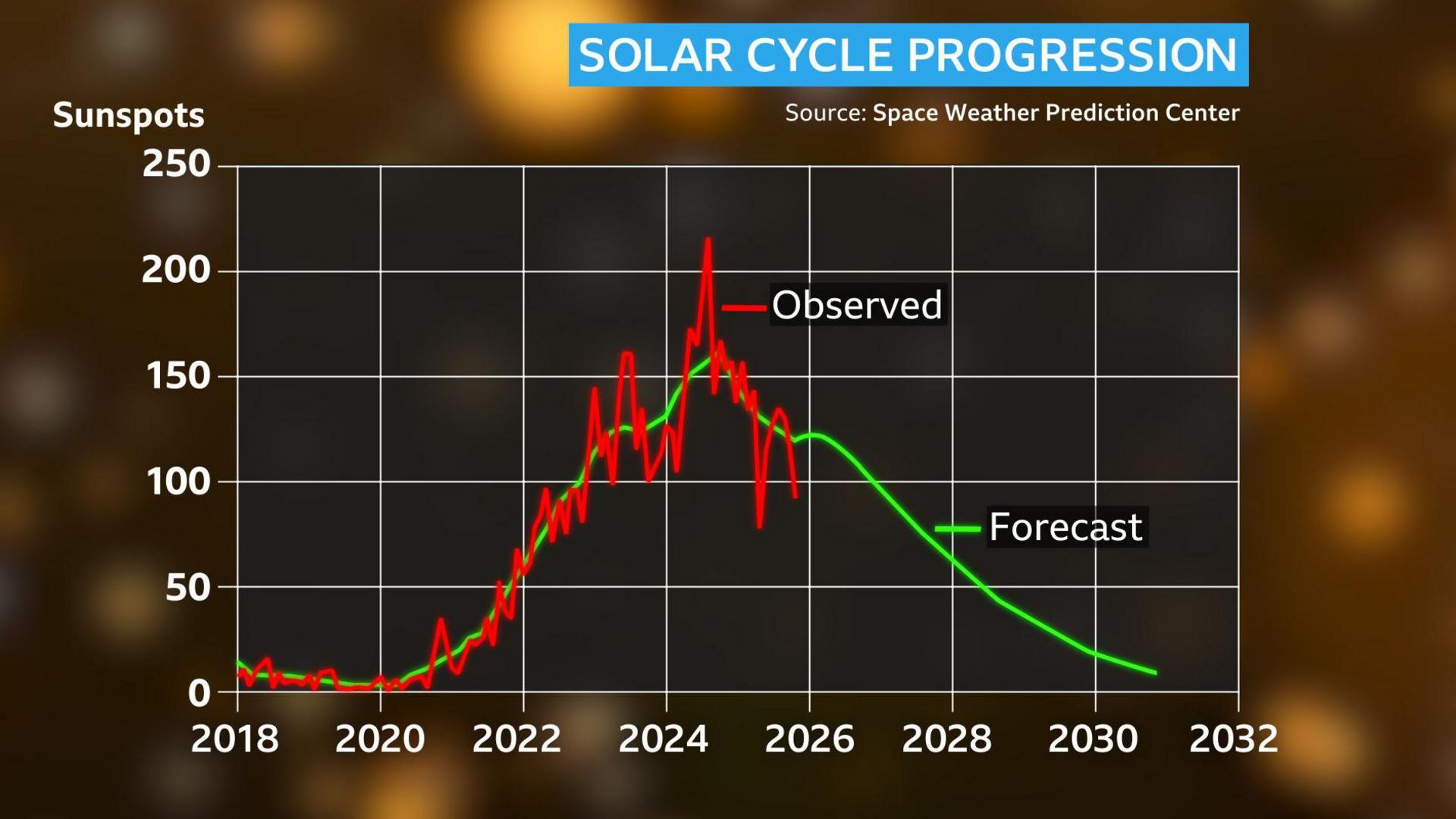
Nasa officially confirmed that the peak of the current solar cycle, Solar Cycle 25, occurred in October 2024. This period saw an exceptionally high number of sunspots, leading to a surge in solar flares and CMEs. Indeed, 2024 proved to be a remarkable year for aurora enthusiasts. In May and October of that year, the Sun unleashed two extraordinarily powerful solar flares, measuring X8.8 and X9 respectively. These "X-class" flares are the most intense category, with X10 and beyond indicating even greater magnitudes. Such potent events triggered widespread and intense aurora displays, visible far beyond the usual polar regions, reaching as far south as Devon and Cornwall in the UK.
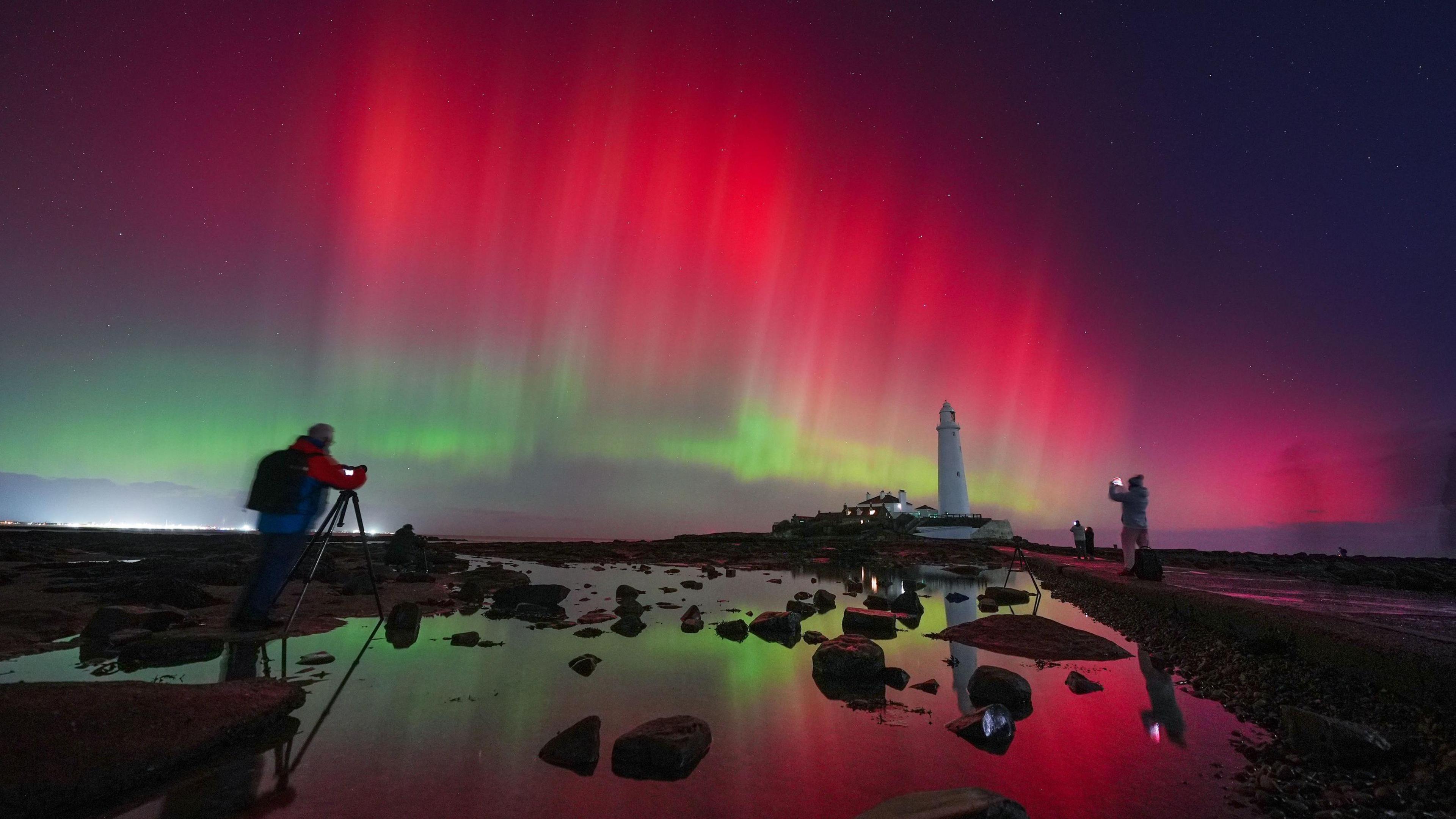
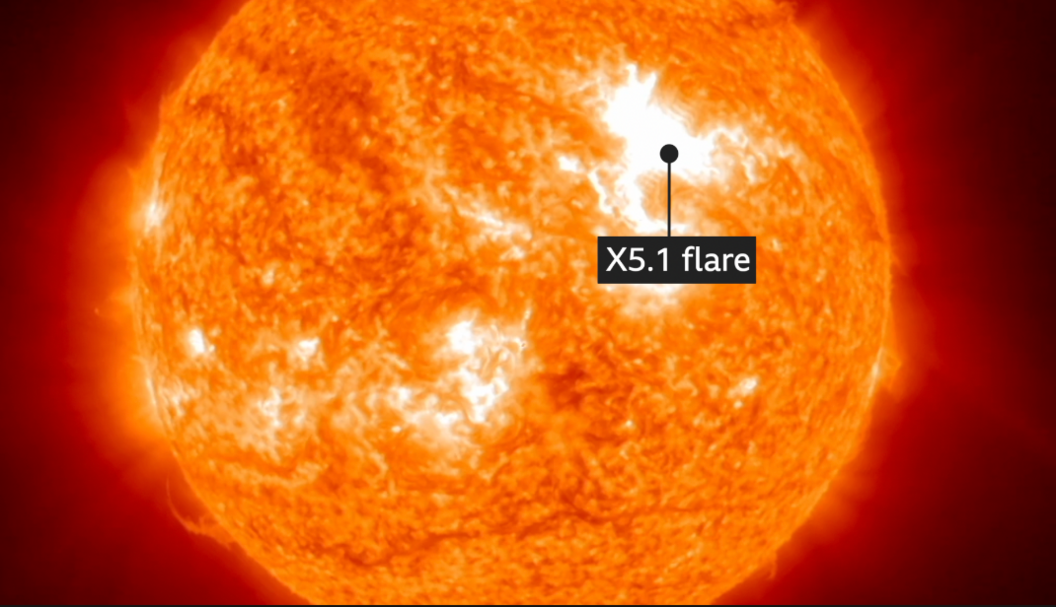
Building on this momentum, mid-November 2025 brought another significant solar event: a large X5.1 solar flare erupted from the Sun’s surface. While not as powerful as the record-breaking flares of 2024, this event still sent a substantial amount of energy towards Earth, resulting in one of the most spectacular Northern Lights displays of that year, with numerous sightings reported across the UK. These recent events serve as compelling evidence of the Sun’s current energetic state and its capacity to deliver extraordinary auroral spectacles.
Crucially, even though we are now technically past the absolute peak of Solar Cycle 25 and heading towards the "solar minimum" – which is expected to occur around 2031-32 – solar activity does not simply cease. The decline phase of the solar cycle is often characterized by complex and unstable magnetic fields, which can still produce powerful and geoeffective solar flares and CMEs. This means that while the frequency of sunspots may gradually decrease, the intensity of individual events capable of triggering auroras can remain high for several years post-peak. Therefore, solar activity is predicted to remain relatively high throughout 2026, offering numerous opportunities for aurora chasers.
It only takes one large solar flare or a well-directed coronal mass ejection to produce a stunning Northern Lights display across the UK. The Sun is a dynamic entity, and even during its descent towards quiescence, it can throw powerful punches. Furthermore, specific astronomical alignments enhance the probability of aurora sightings. The spring and autumn equinoxes, occurring around March 20th and September 22nd respectively, are particularly auspicious times. This phenomenon is known as the Russell-McPherron effect. During the equinoxes, the Earth’s tilt relative to the Sun results in a more favourable alignment of our planet’s magnetic field with the interplanetary magnetic field (IMF) carried by the solar wind. This alignment makes it easier for solar wind particles to penetrate Earth’s magnetosphere, thereby increasing the likelihood and intensity of auroral displays. Historically, observers are roughly twice as likely to witness the aurora during these periods, making the equinoxes of 2026 prime targets for observation.
Beyond the Sun’s inherent activity, advancements in technology and forecasting have dramatically improved our chances of witnessing the Northern Lights, even from less conventional locations. Gone are the days when a trip to the Arctic Circle was almost a prerequisite. Today, a sophisticated network of satellites continuously monitors the Sun and the space environment between our star and Earth. Missions like NOAA’s GOES, NASA’s STEREO, SOHO, ACE, and DSCOVR spacecraft provide real-time data on solar flares, CMEs, and the characteristics of the solar wind, including its speed, density, and magnetic field orientation.
This wealth of data empowers space weather forecasters to predict when these solar events might impact Earth, often with several days’ warning. Organizations like the Space Weather Prediction Center (SWPC) in the US and the Met Office Space Weather Operations Centre (MOSWOC) in the UK issue alerts and forecasts, including the Kp-index (a measure of geomagnetic activity) and G-scale geomagnetic storm warnings. These warnings are now readily accessible to the public through dedicated websites, mobile apps, and social media channels. This improved communication means that aurora enthusiasts can be alerted to potential displays, allowing them to prepare and seek out optimal viewing conditions.
Moreover, the ubiquity and sophistication of modern smartphone cameras have democratized aurora photography. What once required specialized equipment and expertise can now be captured with surprising clarity by a decent phone camera, even for weaker displays that might be barely visible to the naked eye. The ability to instantly share these images on social media platforms, often tagged with location data, creates a virtuous cycle: more people capture photos, more people are inspired to look up, and the collective reporting helps validate and refine forecasting models. Platforms like BBC Weather Watchers leverage this citizen science, allowing ordinary people to contribute to a broader understanding of meteorological and astronomical phenomena.
For those hoping to catch a glimpse of the Northern Lights in 2026, preparation is key. Seek out locations away from urban light pollution, with an unobstructed view of the northern horizon. Dark, clear nights are essential. Patience is a virtue, as displays can be sporadic and vary in intensity. Staying informed via space weather forecasts and local aurora alert groups will maximize your chances.
In conclusion, while the Sun may be easing past its maximum activity, 2026 holds significant potential for spectacular Northern Lights displays. The residual high solar activity, coupled with the predictable enhancements of the equinoxes and revolutionary advancements in space weather forecasting and personal photography, makes it a year for hopeful anticipation. So, keep an eye on the sky, stay informed, and prepare to be dazzled by the Sun’s magnificent artistry in Earth’s atmosphere.



 Roy Suryo