Nakalama John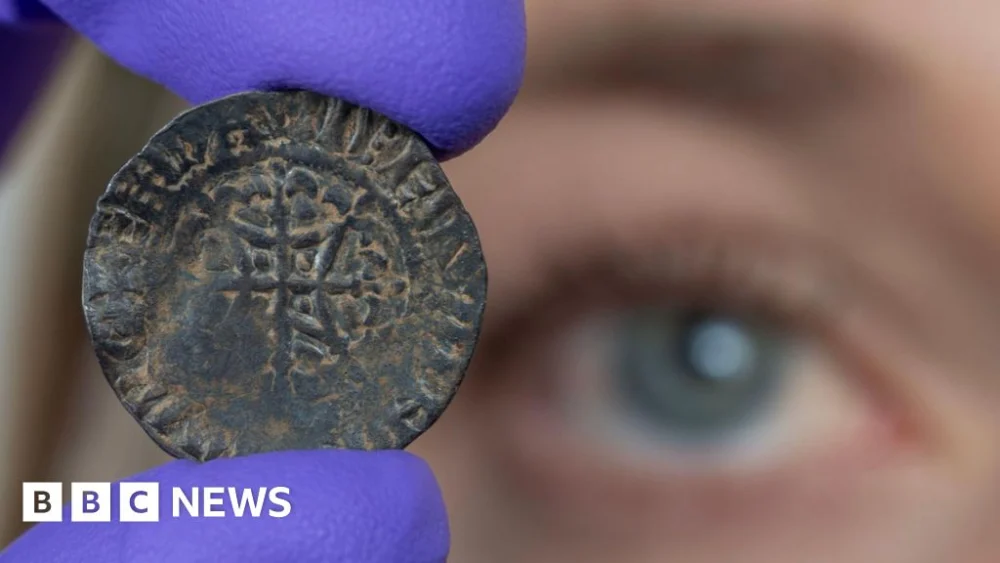
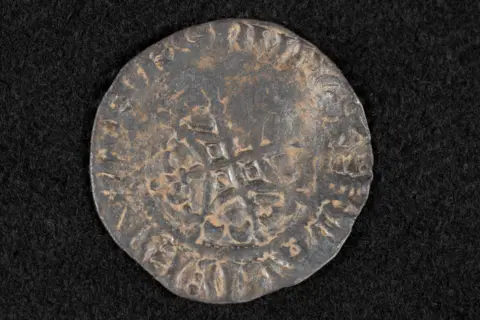
The earliest known coin definitively minted on Scottish soil, a remarkable silver penny dating back almost nine centuries, has been secured for the nation following its discovery by a metal detectorist. This singular artefact, a testament to the nascent economic ambitions of a burgeoning kingdom, represents a pivotal moment in Scottish history, offering unprecedented insights into the reign of King David I and the establishment of a distinct Scottish identity.
Discovered in 2023 within a wooded area near Penicuik, Midlothian, the medieval David I silver coin has been meticulously dated to the second half of the 1130s. Its unearthing was a triumph for the diligent metal detectorist, whose adherence to legal protocols ensured its preservation. In accordance with Scottish law, the find was promptly reported to Treasure Trove Scotland, the body responsible for administering the law of treasure trove north of the border. Following expert assessment by the Scottish Archaeological Finds Allocation Panel, the coin was officially allocated to National Museums Scotland (NMS), a fitting home for such a nationally significant object. To acknowledge the finder’s role and encourage future responsible reporting, a reward of £15,000, determined by the coin’s substantial value, was paid by the King’s and Lord Treasurer’s Remembrancer. This system underscores Scotland’s commitment to safeguarding its archaeological heritage while fairly compensating those who bring such treasures to light.
National Museums Scotland has confirmed that this invaluable coin will initially be dedicated to comprehensive research, allowing curators and numismatists to unlock its full historical potential. There are strong aspirations for the coin to eventually go on public display, offering Scots and visitors alike a tangible connection to the nation’s distant past and the very origins of its monetary system. Its presence in the national collection promises to enrich our understanding of medieval Scottish economics, governance, and identity.
King David I, who ruled Scotland from 1124 until 1153, is widely regarded as one of the most transformative monarchs in Scottish history. His reign, often dubbed the "Davidian Revolution," saw profound changes that laid many of the foundations for the modern Scottish state. Among his many innovations, the introduction of the country’s first systematic coinage was a monumental step, signifying a move towards a more sophisticated and centralised economy, and asserting the kingdom’s sovereignty on a tangible, economic level. Prior to David I, Scotland relied heavily on foreign currency, primarily Anglo-Saxon and continental European coins, or simply operated on a less formal, barter-based system. The creation of a national coinage was a clear statement of independent authority and a vital tool for facilitating trade, taxation, and the consolidation of royal power.
Alice Blackwell, the Senior Curator of Medieval Archaeology and History at National Museums Scotland, highlighted the profound significance of this particular find. Historically, it was believed that all of King David I’s earliest coins were produced in a mint located in Carlisle, Cumbria. David I had seized control of Carlisle in the early 1130s, and it was thought that its established minting facilities provided the initial infrastructure for his new coinage. However, the Penicuik discovery challenges and fundamentally reshapes this long-held assumption.
"This coin is really significant," Dr. Blackwell explained, "because it’s the first of that earliest type, the earliest coins to actually have been minted outside of Carlisle. It was minted in Edinburgh, so it’s the first time that we have Scottish coinage being minted in what was a core part of the Scottish kingdom." This revelation is a game-changer for understanding the geographical spread and administrative capabilities of David I’s nascent monetary system. It demonstrates that minting operations were established in the heartland of the Scottish kingdom much earlier than previously thought, underscoring Edinburgh’s emerging importance as a royal centre even in the mid-12th century. The coin thus not only sheds light on numismatics but also on the political and administrative geography of early medieval Scotland.
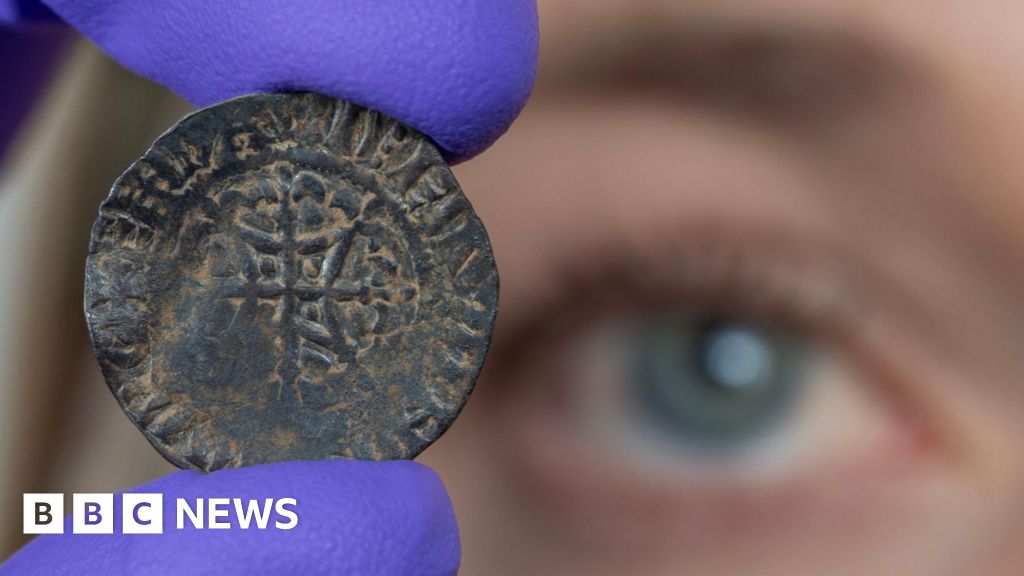
The physical attributes of the coin itself are equally compelling. Crafted from silver, it features a clear portrait of the monarch’s head on one side, a common practice in medieval coinage designed to project royal authority and legitimacy. The reverse side displays a distinctive cross-based design, emblematic of Christian symbolism prevalent throughout medieval Europe. Crucially, the coin also bears an inscription, which, upon careful examination, clearly indicates that it was minted in Edinburgh. This epigraphic evidence is what firmly establishes its origin and provides the definitive proof needed to revise historical understanding. The quality of the strike and the design elements speak volumes about the metallurgical skills and artistic conventions of the period, offering a direct glimpse into the technological capabilities of 12th-century Scottish artisans.
The discovery will undoubtedly allow experts to significantly expand their understanding of how and where coins were produced in medieval Scotland. Dr. Blackwell emphasized the scarcity of written records detailing medieval minting practices. "There was virtually no documentary sources that explained how coinage was produced in Scotland," she noted. "The coins themselves are the primary source. This is the first time that we can see this very early minting of coinage in Edinburgh." Each new coin, especially one of such early vintage and unique provenance, acts as a primary historical document, offering irrefutable evidence that can fill gaps in our historical narrative where written records are silent or absent. Researchers will now be able to compare this Edinburgh-minted coin with those believed to be from Carlisle, examining differences in style, die-cutting, metal composition, and wear patterns to glean further insights into the independent development of Scottish minting.
The early Scottish coins, particularly those from David I’s reign, are exceedingly rare. Their scarcity is a combination of factors: the relatively limited initial production, the passage of nearly nine centuries during which countless coins were lost, melted down for their silver content, or simply worn out of circulation. This rarity amplifies the importance of every new discovery. Dr. Blackwell reiterated that the finding of even one more such coin has the potential to dramatically increase our understanding of the foundational principles of Scottish coinage, how it was initially produced, and the mechanisms through which it began to circulate and integrate into the Scottish economy.
The "Davidian Revolution" extended far beyond coinage. David I was a pivotal figure in the process of feudalisation in Scotland, introducing Anglo-Norman institutions, personnel, and customs. He established a network of royal burghs, strategically located centres that fostered trade and economic growth, such as Perth, Dunfermline, Stirling, Berwick-upon-Tweed, Aberdeen, St Andrews, and Roxburgh in the Scottish Borders. Significantly, many of these burghs would later host their own royal mints, demonstrating the gradual decentralization and expansion of Scotland’s monetary system under David and his successors. His reign also saw the reorganisation of civil institutions, the strengthening of the monarchy’s administrative reach, and the reform of the Scottish Church, bringing it more in line with continental European practices. The introduction of coinage was intrinsically linked to these broader reforms, providing the financial infrastructure necessary to support a more complex and centralised state.
While David I initially held Carlisle and its mint, his political landscape was fluid. He eventually lost control of Carlisle, which underscores the strategic importance of establishing mints within his secure Scottish territories. The Edinburgh coin, therefore, represents not just an economic development but also a strategic assertion of royal control over the kingdom’s financial instruments, independent of fluctuating border territories.
The preservation of this extraordinary coin by National Museums Scotland ensures that it will serve as an enduring educational resource. It will allow future generations to engage directly with a tangible piece of their heritage, understanding the profound shifts that occurred during David I’s reign. This small silver disk, almost 900 years old, is more than just an ancient artefact; it is a powerful symbol of Scotland’s early nation-building efforts, its burgeoning economic independence, and the enduring legacy of one of its most influential monarchs. Its journey from a wooded area in Midlothian to a national museum exemplifies the ongoing importance of archaeological discovery in continually enriching our understanding of Scotland’s rich and complex past.




 Roy Suryo