Nana Banana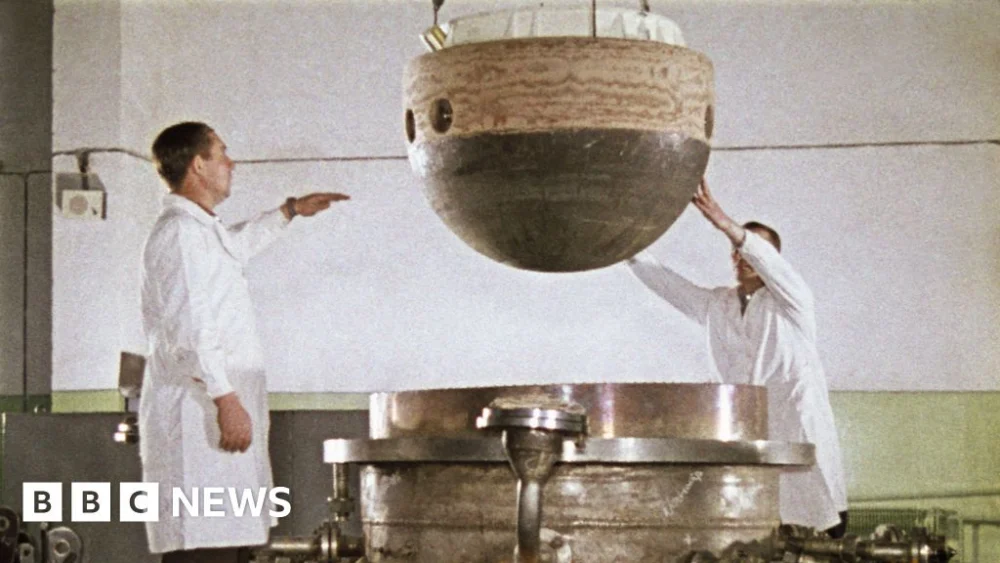
Launched on March 31, 1972, Kosmos 482 was intended as a backup or twin probe to the successful Venera 8 mission, part of the Soviet Union’s ambitious program to explore Venus during the height of the space race. The mission’s primary objective was to deploy a lander onto the surface of Venus to gather atmospheric and surface data, a feat of engineering given the planet’s notoriously hostile environment. However, shortly after its launch, the mission encountered a critical failure. The Blok D upper stage of its Molniya-M launch vehicle, responsible for propelling the probe out of Earth orbit and towards Venus, suffered an anomaly. Reports suggest an insufficient burn time or a premature shutdown, which left Kosmos 482 stranded in a highly elliptical Earth orbit instead of embarking on its interplanetary journey.
This failure meant that Kosmos 482 never made it out of Earth’s gravitational embrace. Instead, the craft broke into four distinct pieces shortly after its launch failure, likely due to residual propellant venting or structural stresses. These fragments have been circling the planet for more than five decades, becoming a persistent object of interest for space debris trackers. For years, experts have been monitoring these pieces, anticipating their eventual, uncontrolled re-entry into Earth’s atmosphere.
The EU Space Surveillance and Tracking (SST) Centre, a consortium of European nations working under ESA coordination, has been diligently tracking these fragments. Their analysis indicates that one specific piece – widely believed to be the lander capsule due to its unique resilience – "most likely" re-entered the atmosphere at approximately 06:16 GMT (07:16 BST) on Saturday. The precise moment and location of re-entry are often difficult to pinpoint for uncontrolled objects, even with advanced tracking capabilities, due to the unpredictable nature of atmospheric drag and the dynamic interaction with Earth’s upper atmosphere.
A significant uncertainty remains regarding the fate of the re-entering object: whether it completely burned up during its fiery descent or if any substantial pieces managed to survive and fall to the ground. Compounding this uncertainty is the lack of a definitive impact location. Given that approximately 70% of Earth’s surface is covered by oceans, the probability of any surviving debris landing in an unpopulated area, particularly in the vast expanses of the sea, is exceedingly high. This significantly reduces the risk of any significant damage or harm to human life.
Stijn Lemmens, a senior analyst at the European Space Agency, underscored this point, stating, "It’s much more likely that you win the lottery than that you get impacted by this piece of space debris." This analogy serves to put the risk into perspective, emphasizing the extremely low probability of any direct harm from re-entering objects, especially considering the vastness of the Earth and the typical disintegration of most space hardware upon atmospheric re-entry.
What makes the Kosmos 482 lander particularly noteworthy is its exceptionally robust construction. Unlike most satellites designed for Earth orbit, this capsule was engineered to withstand the brutal conditions of Venus’s atmosphere. Venus boasts an atmospheric pressure approximately 92 times that of Earth’s sea level and surface temperatures soaring to around 462 °C (864 °F). To survive this hellish environment, the lander was equipped with a formidable heat shield made of advanced ablative materials and a durable, pressure-resistant structure, likely incorporating titanium alloys and specialized ceramics. This extreme engineering, intended to protect sensitive instruments during its descent through Venus’s dense, corrosive atmosphere, is precisely why experts believe it had a higher chance of surviving an uncontrolled re-entry through Earth’s much thinner atmosphere, potentially reaching the ground in some form.
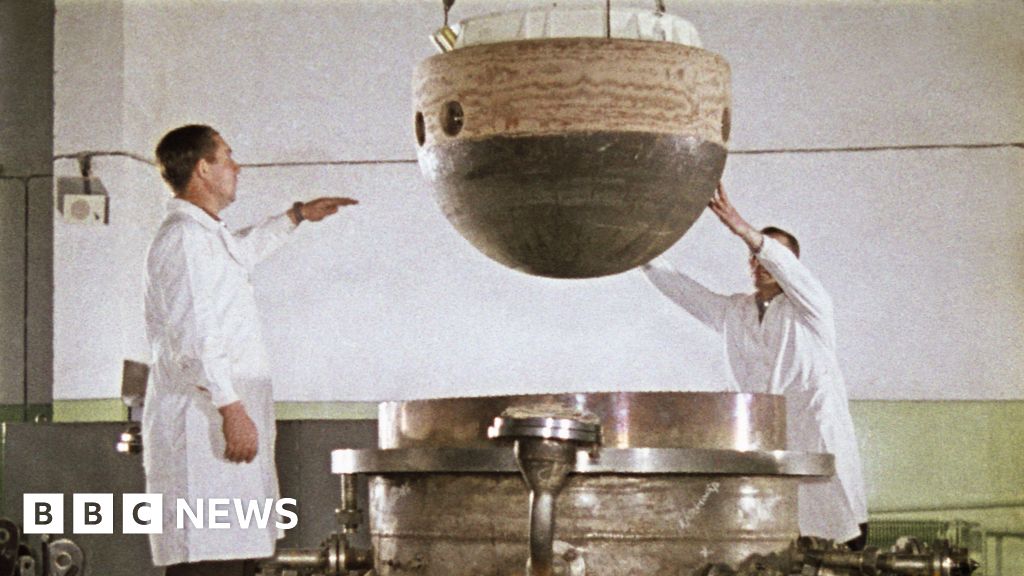
However, even with such robust design, half a century in the harsh vacuum of space takes its toll. The lander’s parachute system, originally intended to slow its descent towards Venus, is highly likely to have degraded significantly over its 52 years in orbit. Exposure to unfiltered solar radiation, micrometeoroid impacts, and extreme temperature fluctuations would have severely compromised the integrity of its fabrics and deployment mechanisms. Therefore, even if parts of the lander survived re-entry, its descent would have been largely unimpeded by any functional parachute, meaning any surviving fragments would have impacted the Earth at considerable speed.
Mr. Lemmens further elaborated on the general phenomenon of space debris re-entry, explaining that the "re-entry of human-made objects into Earth’s atmosphere occurs quite frequently." He noted that larger spacecraft re-enter on a weekly basis, while smaller pieces of debris can re-enter daily. The vast majority of these objects, due to their size, composition, and re-entry angle, typically burn up entirely in the Earth’s atmosphere, creating fleeting meteor-like streaks that are rarely observed and pose no threat. Only a small fraction of the most massive or structurally resilient components manage to survive and reach the ground.
The saga of Kosmos 482 is a vivid illustration of the growing challenge of space debris. As humanity launches more satellites and conducts more space missions, the amount of orbital junk accumulates, increasing the risk of collisions and the frequency of re-entries. International space agencies, including ESA, NASA, and others, are continuously tracking tens of thousands of objects in orbit, ranging from defunct satellites and spent rocket stages to tiny fragments created by collisions. This tracking network uses a combination of ground-based radars, optical telescopes, and orbital sensors to maintain a comprehensive catalogue of space objects, allowing for predictions of potential collisions and re-entry events.
The re-entry of Kosmos 482 serves as a stark reminder of the need for responsible space stewardship. Looking to the future, Mr. Lemmens emphasized that spacecraft "should be designed in such a way that they can take themselves out of orbit safely, preferably by doing controlled re-entries." Controlled re-entries involve actively guiding a spacecraft to burn up over unpopulated areas, typically vast oceanic regions, at the end of its operational life. This allows for precise predictions of landing locations, virtually eliminating the risk of any debris impacting populated areas and safeguarding both people and property.
Beyond controlled re-entries, the international space community is actively pursuing a range of mitigation strategies to combat the space debris problem. These include "passivation," where spacecraft are designed to safely discharge propellants and batteries at the end of their mission to prevent explosions that could create more debris. Another approach is "design for demise," which involves using materials and structural configurations that ensure complete disintegration during atmospheric re-entry. Furthermore, research into "active debris removal" technologies, which aim to physically remove existing large pieces of space junk from orbit, is gaining momentum, though these solutions are still in their early stages of development.
Organizations like the Inter-Agency Space Debris Coordination Committee (IADC), which includes major space agencies worldwide, work to establish and promote international guidelines for space debris mitigation. These guidelines aim to ensure the long-term sustainability of space activities by encouraging best practices throughout the lifecycle of a spacecraft, from design and launch to end-of-life disposal.
In conclusion, the probable re-entry of a piece of Kosmos 482, an unfortunate relic of the early space age, highlights the enduring legacy of past space endeavors and the intricate challenges posed by orbital debris. While the immediate risk from this particular event is minimal, it underscores the critical importance of developing and adhering to sustainable practices in space. As humanity ventures further into the cosmos, careful management of our orbital environment will be paramount to protect vital space infrastructure, ensure safe operations, and preserve the accessibility of space for future generations. The half-century journey of Kosmos 482 from a failed Venus mission to an anticipated fiery demise serves as a compelling narrative in the ongoing story of space exploration and its unforeseen consequences.




 Roy Suryo
 George Anjay
 Ramos Leo
 atisusanti