
 Roy Suryo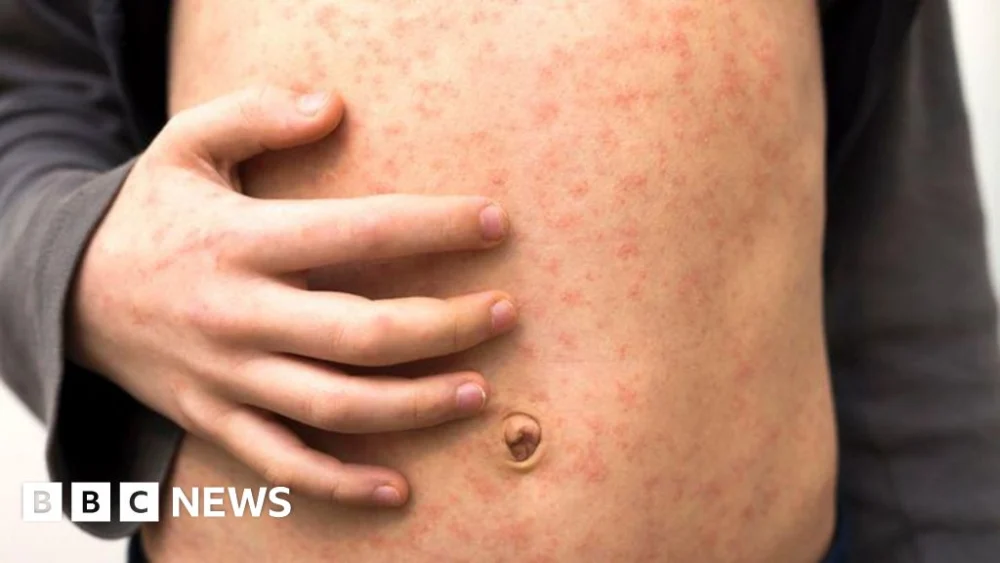
A concerning and "fast-spreading" measles outbreak has gripped several schools in North London, infecting at least 34 children and prompting urgent calls for increased vaccination rates. The alarming surge in cases, primarily concentrated in the Enfield borough, has been confirmed by laboratory tests conducted in January, according to the UK Health Security Agency (UKHSA). The severity of the outbreak is underscored by reports from a local GP surgery, which revealed that a significant one in five infected children required hospital admission, with all of these cases involving individuals who had not been fully immunised. Health officials are now imploring families to ensure their children are up-to-date with their immunisations against this highly contagious and potentially dangerous disease, which can lead to serious health complications.
Enfield’s NHS Ordnance Unity Centre For Health has issued a stark warning on its website, describing the situation as a "fast-spreading measles outbreak in several schools" across the borough. The infections have been officially confirmed in a minimum of seven schools within Enfield and its neighbouring borough, Haringey. Councillor Alev Cazimoglu of Enfield Council expressed her deep concern, noting that the current outbreak has "mainly affected children and some have required additional care with a short stay in hospital." She emphatically stated, "Vaccination is the most effective way to protect yourself and your family. We urge everyone who is not fully vaccinated to act now." In response to the escalating crisis, Enfield Council has announced it is collaborating closely with the UKHSA, the NHS, and local partners to implement measures aimed at curbing further transmission in strict adherence to national public health guidance.
Dr. Vanessa Saliba, a specialist from the UKHSA, described the outbreak as "big" and highlighted that it is "mostly affecting unvaccinated children under 10 in schools and nurseries." She stressed the critical importance of vaccination, explaining, "Measles is a nasty illness for any child, but for some it can lead to long term complications and tragically death, but is so easily preventable with two doses of the MMRV [measles, mumps, rubella, chickenpox] vaccine." Dr. Saliba urged parents whose children may have missed scheduled vaccine doses to "catch up as soon as possible" to safeguard not only their own children but also other vulnerable individuals, including younger children who are too young to be vaccinated or those who cannot be vaccinated due to underlying health conditions. Furthermore, she advised individuals planning international travel over the upcoming Easter holidays to "check their vaccination status," citing the widespread nature of measles in certain countries with strong links to the UK and ongoing outbreaks across parts of Europe.
The rise in measles cases in the UK and globally is a significant public health concern, with declining vaccination uptake identified as a primary contributing factor. Worryingly, UKHSA figures released last August painted a grim picture for Enfield, revealing that only 64.3% of five-year-olds had received both doses of the MMR vaccine in the 2024/25 period, a rate alarmingly lower than the national average and one of the lowest in the country. Across the entire UK, statistics from 2023-24 indicated that 84.4% of children had received two MMR doses by their fifth birthday, a figure that has been steadily declining from a peak of 88.8% in 2014-15. The World Health Organization (WHO) has consistently recommended a vaccination coverage rate of 95% for measles elimination. In a stark acknowledgment of the deteriorating situation, the WHO announced in January that the UK had unfortunately lost its measles elimination status following a surge in outbreaks during 2024.
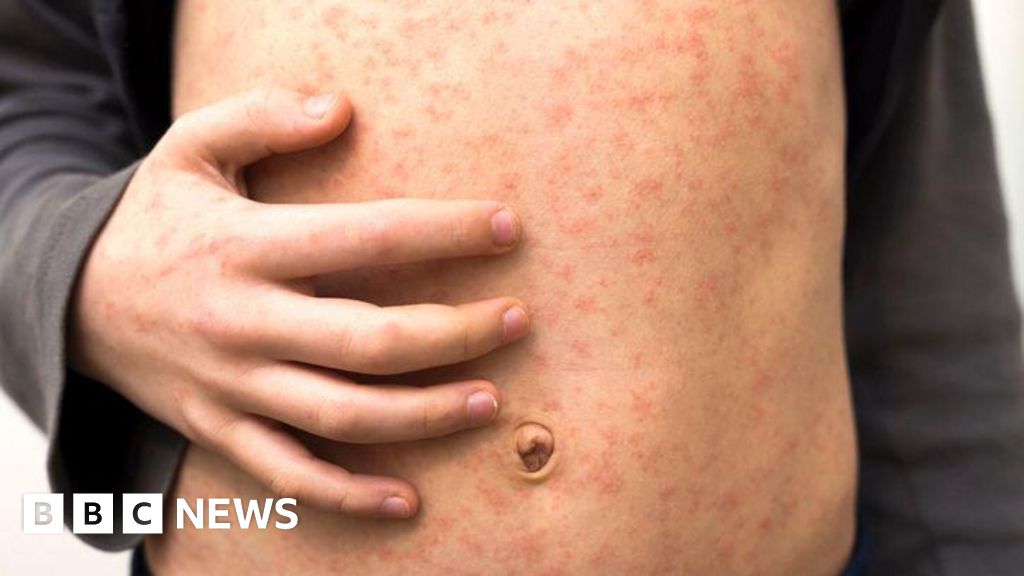
Measles, a highly contagious viral illness, poses a serious threat, particularly to young children. It is spread through airborne droplets from coughing and sneezing, as well as by direct contact with contaminated surfaces. The initial symptoms of measles typically include a fever, cough, runny nose, and red, watery eyes. A distinctive characteristic of measles is the appearance of small, white spots, known as Koplik’s spots, which may develop inside the mouth, usually a day or two before the characteristic rash emerges. The measles rash is typically blotchy, red or brown, and often begins behind the ears before spreading across the face and then down to the rest of the body. It is important to note that the visibility of this rash can vary, potentially appearing less obvious on darker skin tones.
The implications of contracting measles extend far beyond the immediate discomfort. While many children recover without lasting effects, measles can lead to severe complications, including pneumonia, encephalitis (swelling of the brain), and, in rare but tragic instances, death. These complications are significantly more likely in individuals with weakened immune systems, such as those undergoing chemotherapy or living with HIV/AIDS, as well as in very young infants who are too young to have received the vaccine. The MMR vaccine, administered in two doses, offers robust protection against measles, mumps, and rubella. The first dose is typically given around 12 to 15 months of age, with the second dose administered between four and six years old.
The current outbreak in North London serves as a critical reminder of the importance of herd immunity, a concept where a sufficiently high percentage of the population is immune to a disease, thereby providing indirect protection to those who are not immune. When vaccination rates fall below the critical threshold, pockets of susceptible individuals emerge, creating fertile ground for the rapid spread of highly contagious diseases like measles. The low vaccination rates observed in Enfield, and the concerning national decline, highlight a systemic challenge in achieving and maintaining optimal public health protection.
The UKHSA and local health authorities are working diligently to address the outbreak. This includes enhanced surveillance to identify new cases, contact tracing to limit further spread, and intensified public health campaigns to encourage vaccination. Parents are being urged to consult with their GPs or local health centres to confirm their children’s vaccination status and to book appointments for any missed doses. The message is clear: the MMR vaccine is safe, effective, and the most powerful tool available to protect children and communities from the devastating impact of measles. The resurgence of this preventable disease underscores the ongoing need for vigilance, education, and a collective commitment to achieving and sustaining high vaccination coverage rates across all communities. The health of our children and the integrity of our public health systems depend on it.




 Nakalama John
 atisusanti
 Ramos Leo
