
 Ramos Leo
The UK government is reportedly deliberating a substantial acceleration in its defence spending commitments, with Downing Street actively exploring proposals to reach a target of 3% of national wealth, measured as Gross Domestic Product (GDP), significantly earlier than initially planned. This potential move, if enacted, would represent a multi-billion-pound investment in the nation’s armed forces, signalling a profound shift in strategic priorities amidst escalating global threats.
Prime Minister Rishi Sunak had previously pledged to allocate 2.5% of GDP to core defence by April 2027, while also outlining a broader "ambition" to further elevate this spending to 3% of GDP during the subsequent parliamentary term. However, inside sources indicate that the Prime Minister’s advisors are now reviewing options to achieve this ambitious 3% target by the conclusion of the current parliament, which could extend until late 2029. This accelerated timeline underscores a growing sense of urgency within Whitehall regarding the UK’s defence capabilities and its role on the international stage.
The discussions come against a backdrop of heightened geopolitical instability, prominently featuring Russia’s ongoing war in Ukraine, persistent tensions in the Middle East, and a more assertive China in the Indo-Pacific. These complex challenges have prompted a re-evaluation of national security needs across Western allies, with many, including the UK, facing pressure to bolster their military readiness and capabilities.
A key indicator of this evolving sentiment came from Sir Keir Starmer, Leader of the Opposition, during his address at the recent Munich Security Conference. Signalling a rare bipartisan consensus on defence, Sir Keir unequivocally stated, "To meet the wider threat, it’s clear that we are going to have to spend more, faster." He emphasised the necessity to "build our hard power because that is the currency of our age," advocating for greater investment, more efficient delivery, and enhanced coordination with allies. Starmer’s remarks, particularly his call for "generational investments that move us from over-dependence to interdependence" with the United States, and increased cooperation with European partners to support Ukraine, resonated with defence circles. One defence source reportedly observed that Starmer’s speech sounded like an argument for increased defence spending, with the actual announcement being the only missing element.
The impetus for this potential spending hike also stems from stark assessments of the UK’s current military capacity. Sir Richard Knighton, Chief of the Defence Staff, candidly informed Members of Parliament in January that the armed forces "cannot do everything we would want to do, as quickly as we want to do it, within the context of the budget we have set." This admission highlights a critical gap between existing defence commitments and the rising costs of maintaining, modernising, and expanding military capabilities. Officials suggest that this sobering realisation – that current funding levels are insufficient to cover both existing operational bills and future defence commitments – is a primary driver behind the push to bring forward the higher spending targets.
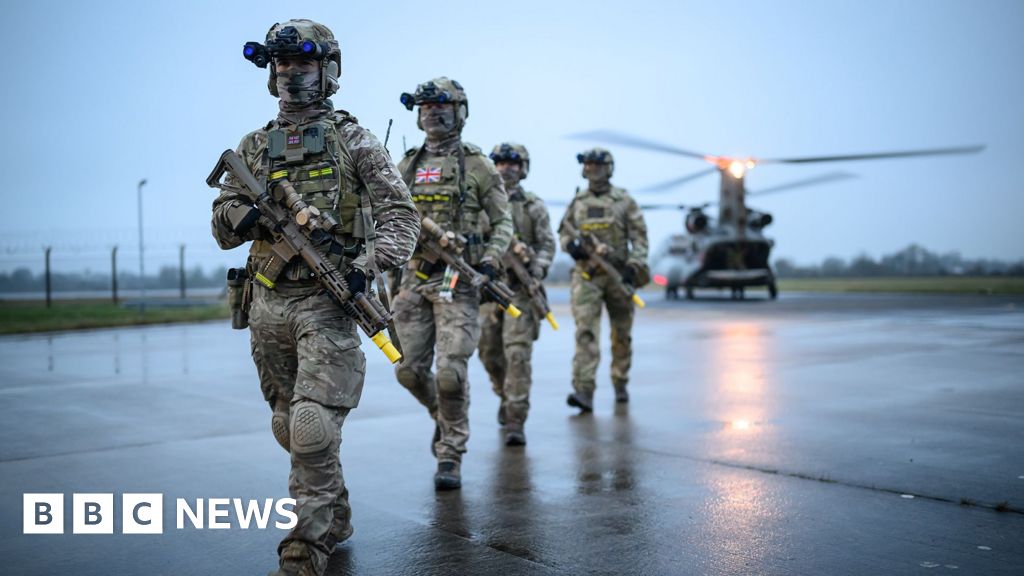
While the strategic imperative for increased defence spending appears to be gaining traction, the financial implications are considerable and are met with caution, particularly from the Treasury. Reaching the 3% of GDP target five years ahead of schedule would entail a significant financial outlay. The Office for Budget Responsibility (OBR), the UK’s independent fiscal watchdog, estimated in March of the previous year that increasing defence spending to 3% of GDP would require an additional £17.3 billion per year by 2029-30. Separately, Bee Boileau, a research economist at the Institute for Fiscal Studies (IFS), offered a slightly lower estimate, suggesting an extra £13-14 billion would be needed once existing planned increases are factored in.
These figures underscore the scale of the financial challenge. The UK’s defence spending last year stood at approximately 2.3% of GDP, amounting to around £66 billion. While this comfortably exceeds NATO’s baseline 2% target, the alliance has also committed to an "ambition" for all members to spend 3.5% of GDP on defence by 2035. Bringing forward the 3% target would position the UK as a leading contributor within NATO, potentially influencing other allies to follow suit.
The Treasury’s cautious stance is understandable given the UK’s delicate fiscal position and government commitments to control borrowing and reduce national debt. Treasury sources, while denying resistance to any "specific 3% plan," acknowledge ongoing "joint conversations" about future defence spending involving the entire government, led by the Prime Minister. However, other Whitehall sources suggest that the Treasury could ultimately be tasked with identifying the necessary funds, implying that options beyond new borrowing are being considered.
The potential sources for such a substantial increase in defence spending are politically contentious. Speculation suggests that funds could be reallocated from other government priorities. These include the Overseas Development Assistance (ODA) budget, which has already seen reductions; initiatives aimed at achieving a net-zero economy by 2050; or further adjustments to major infrastructure projects, such as the high-speed rail line (HS2) between London and Birmingham. Each of these options carries significant political and economic implications, highlighting the tough choices facing the government. Raiding existing budgets would inevitably draw criticism from various sectors and potentially compromise other strategic objectives.
Borrowing the money is another avenue, but the Treasury is reportedly reluctant to breach its existing borrowing targets, fearing a negative reaction from financial markets that could destabilise the economy. In anticipation of these fiscal constraints, one source revealed that a special group has been established within the Ministry of Defence (MOD) to explore innovative ways of navigating the government’s fiscal rules to facilitate increased spending.
The internal dynamics within government also play a role. While the idea was reportedly discussed at a crucial meeting earlier this month involving the Prime Minister and his advisors, the departure of Morgan McSweeney, Sir Keir Starmer’s former chief of staff (who was said to be a strong proponent of increased defence spending), has, according to some officials, led to a "hardening" of Treasury concerns. This suggests the debate is not purely about numbers but also about the political weight of different voices within government.
For the United States, an early commitment by the UK to 3% defence spending would be warmly welcomed. Washington has privately urged its European allies, including Britain, to accelerate their defence investments in response to the evolving global security landscape. A defence source commented that "Shifting the 3% target left would come as no surprise. The government’s already made this massive commitment along with other Nato allies to get to 3.5% by 2035. The UK has to demonstrate how it is going to get there. That’s what the PM signed up to."
Foreign Secretary Yvette Cooper echoed the broader sentiment, telling "Sunday with Laura Kuenssberg" that while the government has delivered the largest sustained increase in defence investment since the Cold War, more is undoubtedly needed. She affirmed, "We are going to need to go further, of course we will need to go further, because we are going to need to strengthen our defence and our partnerships in order to be able to do so."
Despite the widespread discussion and clear signals, Downing Street sources maintain that the "defence investment plan" is still being finalised and that no definitive decisions have been made. A spokesperson for the MOD reiterated this, stating, "We do not comment on speculation. The government is focused on delivering for defence. We are delivering the largest sustained increase in defence spending since the Cold War, with an extra £5 billion for defence this financial year alone."
The ongoing deliberations reflect a critical juncture for the UK’s defence strategy. Balancing the urgent geopolitical imperative for a stronger military with significant fiscal constraints will be a defining challenge for the current government, with profound implications for national security, public finances, and the UK’s standing on the global stage. The ultimate decision on accelerating defence spending will reveal the extent of the government’s commitment to adapting its defence posture in an increasingly uncertain world.




 Roy Suryo

 Nakalama John
 atisusanti
