Nakalama John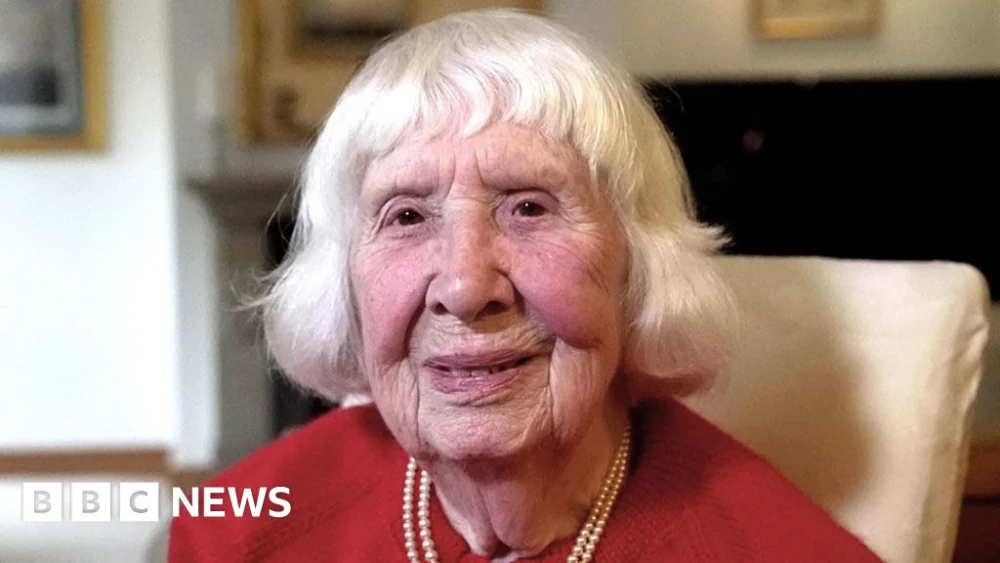
Pritti MistryBusiness reporter

 PA Media
The oldest surviving victim of the Post Office Horizon IT scandal, Betty Brown, has been appointed Officer of the Order of the British Empire (OBE) for her unwavering services to justice after tirelessly campaigning against wrongful prosecutions for decades. At 92 years old, Mrs Brown’s recognition in the New Year Honours list shines a spotlight once more on one of the most widespread miscarriages of justice in UK history, highlighting the enduring human cost of the technological error and corporate intransigence.
Mrs Brown, alongside her late husband Oswall, dedicated much of their lives to serving their community through the Annfield Plain Post Office in County Durham. They took over the branch in 1985, building it into a thriving local hub, known for its friendly service and efficiency. However, their lives were irrevocably shattered in 2003 when they were forced out of their beloved business. The culprit was the faulty Horizon IT system, which began reporting inexplicable financial shortfalls at their branch. To cover these non-existent deficits, the Browns were compelled to pour over £50,000 of their hard-earned savings into the Post Office’s coffers, a sum that represented their entire retirement fund and their life’s work. The financial devastation was coupled with immense emotional distress, as their reputation, built over decades, was slowly eroded by suspicion and accusations of theft.
For years, Betty and Oswall endured the agonizing belief that they were alone in their suffering, unaware that thousands of other sub-postmasters across the UK were grappling with identical, inexplicable losses attributed to the Horizon system. The stress and anxiety took a severe toll on both their health, profoundly impacting their later years and casting a long shadow over their retirement dreams. Oswall’s passing meant he never lived to see the full extent of their vindication, a poignant reminder of the ultimate price paid by many victims.
Mrs Brown recently received her long-awaited settlement from one of the government’s compensation schemes, a partial acknowledgement of the profound injustice she and her husband suffered. Speaking to BBC Breakfast, a visibly moved Mrs Brown expressed that she accepted the prestigious OBE not just for herself, but on behalf of every single victim of the scandal. “Every one of them should have an OBE,” she declared, her voice firm with conviction. “Every one of them for what they’ve [Post Office] put us through and what we have stood solid and faithful for. I did it for justice.” Her words encapsulate the collective struggle and the extraordinary resilience of those who fought for decades to clear their names.
The Horizon IT system, developed by Fujitsu, was rolled out across Post Office branches from 1999. It was responsible for more than 900 sub-postmasters being wrongfully prosecuted, many of whom faced imprisonment, bankruptcy, and public humiliation due to its flawed accounting software. Beyond those prosecuted, thousands more, like Mrs Brown, were coerced or financially ruined as they desperately tried to make up for the phantom losses reported by the system at their branches across the UK. The sheer scale and depth of this institutional failure have led it to be widely described as one of the gravest miscarriages of justice in modern British history.
Mrs Brown articulated her feelings of being “honoured and humbled” by the recognition, adding that after so many years of feeling unheard, she had finally “been heard by the system.” Her journey from silent suffering to public recognition underscores the painstaking battle fought by sub-postmasters against a powerful corporation and a resistant legal framework.
Mrs Brown’s honour follows a growing wave of public recognition for those who championed the cause of justice in the Post Office scandal. A year prior, four other former sub-postmasters turned campaigners – Jo Hamilton, Noel Thomas, Alan Bates, and Lee Castleton – were honoured for their tireless services to justice in the New Year Honours list. Sir Alan Bates, whose relentless campaigning efforts were brought to widespread public attention through the acclaimed ITV drama “Mr Bates vs The Post Office,” was notably knighted in 2024. These honours collectively signify a societal acknowledgement of the immense suffering and the extraordinary fortitude displayed by these ordinary individuals caught in an extraordinary injustice. The drama, in particular, ignited a fresh surge of public outrage and political pressure, significantly accelerating the pace of compensation and accountability.

The 92-year-old was one of the original 555 victims who courageously took part in the landmark group legal action, known as the Group Litigation Order (GLO), led by Sir Alan Bates against the Post Office. This collective action, launched in 2017, was a pivotal moment, forcing the Post Office to confront the systemic failures of its Horizon system. For Betty, the Annfield Plain branch, once a source of pride and livelihood, had been one of the most successful in the region. Yet, the relentless pressure and fabricated shortfalls eventually forced her to sell it at a significant loss, stripping away her financial security and the community role she cherished.
Reflecting on the devastating impact of the scandal, Mrs Brown previously stated that it “absolutely destroyed my whole life.” The emotional scars of being unjustly accused and financially ruined ran deep, affecting not only her but also her family and their standing within the community. The fight for justice, though protracted, became a driving force for her.
Both Mrs Brown and Sir Alan were among the claimants within the Group Litigation Order compensation scheme. These claimants were offered the option of taking a fixed sum of £75,000 or pursuing their own settlement through individual negotiation. The choice reflected the varying degrees of loss and suffering experienced by each sub-postmaster. After enduring years of legal battles and bureaucratic delays, Mrs Brown finally received her payout in November 2025. Upon receiving the long-awaited compensation, she told the BBC with a mix of relief and lingering frustration: “At last, after 26 years, they’ve recognised justice,” adding pointedly, “pity they took so long.” Her words underscore the agonizing wait many victims faced, their lives paused indefinitely by the injustice.
A government spokesperson reiterated the administration’s commitment to rectifying past wrongs, stating: “We must never lose sight of the Horizon scandal’s human impact on postmasters and their families, which the Horizon inquiry has highlighted so well.” The spokesperson acknowledged Mrs Brown’s critical role, adding: “Betty Brown has been a fierce advocate for postmasters and this government has now paid out over £1.3bn to more than 10,000 victims across various compensation schemes.” These schemes include the GLO, the Historical Shortfall Scheme (HSS), and the Overturned Convictions (OC) scheme, each designed to address different facets of the injustice.
When the first report of the official independent public inquiry into the scandal was published in July, the Post Office issued a renewed and emphatic apology. It stated that it apologised “unreservedly” for the suffering “caused to postmasters and their loved ones.” This ongoing inquiry, led by Sir Brian Leveson, continues to meticulously examine the Post Office’s actions, the development and deployment of Horizon by Fujitsu, and the roles of various government departments, aiming to provide a comprehensive account of what went wrong and ensure accountability.
Betty Brown’s OBE is not merely a personal honour; it serves as a powerful symbol of the long, arduous road to justice for all victims of the Post Office Horizon scandal. Her courage, perseverance, and unwavering dedication to the truth, even in her nineties, continue to inspire and remind the nation of the profound importance of fighting for justice, no matter how long it takes.




 Roy Suryo