Nana Banana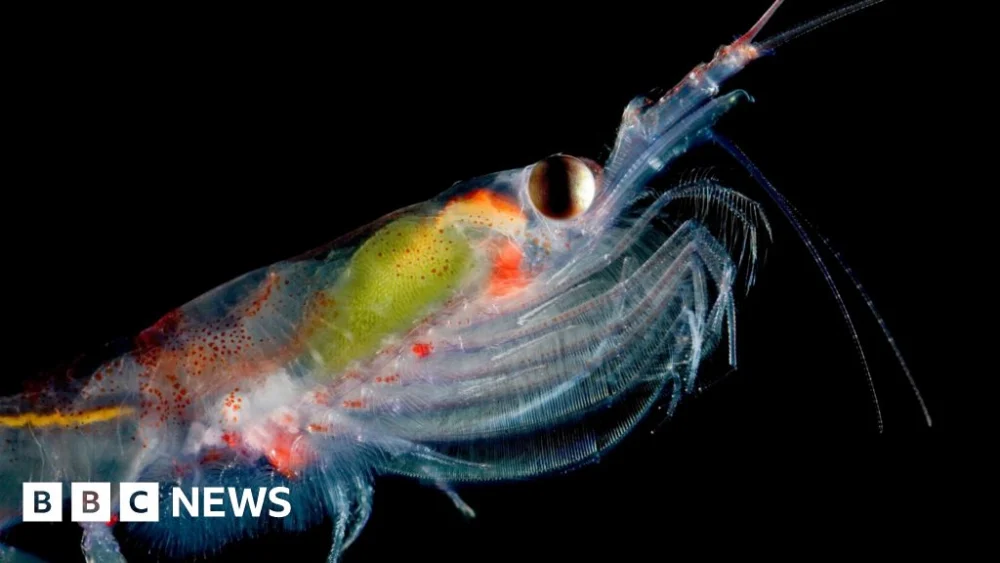
Scientists are embarking on an innovative research endeavor to monitor the vast populations of tiny Antarctic krill, a marine crustacean barely a couple of inches long, from the distant vantage point of Earth-orbiting satellites. This seemingly paradoxical feat – tracking minuscule organisms from hundreds of kilometers above the planet – hinges on detecting subtle differences in the color of seawater, a spectral fingerprint left by the immense swarms of these critically important creatures. This groundbreaking approach, spearheaded by researchers from the University of Strathclyde, in collaboration with the wildlife charity WWF and the British Antarctic Survey (BAS), promises to revolutionize our understanding and management of one of the planet’s most vital ecosystems.
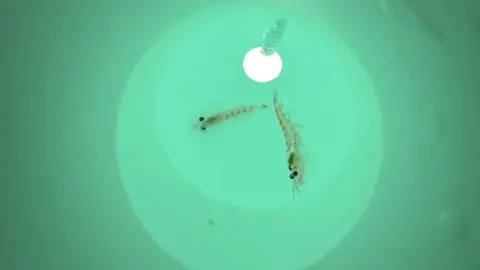
Antarctic krill (Euphausia superba) are, without exaggeration, the superheroes of the Southern Ocean. Despite their diminutive size, they form the cornerstone of the Antarctic food web, sustaining an extraordinary array of marine wildlife. Whales, penguins, seals, and seabirds – including iconic species like humpback whales, blue whales, Adélie penguins, Weddell seals, and various albatrosses – all rely heavily on these abundant crustaceans for their survival. Beyond these charismatic megafauna, countless fish species and cephalopods like squid also feast on krill, highlighting their indispensable role as a primary link between microscopic phytoplankton and larger marine predators.
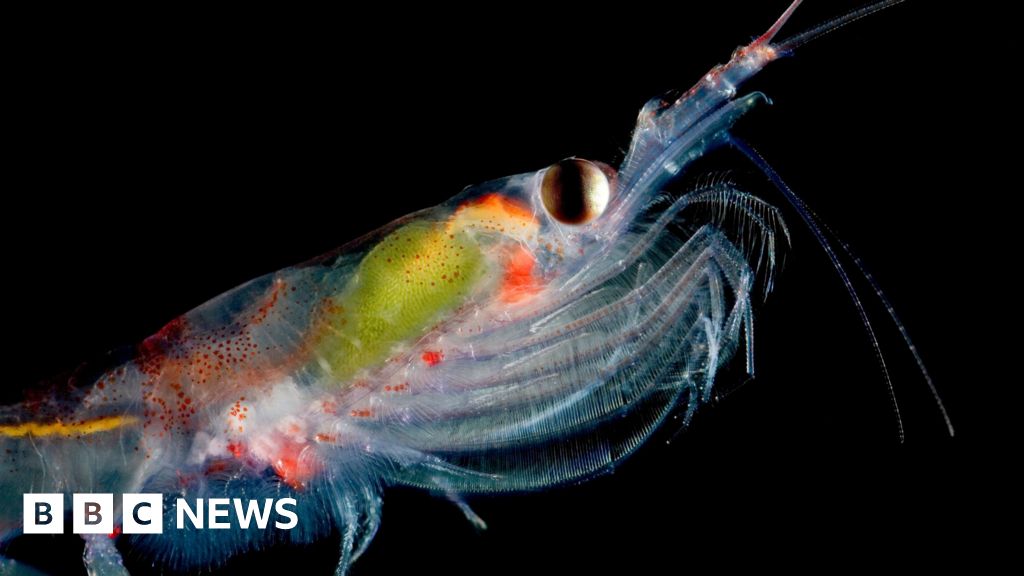
The sheer biomass of Antarctic krill is staggering, making them one of the most abundant animal species on Earth. They often congregate in immense swarms that can stretch for kilometers, dense enough to be visible from aircraft and even space in some instances. This colossal aggregate biomass makes them a crucial component of not just the Antarctic ecosystem but also the global carbon cycle. Krill feed on phytoplankton, microscopic marine plants that absorb vast quantities of carbon dioxide from the atmosphere as they grow. When krill are consumed by whales, and whales subsequently defecate, their nutrient-rich faecal plumes fertilize the surface waters, stimulating further phytoplankton growth. This "virtuous cycle," often referred to as the biological pump, plays a significant role in drawing planet-warming carbon out of the atmosphere and sequestering it in the deep ocean, making krill indirect but powerful allies in climate regulation. Disruptions to krill populations, therefore, have far-reaching implications, extending from the health of individual species to the stability of the global climate.
Conservation scientists, however, are increasingly concerned that this foundational species is under threat from two major anthropogenic pressures: climate change and commercial fishing. The Antarctic region is experiencing some of the most rapid warming on the planet, leading to significant reductions in sea ice extent and thickness. Krill are highly dependent on sea ice, particularly during their juvenile stages, as it provides a critical habitat for the algae they feed on and offers refuge from predators. Less sea ice means less food and shelter, potentially impacting krill recruitment and survival rates. Rising ocean temperatures also affect krill metabolism and distribution, while ocean acidification – the absorption of excess atmospheric CO2 by seawater – poses a threat to their calcifying exoskeletons, potentially weakening them and hindering growth.
In parallel, commercial fishing for krill has intensified in recent decades. Krill are harvested primarily for aquaculture feed (feeding farmed fish), omega-3 dietary supplements, and pet food. While catch limits are set by the Commission for the Conservation of Antarctic Marine Living Resources (CCAMLR), concerns persist about the concentration of fishing efforts in critical foraging areas for predators, potentially creating localized depletions that impact dependent species. Accurate, timely, and comprehensive data on krill populations are therefore paramount for implementing effective conservation strategies and ensuring the sustainable management of this vital resource.
Traditional methods of monitoring krill populations, while valuable, have inherent limitations. Ship-based acoustic surveys, which use sonar to detect krill swarms, provide detailed local information but are expensive, time-consuming, and geographically restricted, especially in the vast and often treacherous waters of the Southern Ocean. Net sampling, as demonstrated by Dr. Cait McCarry’s fieldwork, provides essential "ground truth" data on krill abundance and physiology but is even more limited in its spatial coverage. To gain a truly comprehensive and dynamic picture of krill distribution and biomass across the entire Antarctic region, a broader, more consistent monitoring tool is urgently needed. This is where satellite technology enters the picture.
The new research aims to leverage the capabilities of Earth observation satellites to overcome these challenges. The scientific principle behind this innovative approach lies in the subtle ways that krill swarms alter the optical properties of seawater. Krill, particularly in dense aggregations, contain pigments like astaxanthin, a carotenoid that gives them their characteristic reddish-pink hue. These pigments, along with the krill’s translucent bodies, absorb and scatter sunlight differently than pure seawater or water containing only phytoplankton. Satellites equipped with advanced ocean color sensors can detect these minute variations in the spectral signature of the ocean surface.
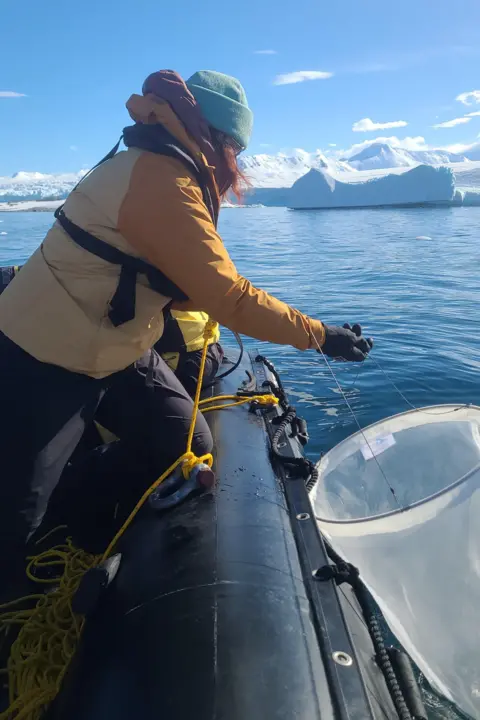
Dr. Cait McCarry, from the University of Strathclyde, has been at the forefront of the experimental phase of this project, recently returning from an expedition to Antarctica. Her crucial fieldwork involved catching live krill in nets – as depicted in images showing her leaning over a boat, pulling in a sampling net – and bringing them aboard a research vessel. In a controlled laboratory setting, she then systematically studied how different densities of krill affected the light absorption characteristics of seawater. "We start with seawater, then we add in a krill and take a measurement [of how much light the water absorbs]," she explained. "Then we add another krill and take another measurement." This meticulous analysis establishes a precise relationship between krill density and the spectral changes observed in the water.
This fundamental data is critical for "ground truthing" the satellite observations. Essentially, Dr. McCarry’s laboratory measurements will allow researchers to develop sophisticated algorithms that can translate the subtle shifts in ocean color detected by satellites into quantitative estimates of krill biomass or density. By understanding exactly how much light is absorbed or reflected at specific wavelengths depending on the number of krill present, scientists can then process vast amounts of satellite data to create detailed maps of krill distribution and abundance across the entire Southern Ocean. This will enable them to take unprecedented "snapshots" of the krill population, monitoring its fluctuations over time and across vast geographical scales that would be impossible with conventional methods.
The implications of this satellite-based krill monitoring system are profound for conservation and resource management. As Rod Downie, chief polar adviser at WWF-UK, emphasized, "Antarctic krill are tiny, unsung heroes that sustain incredible marine life, but climate change and unsustainable fishing are putting them at risk." He added, "We urgently need to better manage the fishery and protect krill habitats within a network of marine protected areas." This new tool could provide the critical data needed to achieve these goals.
With regular, wide-ranging observations from space, conservation bodies like CCAMLR could make more informed decisions regarding fishing quotas, ensuring that harvesting levels are truly sustainable and do not jeopardize the krill population or the species that depend on it. The data could also help identify critical krill habitats that warrant protection through the establishment of Marine Protected Areas (MPAs). Furthermore, by tracking changes in krill distribution and abundance over time, scientists can gain a deeper understanding of the impacts of climate change on this keystone species, potentially serving as an early warning system for ecosystem distress.
The project represents a powerful example of interdisciplinary collaboration, bringing together marine biologists, remote sensing experts, and conservationists. It underscores how cutting-edge technology, combined with meticulous fieldwork, can provide solutions to some of the most pressing environmental challenges facing our planet. By safeguarding Antarctic krill, we are not only protecting a single species but also preserving the intricate balance of one of Earth’s most productive and vital marine ecosystems, and indirectly, contributing to global climate stability. This innovative satellite monitoring project offers a new beacon of hope for the future of the Southern Ocean and its extraordinary inhabitants.




 Roy Suryo
 George Anjay
 Ramos Leo
 atisusanti