Nana Banana
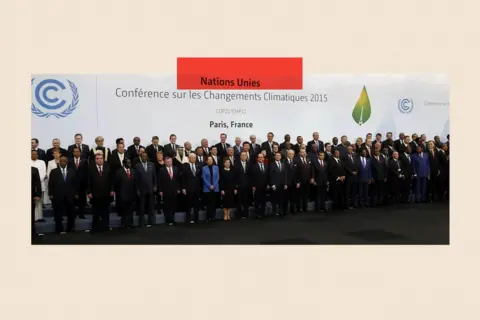
A decade ago, the world watched as leaders from across the globe gathered in Paris for COP21, a summit that culminated in the landmark Paris Agreement. A photograph from that event, featuring dozens of heads of state, including David Cameron, King Charles III (then Prince Charles), Xi Jinping, and Barack Obama, now feels like a relic of a bygone era of multilateral optimism. It captured a moment when global cooperation on climate change seemed not just possible, but imperative and widely embraced.

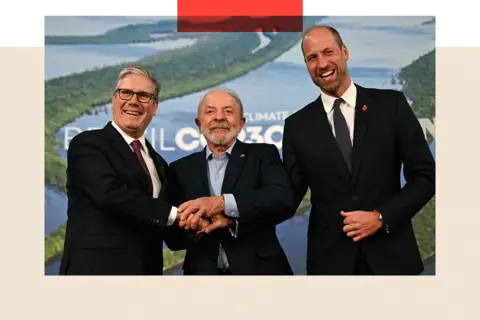
Fast forward to COP30 in Brazil, and the scene is starkly different. The traditional "family photograph" of world leaders was notably sparse. China’s Xi Jinping and India’s Narendra Modi were absent, alongside leaders from approximately 160 other nations. Most strikingly, the US President, Donald Trump, a vocal climate skeptic, was a no-show, with his administration having entirely withdrawn from high-level participation. This dwindling attendance at what is meant to be the planet’s most crucial climate forum raises a fundamental question: do these grand, two-week-long multinational gatherings still serve their intended purpose?
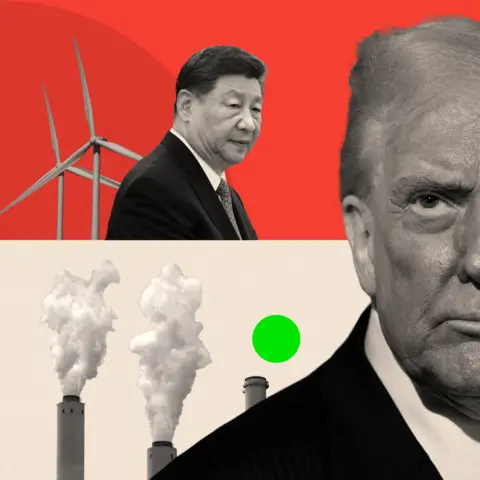
Many seasoned observers believe the golden age of multilateral climate diplomacy, as epitomized by Paris, is over. Christiana Figueres, the former UN climate chief who oversaw the Paris Agreement, remarked during last year’s gathering that the COP process was "not fit for purpose." Joss Garman, a former climate activist now heading the think tank Loom, echoes this sentiment, stating, "The golden era for multilateral diplomacy is over." He argues that "climate politics is now more than ever about who captures and controls the economic benefits of new energy industries." With global carbon dioxide emissions still rising after 29 previous summits, the efficacy of more COPs is under intense scrutiny.
A significant factor in this shift is the disruptive stance of former (and potentially future) US President Donald Trump. Upon re-entering office, Trump wasted no time in withdrawing the US from the Paris Agreement, labeling climate change "the greatest con job ever perpetrated on the world." His administration systematically rolled back environmental regulations, enacted billions in tax breaks for fossil fuel companies, and opened up federal lands for oil, gas, and coal extraction. Globally, he urged nations to abandon "pathetic" renewable energy programs in favor of US hydrocarbons, leveraging punitive tariffs as a potential threat. Trump’s stated objective is clear: to make the US the "number one energy superpower in the world" through fossil fuels.

This approach has involved a concerted effort to dismantle his predecessor Joe Biden’s clean energy initiatives, slashing subsidies for wind and solar, withdrawing permits, and cutting research funding. US Energy Secretary Chris Wright defended these actions, questioning the perpetual need for subsidies in mature renewable industries. However, John Podesta, a senior climate adviser to both Obama and Biden, views it as "taking a wrecking ball to clean energy," pushing the US "back not to the 20th Century, but the 19th." The recent abandonment of a landmark deal to cut global shipping emissions, largely due to opposition from the US and Saudi Arabia, underscores the international ripple effects of this fossil-fuel-first agenda. Climate advocates, like Anna Aberg from Chatham House, express concern that Trump’s position might encourage other countries to dilute their climate commitments, making it "more important than ever that this COP sends some kind of signal to the world that there are still governments and businesses and institutions that are acting on climate change."
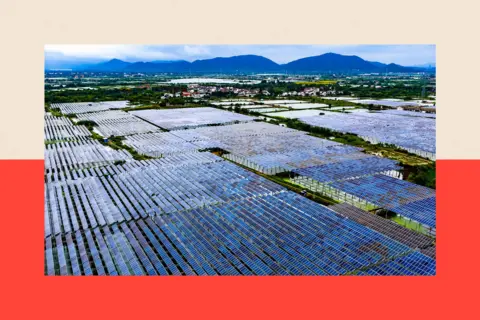
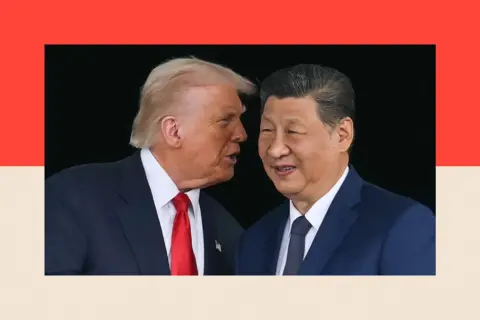
Paradoxically, Trump’s fossil-fuel-centric strategy places the US on a collision course with China, which has been meticulously building its dominance in clean technology for decades. In 2023, clean technologies accounted for roughly 40% of China’s economic growth, making up over 10% of its entire economy. China is not merely participating in global climate talks; it is actively exporting its green energy model worldwide. This divergence creates a new geopolitical dynamic, pitting the world’s two superpowers against each other for control of the future energy landscape.

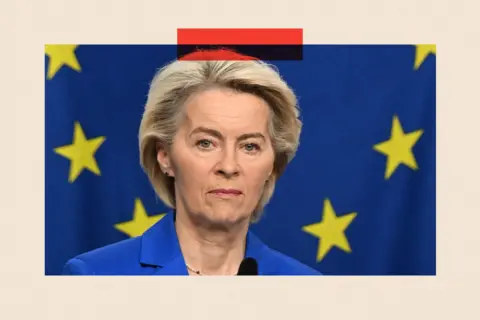
Countries like the UK, Europe, India, Indonesia, Turkey, and Brazil find themselves caught in the middle of this burgeoning economic rivalry. A government source at COP30 revealed a palpable fear among developed nations of being seen to criticize Trump. Meanwhile, European Commission President Ursula von der Leyen warned Europe against repeating past mistakes, specifically the loss of its solar manufacturing base to cheaper Chinese rivals. With the market for renewables projected to grow from €600 billion to €2 trillion within a decade, Europe aims to capture at least 15% of this, but many believe it may be too late. Li Shuo, director of the China Climate Hub at the Asia Policy Institute, asserts that China’s dominance in solar panels (over 80% of global production), advanced batteries, EVs (70%), and wind turbines (over 60%) is now "virtually unassailable." He vividly likens competing with China in clean tech to trying to beat its national team at table tennis: "If you want to surpass China, you had to get your act together 25 years ago. If you want to do it now, you have no hope." The EU’s recent decision to raise tariffs on Chinese EVs illustrates the dilemma: protect domestic industry at the risk of slowing emissions reductions, or embrace cheaper green tech and risk industrial collapse.
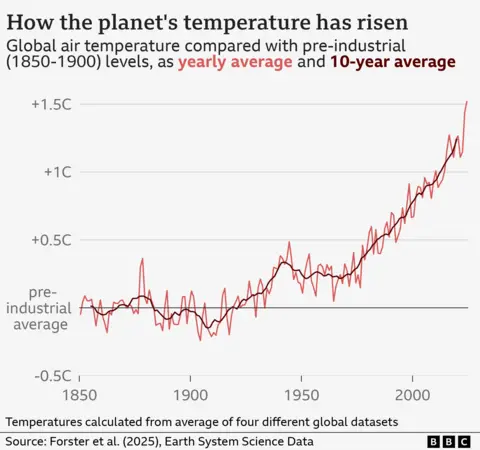
Given these tectonic shifts in global politics and economic priorities, the role of annual COPs is inevitably transforming. The UN Secretary-General António Guterres’s stark admission that the 1.5°C target set in Paris will be breached, which he termed "deadly negligence," underscores the urgency and the gap between ambition and action. Last year was the hottest on record, with scientists warning that the 1.5°C threshold could be crossed within three years. This dire reality fuels questions about the necessity of annual large-scale gatherings.
Michael Liebreich, founder of Bloomberg New Energy Finance, suggests that "we need one big COP every five years," arguing that the current frequency doesn’t allow enough time for industries to develop and real-world changes to manifest. He proposes smaller, more focused meetings on removing barriers to clean energy, with discussions on implementation happening in financial hubs like Wall Street, "where people can actually fund stuff."
However, others maintain the enduring importance of COPs. Anna Aberg believes they will evolve into vital annual forums for "holding to account" countries and organizations, providing an "important role" in transparency and pressure. Michael Jacobs, a politics professor at Sheffield University, emphasizes that continued collective support sends a crucial "political message" against attempts to undermine the process, reassuring businesses to "continue to invest in decarbonisation because governments will continue to enact climate policies." Even the UK’s Energy Secretary, Ed Miliband, despite acknowledging the process as "dry, complicated, anguished, [and] tiring," insists it is "absolutely necessary" for getting countries to engage and enact policies enabling the renewable revolution.
This year’s COP30, for instance, aims to secure a multi-billion-dollar fund to protect vital rainforests like the Amazon and Congo Basin, demonstrating that specific, tangible outcomes remain possible. Yet, the broader future of decarbonisation appears less about grand, multi-country commitments forged at COPs and more about the competitive interplay between national economic strategies and bilateral, big-money deals. The ultimate choice for many nations boils down to aligning with a China-led clean energy revolution or doubling down on a fossil-fuels-first agenda. The UN climate talks, therefore, may not be pointless, but their purpose is certainly evolving from forging universal consensus to facilitating a more complex, often competitive, global energy transition.




 Roy Suryo
 George Anjay
 Ramos Leo
 atisusanti