Nana Banana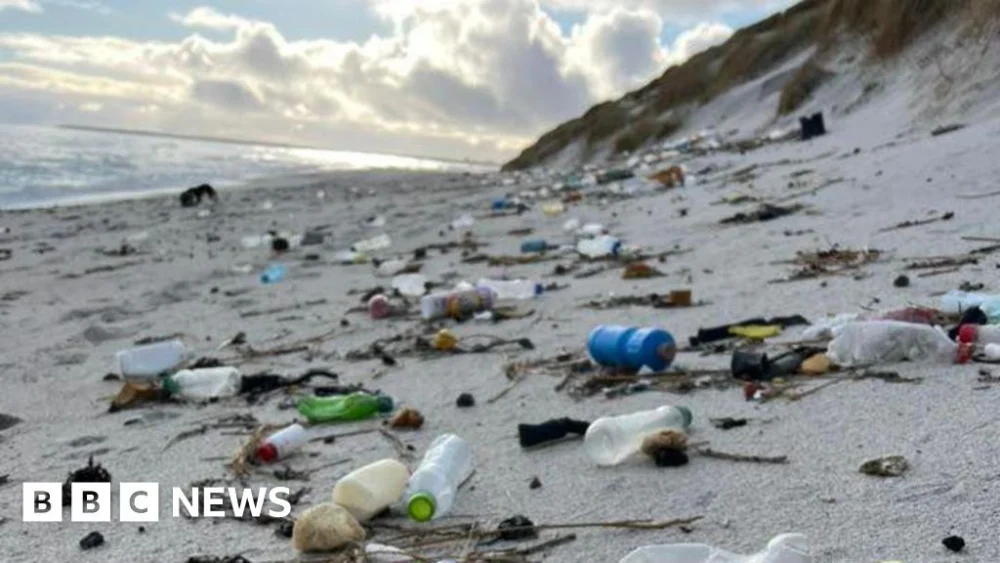
The serene, windswept shores of Sanday, one of Orkney’s most beautiful islands, have become a poignant testament to the enduring legacy of human consumption. In recent weeks, beachcombers and environmental volunteers have been confronted with an "overwhelming" influx of plastic bottles and debris, much of which appears to hail from Canada and astonishingly dates back to the 1960s and 1970s. This extraordinary phenomenon highlights the alarming persistence of plastic in our oceans and the far-reaching consequences of a throwaway culture that began decades ago.
David Warner, a 35-year-old creative sustainability coordinator who spearheads regular beach cleans on Sanday, described his shock and dismay at the sheer volume of "retro rubbish" inundating the Howar Sands beach. Last year, his efforts yielded a modest 42 plastic bottles from the shoreline. This year, the count has already soared into the hundreds, a stark indicator of an unprecedented arrival of historical waste. "It’s the first time since cleaning the beaches I’ve been overwhelmed by it," Warner confessed to BBC Radio Orkney, contrasting it with previous clean-ups where a group effort would leave the beach visibly tidier, only for rubbish to return in predictable cycles. This time, the scale of the problem feels insurmountable.
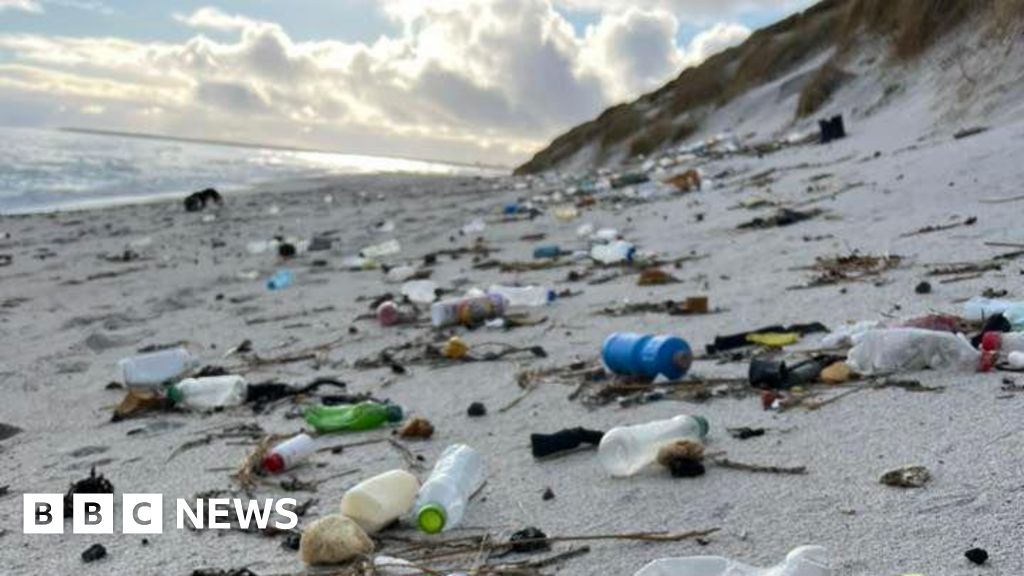
Among the myriad items, Warner has identified distinct plastic bottles bearing labels and designs indicative of their mid-20th-century origin, with some clearly traceable to Newfoundland and Labrador in Canada. These artefacts of a bygone era, remarkably preserved by the cold, dark depths of the Atlantic, now litter a Scottish beach thousands of miles from their point of entry into the marine environment. The presence of brands like "Sqezy," a detergent popular in the 60s and 70s and no longer manufactured, provides irrefutable proof of the plastic’s age and its incredible resilience.
Experts attribute this unusual deluge of vintage plastic to "fairly extraordinary weather" patterns, specifically a prolonged period of strong south-easterly winds. These powerful gusts, uncharacteristic for the region, are believed to have altered typical ocean currents, effectively steering a slow-moving conveyor belt of historical marine debris directly towards the Orkney archipelago. The North Atlantic Gyre, a vast system of circulating ocean currents, plays a critical role in distributing marine litter across the Atlantic. Debris entering the ocean off the Canadian coast could theoretically be caught in the Labrador Current, then the North Atlantic Current, eventually making its way towards the European coastline. The journey across the Atlantic, propelled by such currents, can take many years, even decades, for plastic items to complete, explaining why materials from the 1960s are only now making landfall.
Warner’s concern extends beyond the present. He worries that this wave of decades-old plastic is merely a precursor to an even greater influx. "We haven’t hit rubbish from the nineties and noughties, so that’s going to be extortionate amounts," he predicted grimly. This fear is well-founded, given the exponential increase in global plastic production and consumption that occurred in the latter half of the 20th century. The sheer quantity of plastic introduced into the environment post-1980 vastly overshadows that of earlier decades, meaning future marine debris events could be far more catastrophic.
Beyond the visible bottles and larger items, the beach is also blighted by an astronomical number of microplastics, particularly polystyrene pieces. Warner estimated that over 300,000 such fragments were scattered across just 70 square metres of the shoreline. The insidious nature of these tiny particles makes them virtually impossible to collect manually, leaving them to persist in the environment. This is particularly concerning given that Howar Sands is designated a Site of Special Scientific Interest (SSSI), critical for nesting birds and other sensitive wildlife. The tiny plastic fragments pose a significant hazard, easily mistaken for food by birds and marine animals, leading to internal injuries, starvation, and the transfer of toxic chemicals up the food chain.
Catherine Gemmell, a spokesperson for the Marine Conservation Society, reinforced the long-term impact of plastic pollution. "Litter, especially plastic litter, never disappears and can last a very long time in the marine environment and also travel across oceans," she stated. She noted that historic litter often washes up at this time of year due to seasonal storms, which stir up the seabed and coastal areas. Another significant, though often overlooked, source of "retro" rubbish, she added, comes from eroding coastal landfill sites. As coastlines change and sea levels rise, older landfills, particularly those sited near the sea, can be compromised, releasing their buried waste directly into the ocean, contributing to the historical debris found on beaches.
John Berry of the Scottish Islands Federation and Greener Orkney expressed little surprise at the findings on Sanday. He highlighted a curious dichotomy within Orkney’s coastal landscape: "We’ve got the really clean beaches [in Orkney] but we’ve got some really dirty beaches as well." This uneven distribution often depends on prevailing winds, currents, and geographical features that act as natural traps for marine debris. Berry acknowledged the relentless nature of the problem, stating, "But we will clean it up in spring. And next year, it will be back. So we will do the exercise again." His words underscore the Sisyphean task faced by island communities on the frontline of global plastic pollution.

While the situation on Sanday is undeniably disheartening, David Warner is determined to channel the despair into positive action and heightened awareness. He plans to formalize the island’s volunteer efforts by forming an official beach cleaning group, providing a structured platform for individuals to contribute and share their interesting finds. These finds are not always as mundane as bottles; the global reach of ocean currents was once dramatically illustrated by the discovery of a decapitated doll from Japan on Sanday’s shores, a stark reminder of how interconnected the world’s oceans are.
As a member of the Sanday Community Craft Club, Warner is also exploring the possibility of transforming the collected plastic into an artistic sculpture. This creative endeavour would serve as a powerful visual statement about the scale of the problem, turning the detritus of decades past into a poignant monument to human impact on the environment. Such a piece could not only raise local awareness but also draw broader attention to the issue of marine plastic pollution.
Ultimately, Warner’s message transcends the immediate crisis on Sanday. He acknowledges the pervasive nature of plastic in modern life – "We can’t escape plastic. I use plastic, it’s inescapable." However, he urges a fundamental shift in mindset: "I just want people to be aware when they do buy plastic, think where it’s going to end up. Even if this rubbish isn’t our rubbish per se, it’s somebody’s rubbish, and then where is our rubbish going? It’s just more about awareness, and trying to buy less if you don’t have to." This call for conscious consumption, combined with systemic changes in plastic production and waste management, is essential to stem the tide of historical and future plastic overwhelming our planet’s most remote and beautiful coastlines. The plastic washing ashore on Sanday today is not just litter; it’s a time capsule, a warning, and a profound illustration of our shared global responsibility.




 Roy Suryo
 George Anjay
 Ramos Leo
 atisusanti