Nana Banana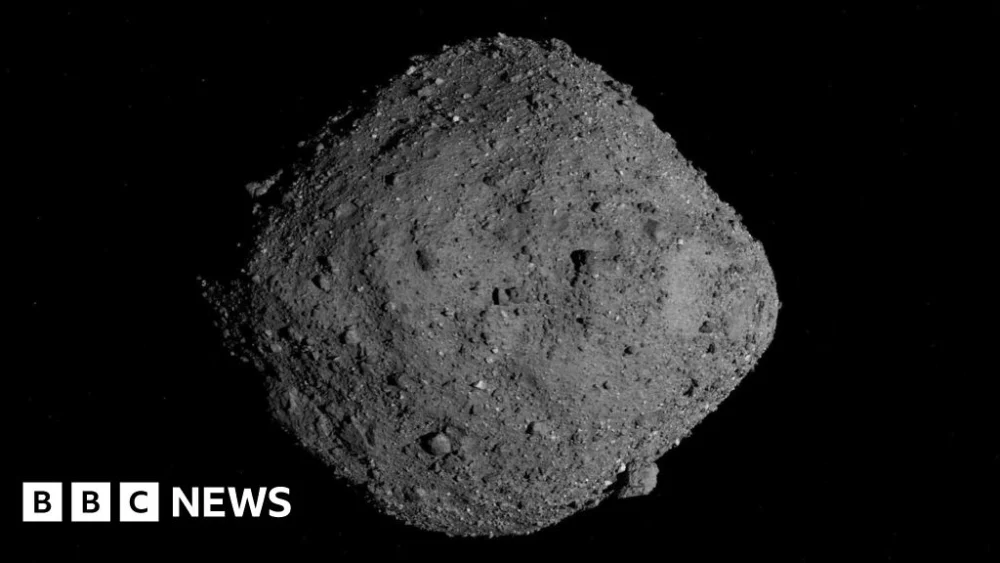
In a landmark discovery that promises to reshape our understanding of life’s origins, scientists have confirmed the presence of the fundamental chemical building blocks of life within samples retrieved from the asteroid Bennu. This groundbreaking analysis of grainy dust, meticulously collected by a NASA spacecraft, has unveiled a rich tapestry of minerals alongside thousands of organic compounds, including vital amino acids and nucleobases – the very molecules that form proteins and DNA, respectively.
The findings, detailed across two seminal papers published in the prestigious journals Nature and Nature Astronomy, represent a monumental leap in astrobiology. While the discovery doesn’t suggest that life ever existed on Bennu, it provides compelling empirical evidence for a long-held scientific theory: that asteroids acted as cosmic delivery vehicles, ferrying these essential ingredients to a nascent Earth billions of years ago. This process of extraterrestrial seeding is not believed to be unique to our planet; scientists hypothesize that similar compounds could have been deposited on other worlds throughout our Solar System, potentially influencing their own evolutionary paths.
"What we’ve learned from it is truly amazing," remarked Professor Sara Russell, a distinguished cosmic mineralogist from the Natural History Museum in London, highlighting the profound implications of the research. "It’s telling us about our own origins, and it enables us to answer these really, really big questions about where life began. And who doesn’t want to know about how life started?" Her enthusiasm underscores the profound human curiosity these findings address, touching upon one of humanity’s most enduring mysteries.
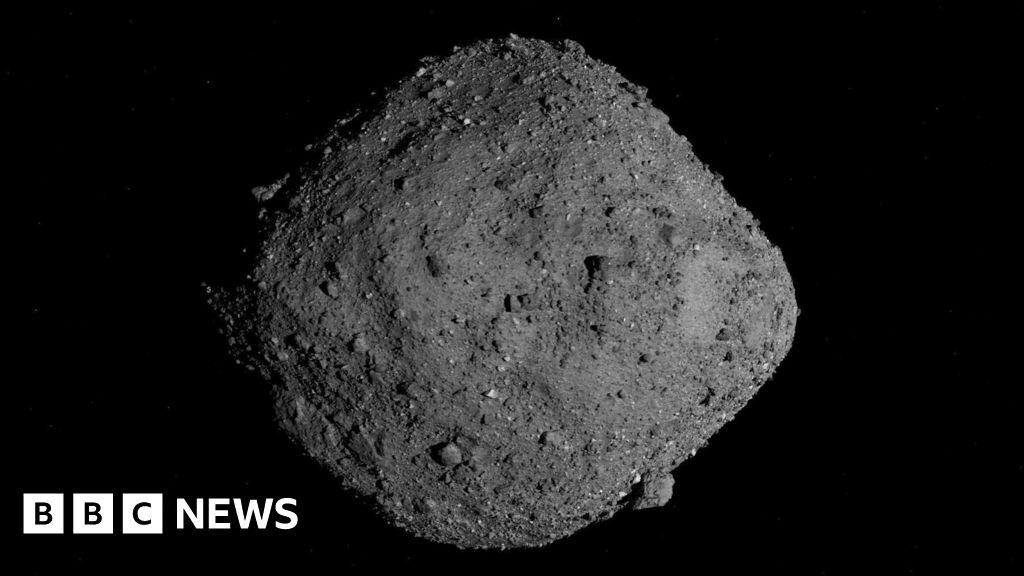
The journey to this discovery was itself a testament to human ingenuity and scientific ambition. Grabbing a piece of Bennu was one of the most audacious and technically challenging missions ever undertaken by NASA. The mission, known as OSIRIS-REx (Origins, Spectral Interpretation, Resource Identification, Security-Regolith Explorer), launched in September 2016. After a two-year journey, the spacecraft rendezvoused with Bennu, a 500-meter-wide B-type asteroid classified as a carbonaceous chondrite, signifying its primitive, carbon-rich composition. Its accessibility and classification as a Near-Earth Object (NEO) made it a prime target for a sample return mission, offering a pristine glimpse into the early Solar System.
Bennu itself is not a solid rock but rather a "rubble pile" asteroid, a cosmic aggregate of countless boulders, rocks, and dust held together by its own weak gravity. This structure, revealed by OSIRIS-REx’s detailed mapping, presented unique challenges but also offered insights into the asteroid’s formation and history. The mission spent over two years orbiting Bennu, meticulously mapping its surface to identify the safest and most scientifically promising sample collection site. The chosen spot, dubbed "Nightingale," was a relatively smooth area within a crater, yet still posed significant risks due to the asteroid’s rugged terrain.
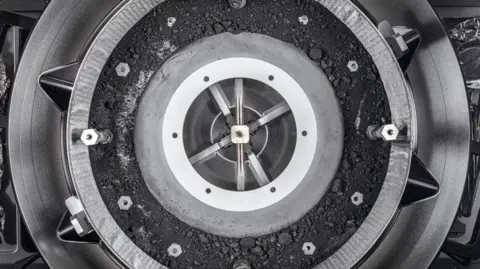
On October 20, 2020, OSIRIS-REx executed its daring "Touch-And-Go" (TAG) maneuver. A robotic arm, equipped with a specialized sampling head called TAGSAM (Touch-And-Go Sample Acquisition Mechanism), extended to briefly contact Bennu’s surface. Nitrogen gas was then fired to stir up surface material, which was subsequently captured in the TAGSAM collector. The event was brief, lasting mere seconds, but incredibly tense. Scientists later confirmed that the spacecraft had not only collected a sample but had collected so much material that the flap designed to seal the collection head was slightly jammed open. This unexpected abundance, while initially a concern, ultimately proved to be a scientific boon.
After successfully securing approximately 120 grams of the precious black dust and pebble-sized fragments, the OSIRIS-REx spacecraft began its long journey back to Earth in May 2021. The sample return capsule detached from the main spacecraft and parachuted into the Utah desert on September 24, 2023, where it was carefully recovered and transported to NASA’s Johnson Space Center for initial analysis in a specially constructed cleanroom.
The retrieved material, resembling dark, fluffy coal dust, immediately impressed scientists with its pristine nature, largely uncontaminated by Earth’s environment thanks to the careful handling and sealed capsule. This "treasure trove," as Professor Russell described it, has since been shared with scientific teams across the globe, including those at the Natural History Museum in the UK, where tiny specks of Bennu are being analyzed with unprecedented precision.
The new research confirms that Bennu’s grains are exceptionally rich in nitrogen and carbon-bearing compounds, which are fundamental to organic chemistry. Among the most exciting discoveries are 14 of the 20 amino acids that form the basis of proteins in all known life on Earth. Even more remarkably, all four of the ring-shaped nucleobases – adenine, guanine, cytosine, and thymine – that constitute the genetic code of DNA and RNA have been identified. The presence of these specific compounds in extraterrestrial material offers a powerful connection to the building blocks of life as we know it.
Beyond these critical organic molecules, the analysis also revealed a diverse array of minerals and salts. Their presence, particularly hydrated minerals like clays, strongly suggests that liquid water once flowed through or was present on Bennu’s parent body early in the Solar System’s history. This indicates that the conditions for complex chemical reactions, including the formation of organic compounds, could have existed within the asteroid or its progenitor. Furthermore, ammonia, a compound crucial for various biochemical reactions, was also detected in the sample. While some of these compounds have been observed in meteorites that have naturally fallen to Earth, the Bennu sample represents a pristine, uncontaminated collection that has allowed for the detection of many compounds previously elusive or unconfirmed.
"It’s just incredible how rich it is. It’s full of these minerals that we haven’t seen before in meteorites and the combination of them that we haven’t seen before. It’s been such an exciting thing to study," Professor Russell elaborated, emphasizing the unique chemical signature of Bennu.
This latest study significantly bolsters the hypothesis that asteroids played a pivotal role in delivering both water and organic material to a young Earth. "The early Solar System was really turbulent and there were millions of asteroids like Bennu flying about," explained Dr. Ashley King, also from the Natural History Museum. The prevailing scientific narrative suggests that these frequent and intense bombardments by carbon-rich asteroids and comets during Earth’s Hadean eon (roughly 4.5 to 4.0 billion years ago) seeded our planet with the necessary ingredients. These impacts would have contributed substantially to the formation of Earth’s oceans and the rich reservoir of organic molecules that could then participate in pre-biotic chemistry, eventually leading to the emergence of life. This process provides a compelling answer to the origin of the "primordial soup" often invoked in theories of abiogenesis.
Crucially, Earth was not the sole recipient of these cosmic deliveries. Asteroids would have bombarded other planetary bodies throughout the Solar System. "Earth is unique, in that it’s the only place where we have found life so far, but we know asteroids were delivering those ingredients, the carbon and the water, throughout the Solar System," Dr. King noted. This raises tantalizing questions about the potential for life elsewhere. If the raw materials were universally distributed, then the emergence of life might not be an anomaly but rather a common outcome where the right environmental conditions, such as the presence of liquid water and stable energy sources, persisted.
"And one of the big things that we’re trying to understand now is, if you have the right conditions, why do we have life here on Earth – and could we potentially find it elsewhere in our Solar System?" Dr. King pondered, articulating the central question driving modern astrobiology. These findings invigorate the search for extraterrestrial life, suggesting that the building blocks are readily available across the cosmos. This could have profound implications for understanding the habitability of worlds like Mars, or even ocean moons such as Europa and Enceladus, where these delivered compounds could interact with subsurface liquid water.
The journey of discovery with the Bennu sample is far from over. Scientists anticipate decades of meticulous research ahead, analyzing every grain of the precious asteroid dust. Each tiny particle holds secrets about the early Solar System, the processes of planet formation, and the intricate chemical pathways that culminated in life. The insights gleaned from Bennu will undoubtedly guide future missions and inform our ongoing exploration of the cosmic neighborhood, as humanity continues its relentless quest to answer the fundamental question of whether we are alone in the universe.




 Roy Suryo
 George Anjay
 Ramos Leo
 atisusanti