Nana Banana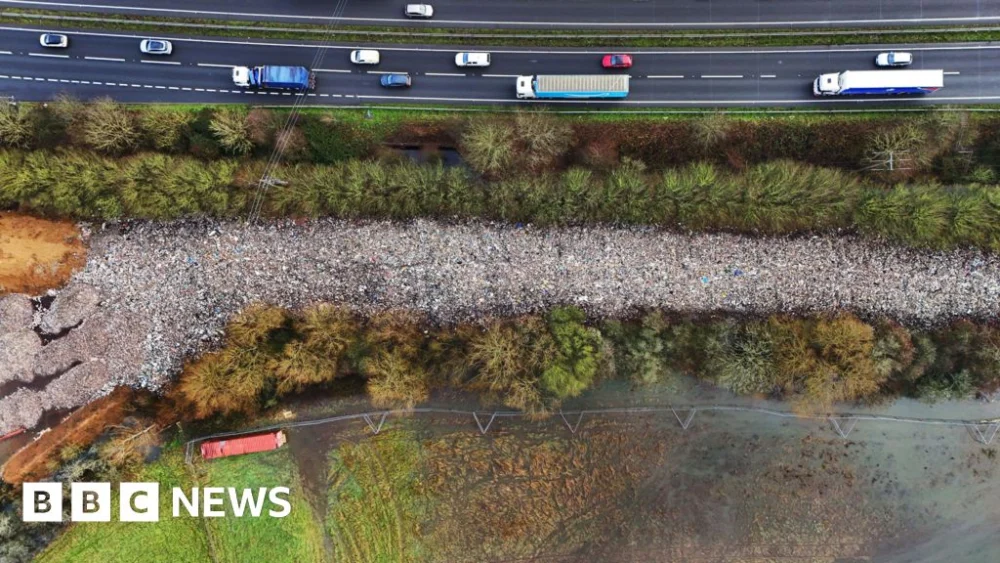
The call for transparency intensified after the BBC submitted a Freedom of Information (FOI) request to Oxfordshire Fire and Rescue Service (OFRS) seeking the publication of this critical fire risk assessment. The request was denied, with OFRS citing potential risks to public safety should the detailed information be released. This refusal has drawn sharp criticism from prominent figures, including Baroness Sheehan, chairwoman of the House of Lords’ environment committee, who expressed her "extreme disappointment" at the decision.
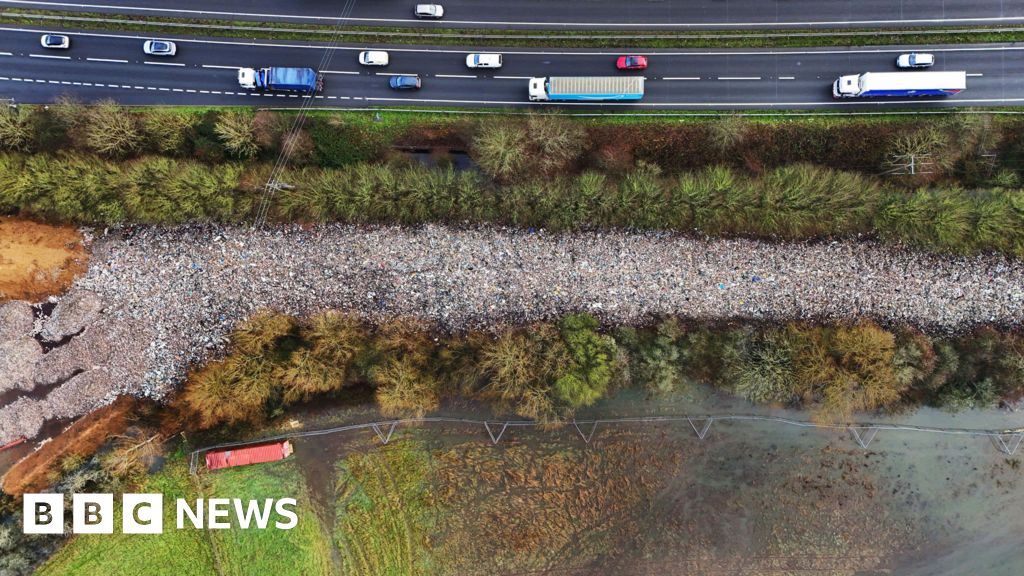
The Kidlington site itself is an alarming testament to the scale of illegal dumping, estimated to contain approximately 21,000 tonnes of illegally deposited waste. This vast accumulation, often referred to as a "supersized dump," presents a complex and evolving hazard. A fire at such a site is not merely a localised blaze; it carries the potential for widespread environmental contamination, significant public health risks from toxic fumes, and major disruption to critical infrastructure. The Environment Agency underscored the severity of the situation, stating that the risk assessment highlighted "rapidly escalating fire risks at the Kidlington site with the potential to close the A34 major highway and impact key electrical supplies." This direct threat to vital transport links and energy infrastructure was the primary driver behind the EA’s unprecedented decision to fund the clearance using taxpayer money, rather than pursuing the often lengthy and challenging process of making the perpetrators pay.
The justifications provided by OFRS for withholding the report delve into the highly sensitive nature of its contents. The service stated that the document constitutes a "detailed operational fire risk assessment" containing specific information such as the location of thermal hotspots, an in-depth analysis of potential fire ignition points and escalation scenarios, and crucial tactical firefighting considerations. OFRS argued that the disclosure of such granular operational details "would, more likely than not, adversely affect public safety." Furthermore, they contended that releasing the information could "adversely affect the council/OFRS’ ability to conduct effective regulatory investigations and enforcement action." Even a redacted version was deemed unsuitable, with OFRS suggesting it would leave "little or no meaningful information while still posing a residual risk of harm."
However, critics argue that this blanket refusal undermines public trust and denies local communities the right to understand the specific threats they face. Baroness Sheehan, who intends to raise the issue in a forthcoming Lords debate, articulated this sentiment clearly: "Local residents are already aware of concerns about the public health, environmental and fire risks of the site, so I cannot understand the reasons why this FOI has been refused." The debate centres on the balance between safeguarding sensitive operational tactics and ensuring transparency on issues of significant public interest and safety. While fire services need to protect their tactical playbook from those who might exploit it, communities argue they need enough information to feel secure and to hold authorities accountable for their actions and inactions. The £9 million cost of clearing the Kidlington site further intensifies the demand for full transparency, particularly when public funds are involved in such a substantial, "exceptional" measure.
The concern is amplified by the perceived inconsistency in the Environment Agency’s response to other illegal waste sites across England. Communities living near similar dumps, many of which also pose significant fire and environmental risks, feel neglected. One such community is in Over, Gloucestershire, where Charlie Coats, chairman of Highnam Parish Council, has been campaigning tirelessly for the EA to address a massive illegal waste site. This dump, containing thousands of tonnes of refuse, is located perilously close to a busy main road, a popular countryside park, and a farm shop, and has been plagued by regular fires.
Coats expressed his dismay at the differential treatment, noting that despite the urgent action at Kidlington, his council has "still not received anything other than a cursory acknowledgement" regarding its formal complaint to the EA. He accused the agency of "continually and blatantly" ignoring the interests of the local community and echoed the call for the Kidlington fire risk assessment to be made public, hoping it might shed light on the criteria for intervention. Gloucestershire Fire and Rescue Service (GFRS) acknowledged the Over site’s hazards, stating it is covered by their generic risk assessment for waste fire incidents. GFRS confirmed that their two local Gloucester fire stations are "fully aware of this site due to multiple incidents and have been informing the Environment Agency and providing any additional information where possible," highlighting ongoing concerns that have yet to trigger a similar "exceptional" response from the EA. The Environment Agency, in turn, maintains that it is not primarily funded to clear up waste sites and is actively investigating the illegal dumping at Over, suggesting a focus on enforcement against perpetrators rather than direct clean-up.
Another case in point is Bickershaw, Wigan, home to a vast 25,000-tonne illegal waste site situated alarmingly close to a primary school. This site carries an additional layer of complexity as it is partially owned by the King’s Duchy of Lancaster estate. Greater Manchester Fire and Rescue Service (GMFRS) monitors the Bickershaw site, noting that recent heavy rainfall has temporarily lowered the current fire risk. However, they issued a critical warning: removing the waste could expose slow-burning, deep-seated fires to the open air, significantly increasing the risk of major combustion and further complicating any clean-up efforts. The EA’s position here, mirroring its stance on Over, is that it is "doing everything within our power to ensure that the perpetrators pay the price to clean up the site, rather than taxpayers."
The contrasting responses to these sites – the rapid, costly intervention at Kidlington versus the prolonged investigations and lack of direct clean-up funding for Over and Bickershaw – raise fundamental questions about the Environment Agency’s policy and priorities. Is direct infrastructure threat (like the A34 at Kidlington) the sole trigger for such "exceptional" action, or are there other undisclosed criteria? This disparity fuels frustration among communities who perceive their safety and environmental well-being as secondary concerns.
The proliferation of these "supersized" illegal waste sites across England represents a systemic failure in waste management and enforcement. These dumps are not merely eyesores; they are environmental ticking time bombs. They pollute the land, risk contaminating groundwater and waterways (such as the River Cherwell near Kidlington, as indicated in the map graphic), and, when they catch fire, release noxious fumes that pose severe health risks to nearby populations. The economic burden is also substantial, encompassing not only the direct costs of clean-up, which can run into millions, but also the costs to emergency services responding to incidents, and the devaluation of surrounding properties.
Baroness Sheehan’s intervention in the House of Lords underscores the need for parliamentary scrutiny and a re-evaluation of current policies. The ongoing debate highlights the challenging balance between effective enforcement against illegal operators, the immediate imperative of public safety, and the fundamental right of communities to be informed about significant environmental and health risks in their vicinity. While operational security is important, the current lack of transparency surrounding the Kidlington fire risk assessment, juxtaposed with the varied responses to other dangerous sites, perpetuates a sense of injustice and mistrust among affected communities, pointing to a broader need for systemic reforms in how England manages and responds to the escalating crisis of illegal waste dumping.




 Roy Suryo
 George Anjay
 Ramos Leo
 atisusanti