Nana Banana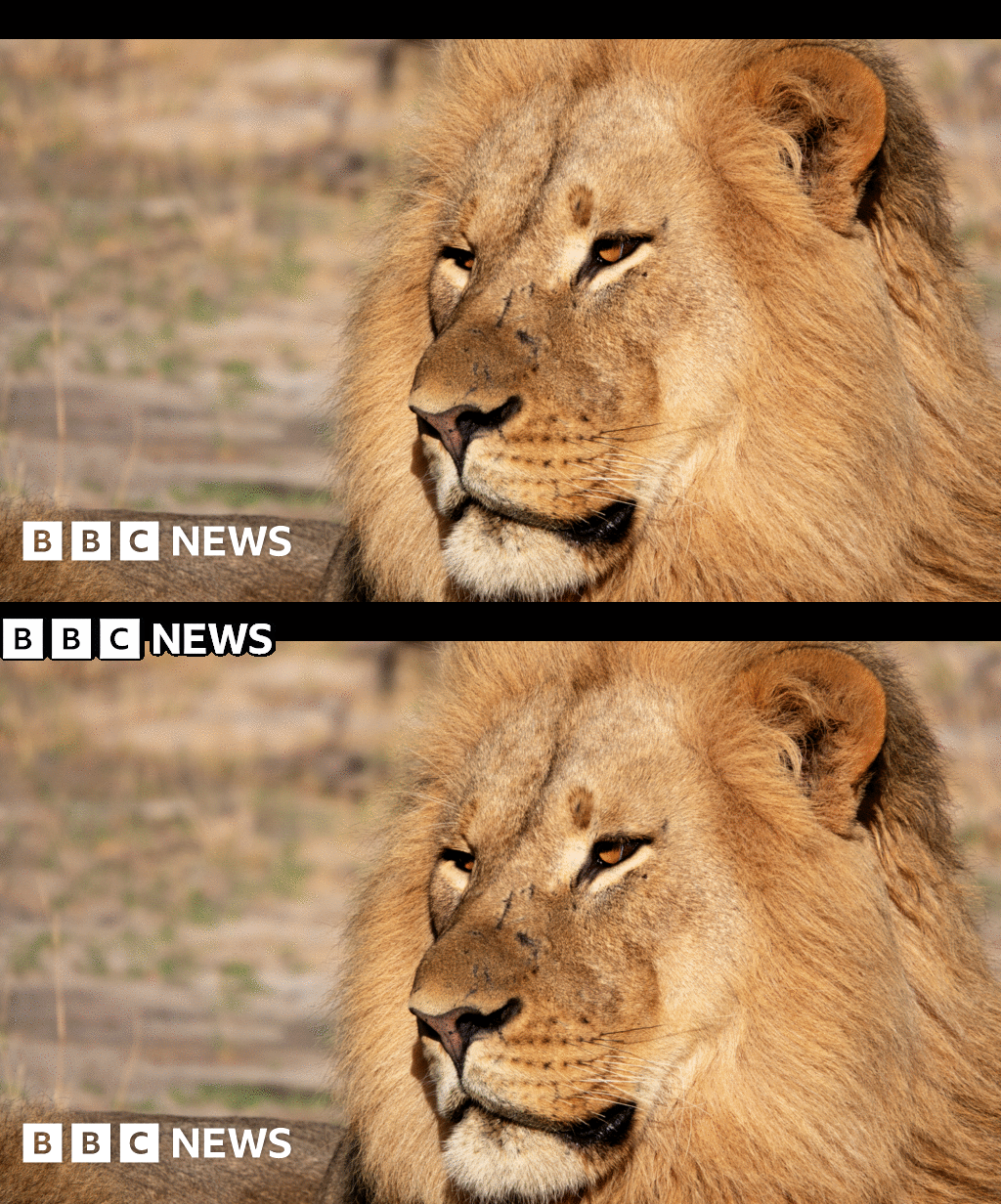
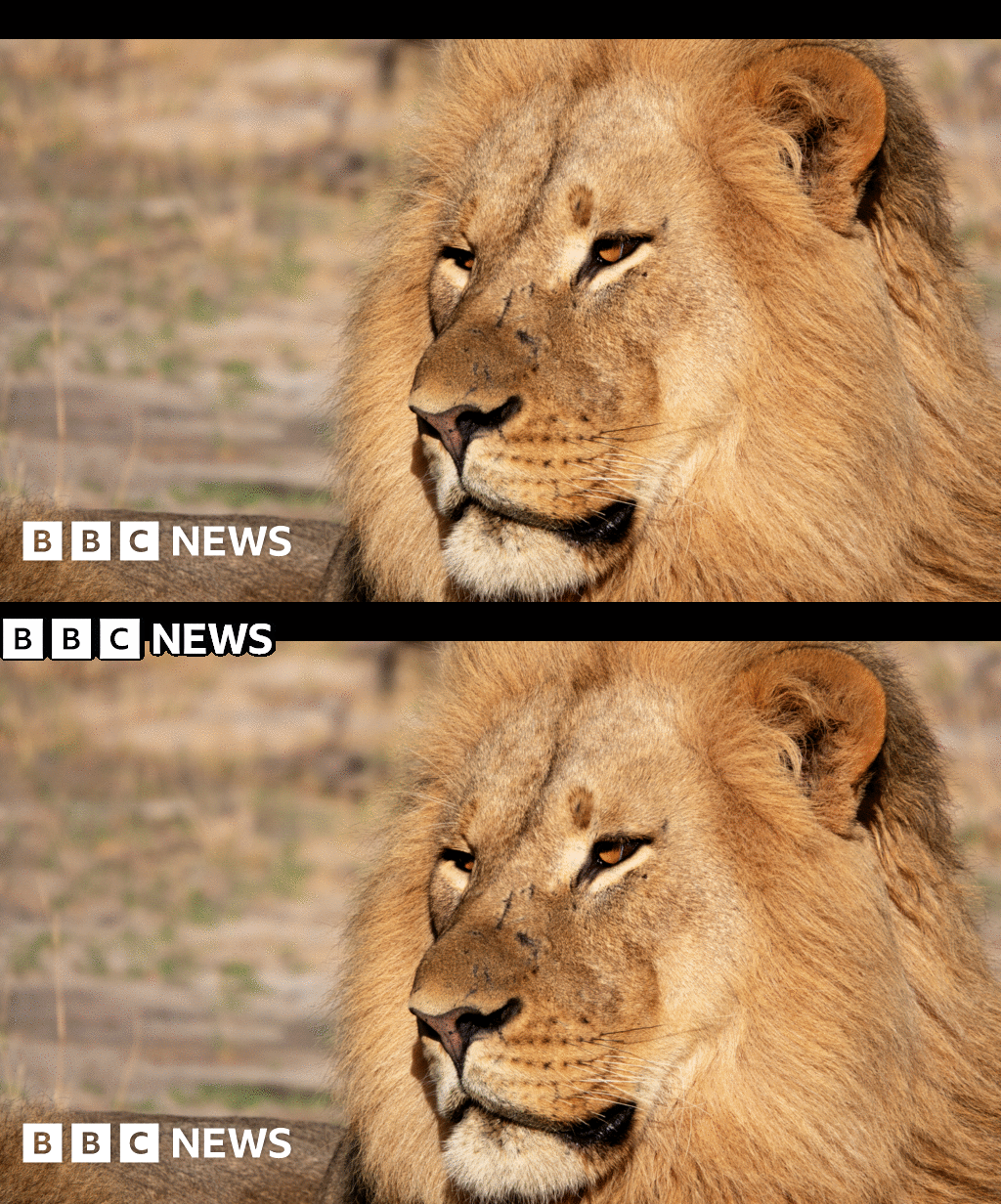
Details of this landmark case, previously undisclosed, have now been shared by the non-governmental organisation (NGO) Traffic, a global leader in combating illegal wildlife trade. The incident unfolded in May 2024 within the vast expanses of Hwange National Park, Zimbabwe’s largest game reserve, a vital sanctuary for its lion population. Authorities became alarmed when a male lion, which was part of a conservation tracking program and fitted with a radio collar, suddenly went silent. The abrupt cessation of the collar’s signal immediately triggered an investigation, indicating a strong likelihood that the animal had been killed.
Investigators, comprising park rangers, police, and wildlife experts, swiftly mobilized to trace the lion’s last known location. Their search led them to a grim discovery: a snare, a cruel and indiscriminate poaching device, with tell-tale strands of lion fur still clinging to it. This initial piece of evidence was meticulously collected for forensic analysis. Following up on leads in a nearby village, the investigative team questioned two men. A search of their premises yielded three sacks of meat, along with 16 lion claws and four teeth – items often highly prized in illegal wildlife markets. These body parts would prove to be the linchpin of the prosecution.
For years, a significant obstacle in prosecuting wildlife crime in Zimbabwe, and indeed across much of Africa, has been the difficulty in proving the illegal origin of seized animal products. The mere possession of lion parts, such as claws or teeth, has historically been explained away by suspects as deriving from animals that died naturally, or as traditional ornaments passed down through generations. Without definitive proof linking the parts to a specific act of poaching, convictions were often elusive, even when suspicion ran high.
This is where the revolutionary application of DNA profiling changed the game. The Victoria Falls Wildlife Trust (VFWT), an organization dedicated to wildlife conservation and research, had, over the past eight years, been painstakingly building a comprehensive DNA database of lions across Zimbabwe. This ambitious project, bolstered by approximately £250,000 in funding from the UK’s People’s Postcode Lottery, involved collecting blood and tissue samples from individual lions, including those fitted with tracking collars, to create unique genetic profiles for each animal. This foresight proved invaluable.
A scientist at the VFWT laboratory, whose identity remains anonymous for safety reasons given the dangerous nature of wildlife crime, was instrumental in this breakthrough. "Before we had access to this technology, we were only able to do species identification, but sometimes that’s not enough," the scientist explained. "We can essentially match those claws or those products to the lion of interest that we are looking for." The process involved extracting DNA from the seized lion meat, claws, and teeth. This genetic profile was then rigorously compared against the existing database, specifically to the profile of the collared male lion whose signal had ceased. The match was unequivocal and absolute, definitively linking the recovered body parts to the missing animal.
The speed and precision of this forensic evidence were remarkable. Within just ten days of the lion’s killing, the robust DNA evidence was presented in court. Faced with irrefutable scientific proof, the two poachers pleaded guilty to their crimes. They were subsequently sentenced to 24 months in prison, a significant penalty that underscores the seriousness with which wildlife authorities and the judiciary are now treating such offenses. During the hearing, the court was informed that the estimated value of the poached lion was approximately $20,000, a figure that highlights the economic loss incurred by the nation and the high stakes involved in illegal wildlife trade.
Richard Scobey, Traffic’s executive director, lauded the achievement, emphasizing its broader implications. "Countries now have the forensic capability to bring solid, science-based evidence to court," Scobey stated. He predicted that this success would have a profound global impact, inspiring similar initiatives and strengthening legal frameworks for wildlife protection worldwide. Professor Rob Ogden, co-founder of Trace, an organization that champions the use of forensic science in wildlife law enforcement and who was closely involved in establishing the project, echoed this sentiment. He described the prosecution as sending "a message of hope," illustrating what can be achieved through a concerted combination of specialized training, cutting-edge research and development, and meticulous forensic casework.
This landmark case comes at a critical time, as recent figures indicate a disturbing increase in the number of lions being killed for their body parts. The motivations behind this surge are complex and multifaceted. Lion bones, claws, and teeth are trafficked for various purposes, including their use in traditional Chinese medicine (TCM) as substitutes for tiger parts, and as cultural objects or adornments in some African communities. Disturbingly, there is a growing concern that organized crime gangs, already deeply entrenched in the illegal trade of rhino horn and ivory, are increasingly diversifying into lion poaching, bringing their sophisticated networks and ruthless methods to bear on this vulnerable species.

The scale of the problem is stark. In Mozambique alone, between 2010 and 2023, an alarming 426 lions were killed due to human contact, with a quarter of these deaths directly linked to deliberate poaching. Evidence of this burgeoning illicit trade is also seen in numerous large-scale seizures by authorities across the continent. These include the discovery of 17 lion skulls in Lusaka in 2021, reportedly en route from South Africa, and a massive seizure in Maputo in 2023 of over 300kg of lion body parts. These figures underscore the urgent need for more effective deterrents and enforcement mechanisms.
It is precisely why this breakthrough in individual lion DNA identification is regarded as so profoundly significant. By providing an irrefutable link between poachers and their victims, it eliminates ambiguity and significantly strengthens the hand of prosecutors. This case sends an unequivocal message to would-be poachers: the era of impunity is drawing to a close. The combination of advanced scientific techniques, dedicated conservation efforts, and robust legal action offers a powerful new weapon in the ongoing battle to protect Africa’s iconic lions and other endangered wildlife from the relentless threat of illegal exploitation. This precedent is poised to transform wildlife law enforcement, offering a blueprint for similar successes against poaching networks globally.




 George Anjay
 Ramos Leo
 Roy Suryo