Roy Suryo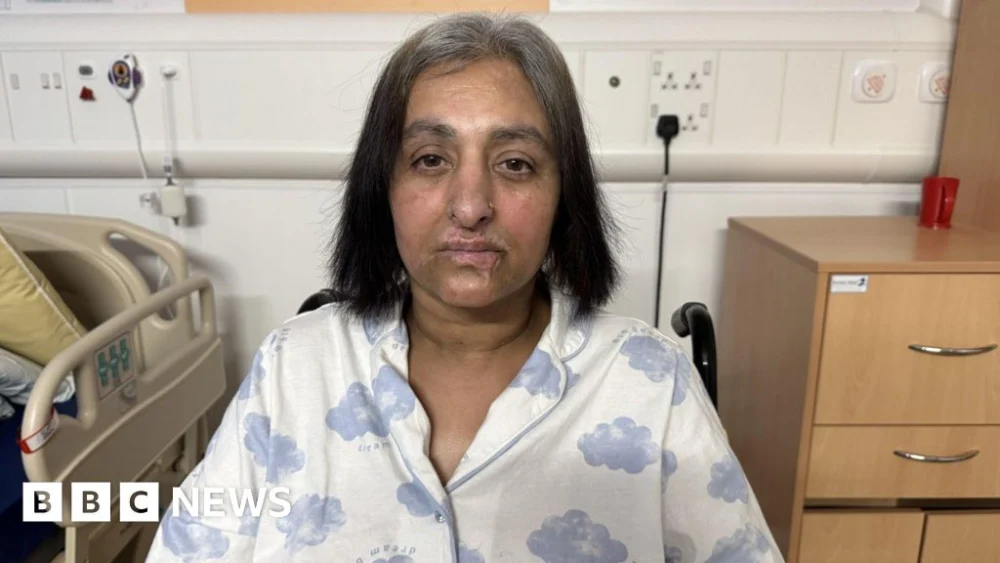
After a harrowing 32 weeks in hospital, punctuated by multiple cardiac arrests and the life-altering quadruple amputation, sepsis survivor Manjit Sangha has finally returned to the comfort of her home in Penn, on the Wolverhampton/Staffordshire border. The 56-year-old received a hero’s welcome from her jubilant family, a stark contrast to the grim prognosis she faced, with medics having believed her survival was highly unlikely. Her devastating battle with sepsis, a condition doctors suspect may have been triggered by something as seemingly innocuous as a lick from her dog on a minor cut or scratch, has transformed her life in a way she could never have imagined. As she embarks on the arduous journey of recovery and rebuilding, Ms. Sangha is driven by a powerful desire to educate others about the insidious danger of sepsis, emphasizing that "it could happen to anybody."
"It’s difficult to explain the experience," Ms. Sangha shared, her voice a testament to the immense ordeal she has endured. "Losing your limbs and your hands in a short time period is a very big thing. It’s very serious and not to be taken lightly." The physical and emotional toll of such profound loss is immeasurable, yet her determination to reclaim her life shines through.
Sepsis, a rare but life-threatening condition, arises when the body’s immune system, designed to combat infections, mistakenly attacks its own tissues and organs. This overwhelming inflammatory response can lead to rapid organ damage and failure, making timely recognition and treatment absolutely critical.
Ms. Sangha’s ordeal began on a Sunday afternoon in July of the previous year, when she returned home from work, feeling unwell. By the following morning, her condition had deteriorated drastically. She was unconscious, her extremities were ice-cold, her lips had turned a disturbing shade of purple, and she was struggling to breathe. Her husband, Kam Sangha, a 60-year-old distribution worker, described the terrifying swiftness of her decline. "Your mind is all over the place," he recounted, his voice still etched with the memory of that harrowing time. "You’re thinking ‘how can this happen in less than 24 hours?’ One minute on a Saturday she’s playing with the dog, Sunday she’s gone to work, Monday night she’s in a coma."
During her critical stay at New Cross Hospital in Wolverhampton, Ms. Sangha’s heart stopped an astonishing six times while she was in intensive care. The severity of the infection meant that surgeons at Russells Hall Hospital in neighbouring Dudley were ultimately forced to amputate both of her legs below the knee, and both of her hands, in a desperate bid to halt the spread of the gangrene and save her life. The devastating cascade of complications did not end there; the former pharmacy worker also lost her spleen, battled a severe bout of pneumonia, and developed gallstones, which may necessitate further surgical intervention. "I didn’t know what was happening," she confessed, her memory of the initial period in hospital a blur. "The first month I do not remember anything."
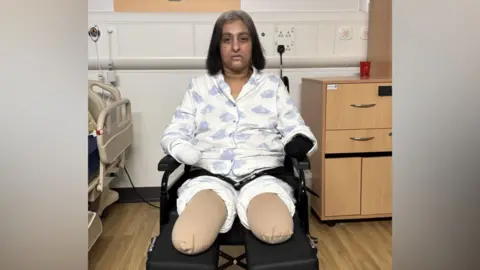
Mr. Sangha, who has been on an extended seven-month leave of absence from his job at Screwfix to provide constant support and care for his wife, expressed immense pride in her resilience. "She’s so strong," he stated emphatically. "Every day was like ‘she’s going to go today’ but she proved us wrong every single day with what she’s been through." Their journey through this ordeal has been marked by significant personal milestones overshadowed by illness, including their 37th wedding anniversary and Ms. Sangha’s birthday, both spent in the confines of the hospital.
The couple are now channeling their energy into fundraising for advanced prosthetics, with the hope of acquiring sophisticated robotic hands that could significantly enhance Ms. Sangha’s independence. The estimated cost for such cutting-edge technology runs into tens of thousands of pounds. To date, they have garnered remarkable support, raising over £22,000 through a dedicated GoFundMe page and fundraising initiatives at Screwfix, where Ms. Sangha also worked weekend shifts alongside her primary role as a pharmacy worker.
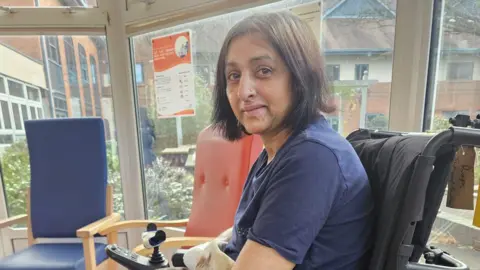
Despite the monumental challenges that lie ahead, Ms. Sangha remains resolute in her determination to rebuild her life and regain her independence. "I want to get walking," she declared with unwavering resolve. "I want to get my prosthetics [and] to go back to work. I’ve sat down in my chair and my bed enough. It’s time to walk now." Her inspiring words underscore a spirit that refuses to be defeated by adversity, a testament to the enduring power of human resilience and the profound impact of a life-saving warning that could prevent others from enduring a similar fate. The awareness she hopes to generate through her story is a crucial step in combating the silent killer that is sepsis, a condition that can strike anyone, anywhere, at any time, with devastating consequences. Her journey, though marked by unimaginable loss, is now a beacon of hope and a powerful call to action for greater public understanding and vigilance against this dangerous disease.



 Nakalama John
 atisusanti
 Ramos Leo