Nakalama John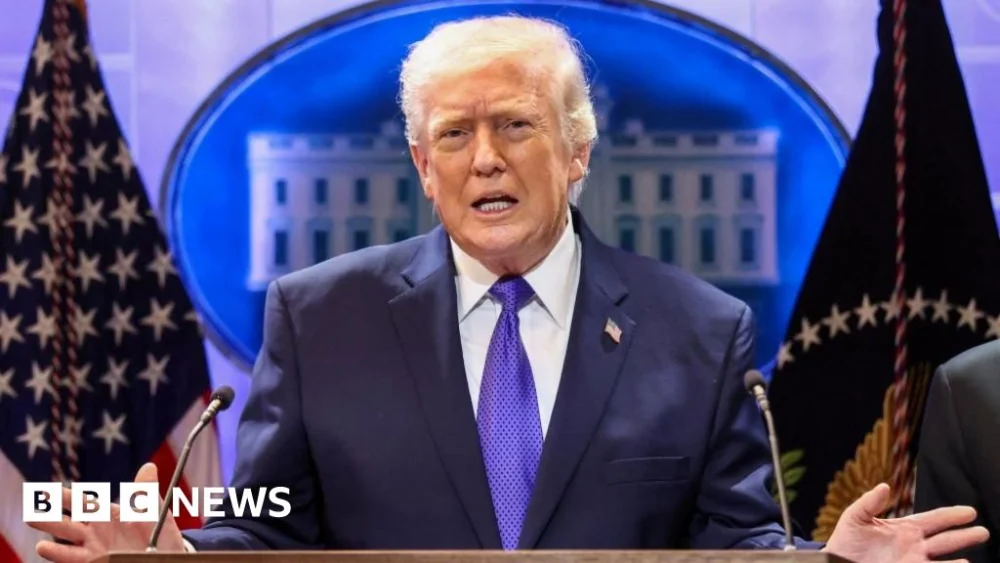
US President Donald Trump swiftly imposed a new 10% global tariff on imports, acting immediately after the Supreme Court delivered a scathing rejection of his previous widespread trade duties. The President lambasted the high court’s decision as "terrible" and publicly attacked the justices who ruled against his trade policy, branding them "fools" and accusing them of being "unpatriotic and disloyal to our Constitution." This dramatic move and fiery rhetoric mark a significant escalation in the ongoing trade disputes and a direct challenge to the judiciary’s role in executive power.
The President’s announcement came shortly after the Supreme Court, in a 6-3 decision, ruled that the White House had overstepped its constitutional authority by imposing a broad array of global tariffs last year. The ruling, a major victory for numerous American businesses and several US states that had challenged the duties, potentially paves the way for billions of dollars in tariff refunds, while simultaneously plunging the global trade landscape into fresh uncertainty. Speaking from the White House on Friday, Trump, ever defiant, indicated that any refunds would not be granted without a protracted legal battle, stating his expectation that "the matter [would] be tied up in court for years." He also affirmed his commitment to pursuing his protectionist trade agenda, asserting that he would leverage "other laws" to press ahead with tariffs, which he consistently argues are essential for encouraging investment and manufacturing within the United States. "We have alternatives — great alternatives and we’ll be a lot stronger for it," he declared, signaling his intent to continue reshaping international trade policies.
The crux of the Supreme Court battle revolved around import taxes that the Trump administration had unveiled last year, initially targeting goods from Mexico, Canada, and China, before dramatically expanding to dozens of trade partners on what the President famously dubbed "Liberation Day" last April. The White House had justified these sweeping tariffs by citing the 1977 International Emergency Economic Powers Act (IEEPA), a statute that grants the president power to "regulate" trade in response to a declared national emergency. However, these measures ignited a fierce outcry both domestically and internationally from firms facing an abrupt and substantial rise in taxes on shipments entering the US, fueling widespread concerns that the levies would inevitably lead to higher consumer prices and disrupt supply chains.
Lawyers representing the challenging states and small businesses argued before the Supreme Court that the IEEPA, the law invoked by the President, made no explicit mention of the word "tariffs." They contended that Congress, which holds the constitutional power to tax, did not intend to cede such a fundamental authority to the executive branch, nor did it intend to grant the president "an open-ended power to junk" existing trade deals and tariff rules. Chief Justice John Roberts, a conservative appointee, sided firmly with this view in his majority opinion. "When Congress has delegated its tariff powers, it has done so in explicit terms and subject to strict limits," Roberts wrote, underscoring the legislative branch’s preeminence in this domain. He further elaborated, "Had Congress intended to convey the distinct and extraordinary power to impose tariffs, it would have done so expressly, as it consistently has in other tariff statutes." This interpretation reinforced the principle of congressional oversight and limited executive authority in matters of taxation and trade.
The decision to strike down the tariffs saw an unusual alignment of justices. The court’s three liberal justices were joined by two justices nominated by President Trump himself: Amy Coney Barrett and Neil Gorsuch. This outcome was particularly noteworthy, highlighting a principled stand on judicial interpretation over political allegiance, and undoubtedly contributing to Trump’s public ire. Three conservative justices—Clarence Thomas, Brett Kavanaugh, and Samuel Alito—dissented, likely emphasizing a broader interpretation of executive power in foreign policy and emergency situations. At the White House, Trump expressed profound disappointment, stating he was "absolutely ashamed" of the Republican appointees on the court who voted against his trade policy, accusing them of being "just being fools and lap dogs."
Economically, shares on Wall Street reacted positively to the news of the ruling, with the S&P 500 closing up approximately 0.7%, as businesses across the US cautiously welcomed the judiciary’s intervention. Beth Benike, owner of Busy Baby products in Minnesota, a company that manufactures in China, articulated a common sentiment of relief, stating, "I feel… like a thousand-pound weight has been lifted off my chest." Similarly, Nik Holm, chief executive of Terry Precision Cycling, one of the small businesses directly involved in the legal challenge, described the ruling as a "relief." He added, "Though it will be many months before our supply chain is back up and running as normal, we look forward to the government’s refund of these improperly-collected duties."
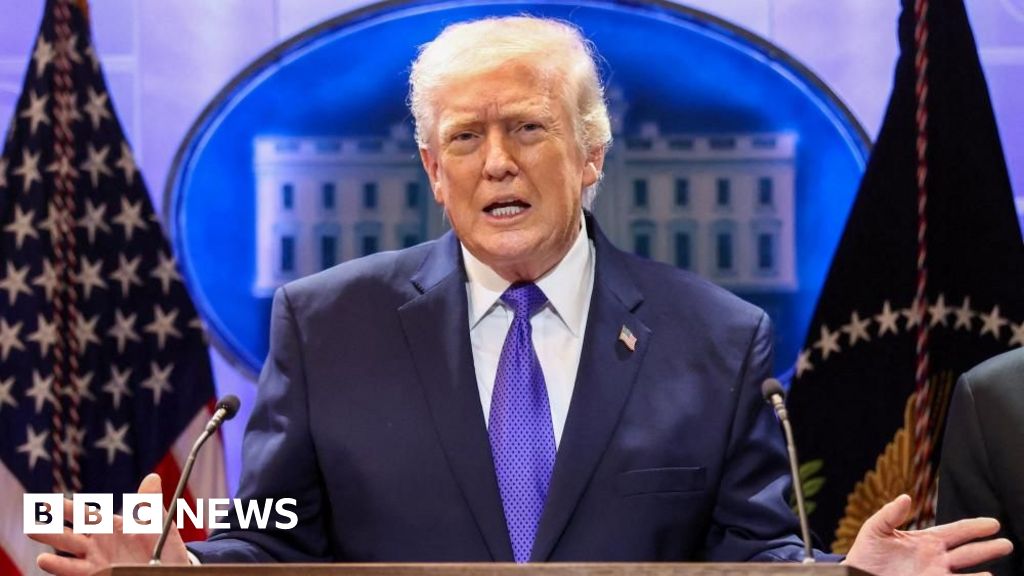
However, the anticipated refunds and relief from tariff costs may yet prove elusive for many. On Friday, almost immediately after the Supreme Court’s ruling, Trump signed a proclamation imposing the new 10% tariff under a never-before-used statute known as Section 122 of the Trade Act of 1974. This particular law grants the president the power to implement tariffs of up to 15% for a period of 150 days, after which Congress must actively intervene to extend or modify them. The new tariff regime is set to go into effect on February 24th.
The new order outlines a variety of exemptions to the 10% tariff. These include certain critical minerals, natural resources, and fertilizers; some agricultural products such as oranges and beef; pharmaceuticals; specific categories of electronics; and certain types of vehicles. For many of these exempt categories, the order is broadly worded, leaving some ambiguity about the precise items that might qualify for exemption. Crucially, Canada and Mexico will largely retain their exemption under the North American free trade pact, the USMCA, for a vast majority of goods, reflecting the specific bilateral agreements in place.
However, a White House official confirmed that countries which had previously struck trade deals with the US, including key allies like the United Kingdom, India, and the European Union, will now face the new global 10% tariff under Section 122, irrespective of their previously negotiated tariff rates. The Trump administration, the official added, expects these countries to continue abiding by the concessions they had agreed to under their respective trade deals, despite the imposition of these new duties. This move threatens to complicate diplomatic relations and existing trade agreements significantly.
Analysts widely anticipate that the White House will also explore and potentially deploy other existing trade tools. These include Section 232 of the Trade Expansion Act of 1962, which allows for import taxes to address national security risks, and Section 301 of the Trade Act of 1974, which permits tariffs in response to unfair trade practices. Trump has previously utilized both of these tools for tariffs, including those announced last year on sectors such as steel, aluminum, and automobiles. Notably, these specific tariffs were untouched by the Supreme Court’s recent ruling, leaving those measures in effect. "Things have only gotten more complicated and more messy today," observed Geoffrey Gertz, a senior fellow at the Center for a New American Security in Washington, highlighting the fragmented and uncertain nature of US trade policy.
Reaction from major trade partners has been relatively muted, as they carefully assess the implications of the ruling and the President’s subsequent actions. European Commission spokesman Olof Gill stated on social media, "We take note of the ruling by the U.S. Supreme Court and are analyzing it carefully," indicating a cautious approach while legal and economic experts within the EU dissect the impact.
The question of refunds for businesses that paid the now-invalidated tariffs remains a significant point of contention and uncertainty. In recent weeks, hundreds of firms, ranging from retail giant Costco to aluminum producer Alcoa and food importers like tuna brand Bumble Bee, have filed lawsuits contesting the tariffs, all vying to get in line for potential refunds. However, the Supreme Court’s majority decision does not directly address the mechanism for these refunds, effectively punting the complex question of how that process might work back to the Court of International Trade. In his dissent, Justice Brett Kavanaugh presciently warned that the situation would become a "mess." Diane Swonk, chief economist at KPMG US, cautioned that the substantial cost of litigation could make recouping funds particularly difficult for smaller firms. "Unfortunately, I’d say curb your enthusiasm, although I understand the desire for relief," she advised. Steve Becker, head of the law firm Pillsbury, suggested that the "best thing" for businesses would be if the government itself created a streamlined procedure that did not necessitate individual lawsuits. "I think companies can be fairly confident that they’ll get their money back eventually," he added. "How long it will take really is up to the government." The complex interplay of executive action, judicial oversight, and legislative authority ensures that the landscape of US trade policy will remain tumultuous and hotly contested for the foreseeable future.
Reporting contributed by Danielle Kaye and World Business Express.


 Roy Suryo
 George Anjay
 Ramos Leo