Nana Banana
The primary objective of this groundbreaking venture is to manufacture advanced materials for semiconductors, the indispensable building blocks of modern electronics. These space-made semiconductors are destined for use across a vast array of crucial technologies, from bolstering global communications infrastructure like 5G networks to powering the intricate computing systems that drive our digital world, and enhancing the efficiency of electric vehicles and next-generation transport systems. The rationale behind moving such manufacturing processes into orbit is rooted in the unique environmental advantages that space offers, conditions that are simply unattainable on Earth.

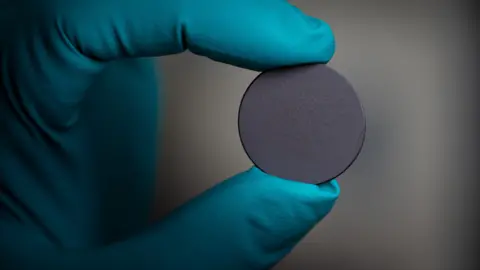
At the heart of Space Forge’s innovation lies the profound understanding that the conditions prevalent in the vacuum of space are ideally suited for creating materials with unparalleled purity and structural integrity. Semiconductors, by their very nature, rely on a highly ordered, three-dimensional arrangement of atoms to function optimally. On Earth, the omnipresent force of gravity introduces subtle yet significant imperfections during the crystallization process, leading to microscopic defects and dislocations in the atomic lattice. However, in the microgravity environment of low Earth orbit, this gravitational interference is virtually eliminated. Without the pull of gravity, atoms can align themselves with exceptional precision, forming perfect crystalline structures.
Furthermore, the natural vacuum of space provides an inherently contaminant-free environment. On Earth, even in the most meticulously controlled cleanrooms, trace impurities from the surrounding atmosphere can inadvertently infiltrate the manufacturing process, compromising the quality of the delicate semiconductor materials. In orbit, the near-perfect vacuum drastically reduces the risk of such contamination, allowing for the creation of materials that are orders of magnitude purer than their Earth-bound counterparts. Josh Western, CEO of Space Forge, articulates the transformative potential of this purity: "The work that we’re doing now is allowing us to create semiconductors up to 4,000 times purer in space than we can currently make here today." He emphasizes the widespread impact these superior materials will have, stating, "This sort of semiconductor would go on to be in the 5G tower in which you get your mobile phone signal, it’s going to be in the car charger you plug an EV into, it’s going to be in the latest planes." This leap in material quality promises to unlock new levels of performance, efficiency, and reliability for future technologies.
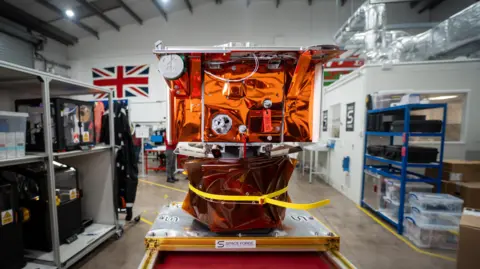
The journey to this orbital manufacturing breakthrough began with the launch of Space Forge’s mini-factory aboard a SpaceX rocket earlier this summer. Since its successful deployment, the dedicated team at Space Forge’s mission control headquarters in Cardiff has been diligently testing its sophisticated systems, monitoring performance, and validating its core functionalities. A pivotal moment in this testing phase involved the successful activation of the onboard furnace and its ascent to 1,000C. Veronica Viera, the company’s payload operations lead, shared her excitement, describing a vivid image beamed back from the satellite. This image, captured from within the furnace itself, showcased plasma – a superheated, ionized gas – glowing intensely at the target temperature. Seeing this visual confirmation was, for Viera, "one of the most exciting moments of my life." She elaborated on its significance: "This is so important because it’s one of the core ingredients that we need for our in-space manufacturing process. So being able to demonstrate this is amazing." The successful generation and containment of plasma at such high temperatures in space is a testament to the robust engineering and advanced thermal management systems developed by Space Forge. It confirms their ability to create the necessary conditions for complex material synthesis far beyond Earth’s atmosphere.
Looking ahead, Space Forge is not content with merely demonstrating proof of concept. The team is already charting a course for expansion, planning the development of a significantly larger space factory. This next-generation orbital facility will be designed to scale up production, capable of manufacturing enough semiconductor material to supply an estimated 10,000 chips. However, the creation of superior materials in space is only half the equation; the other critical challenge lies in safely and efficiently returning these valuable products to Earth.
To address this, Space Forge is focusing on developing and rigorously testing its re-entry technology. A future mission will see the deployment of a specialized heat shield, aptly named Pridwen – a legendary shield wielded by King Arthur. This advanced heat shield is crucial for protecting the spacecraft and its precious cargo from the extreme temperatures and immense aerodynamic stresses encountered during atmospheric re-entry. The ability to perform controlled re-entry and retrieve manufactured goods intact is fundamental to establishing a viable and economically sustainable in-space manufacturing industry. Beyond the technical challenges, Space Forge also aims for its platforms to be reusable, minimizing space debris and contributing to a more sustainable space economy.
Space Forge’s ambitious undertaking is part of a broader, rapidly accelerating trend in the global space industry. Numerous other companies and research institutions are also casting their gaze skywards, exploring the unique advantages of microgravity and vacuum for a diverse range of manufacturing applications. These include the production of advanced pharmaceuticals with enhanced purity and efficacy, the cultivation of artificial tissues for medical research and transplantation, the creation of novel high-performance alloys, and the fabrication of ultra-pure fibre optics with superior transmission capabilities. The unique environment of space allows for processes like containerless processing, where molten materials can solidify without touching container walls, eliminating impurities and defects that arise from terrestrial manufacturing methods.

Libby Jackson, head of space at the Science Museum, succinctly captures the essence of this emerging era: "In-space manufacturing is something that is happening now." While acknowledging that it is still in its "early days" and current production is in "small numbers," Jackson emphasizes the critical importance of proving the underlying technology. She highlights that by demonstrating technical feasibility and reliability, these pioneering efforts "really open the door for an economically viable product, where things can be made in space and return to Earth and have use and benefit to everybody on Earth. And that’s really exciting." This vision points towards a future where the unique environment of space becomes an integral part of the global supply chain, delivering unparalleled materials that drive innovation and improve lives back on our home planet. Space Forge’s successful furnace ignition is not just a technological feat; it is a blazing signal for the dawn of a new industrial revolution, one that extends beyond Earth’s atmosphere.




 George Anjay
 Nakalama John
 atisusanti
 Ramos Leo