
 Nana Banana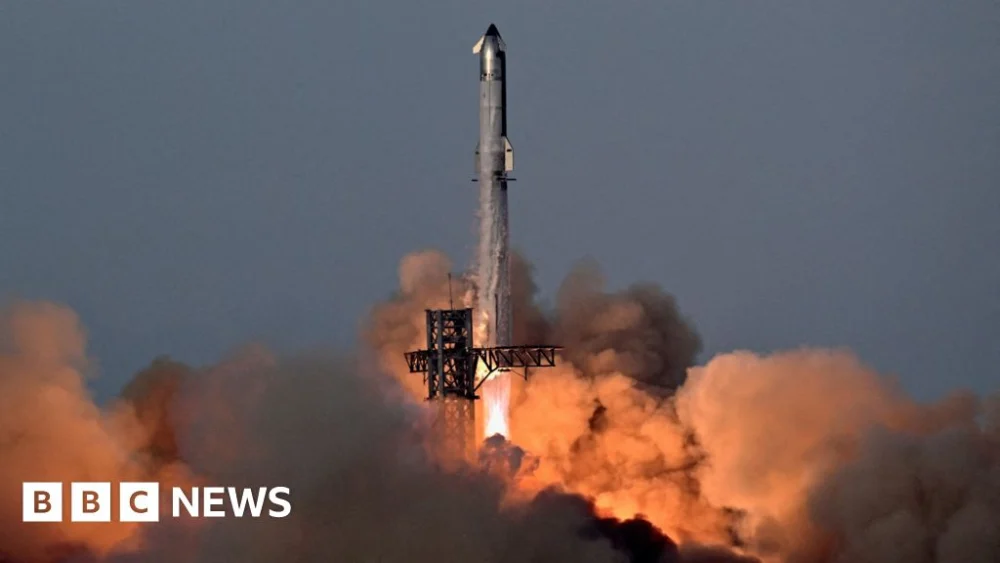
SpaceX achieved a monumental success with the test flight of its colossal Starship rocket, marking a dramatic reversal after a series of high-profile failures that had cast shadows over the ambitious program. This triumphant flight represents a critical milestone for the world’s largest and most powerful rocket system, propelling SpaceX closer to its audacious goals of lunar missions and ultimately, human settlement on Mars.
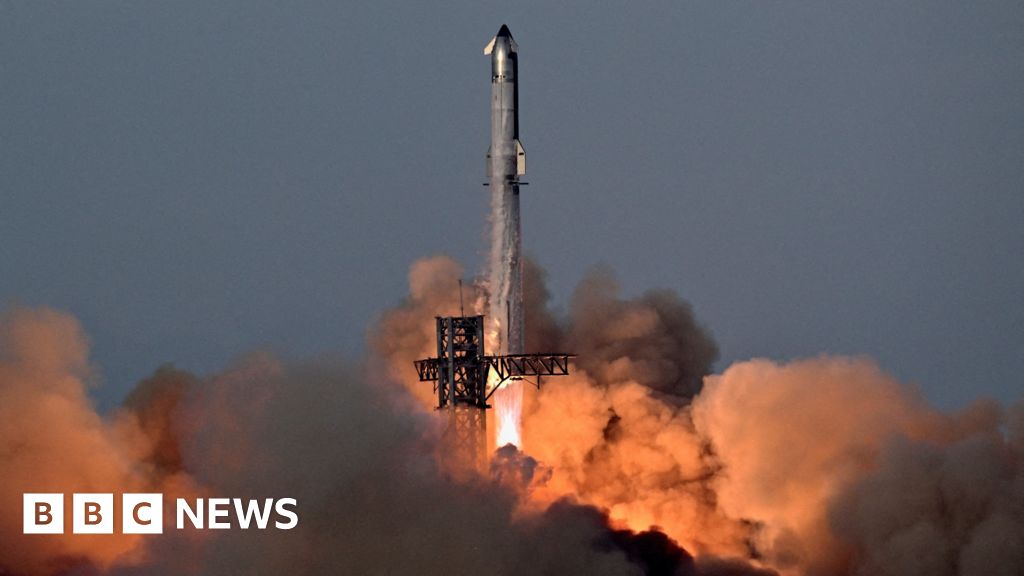
The gargantuan rocket, comprising the Super Heavy booster and the Starship spacecraft, thundered off the launchpad at Starbase in Boca Chica, Texas, just after 6:30 PM local time (00:30 BST). What followed was a nail-biting 60-minute journey that captivated observers worldwide, culminating in a successful splashdown of both stages – an unprecedented achievement for the fully integrated system. Previous attempts had ended in spectacular, though often informative, explosions, leading to increasing scrutiny and pressure on the company.
While the flight was hailed as a success, it wasn’t without its dramatic moments. Observers noted parts of the engine appearing to vent or "explode" at one stage during the ascent, a phenomenon often related to controlled fuel burns or structural stresses. During re-entry, flaps on the side of the Starship spacecraft visibly caught fire and swung wildly, a testament to the extreme aerodynamic and thermal forces the vehicle endured. These occurrences, while visually alarming, are often anticipated during strenuous test flights designed to push the limits of engineering and gather critical performance data.
The stakes for this flight were exceptionally high, not just for SpaceX but also for NASA. The US space agency has contracted SpaceX to develop a modified version of Starship as the Human Landing System (HLS) for its Artemis program, with the ambitious goal of returning humans to the Moon by 2027. This pivotal role underscores Starship’s importance in the broader context of humanity’s return to the lunar surface.
Following the successful mission, SpaceX CEO Elon Musk, who has personally invested billions into Starship’s development (with each launch estimated to cost around $100 million), expressed his elation on X, posting, "Great work by the SpaceX team!!" His vision for Starship extends far beyond Earth’s orbit; it is designed to be a fully reusable, multi-planetary transport system, capable of ferrying hundreds of tons of cargo and eventually, large numbers of people, to the Moon and Mars.
Starship is an engineering marvel, dwarfing all previous rockets. Standing at an imposing 121 meters (397 feet) tall, it surpasses even NASA’s iconic Saturn V rocket, which propelled Apollo missions to the Moon, and the agency’s current Space Launch System (SLS). Its two stages, the Super Heavy first-stage booster and the Starship upper stage, are powered by an unprecedented array of Raptor engines – 33 on the Super Heavy and 6 on the Starship, generating an astonishing 7,500 tons of thrust. This immense power is essential for lifting massive payloads and eventually, fully fueled spacecraft, off Earth.
The signs of success were evident from the very start of Tuesday’s flight. All 33 of the Super Heavy booster’s Raptor engines ignited flawlessly, a critical achievement given past issues with engine reliability. Approximately seven minutes into the flight, the booster successfully separated from the Starship spacecraft, executing a ‘hot stage’ maneuver where Starship’s engines ignite before full separation – a complex and risky procedure. The Super Heavy then performed a controlled descent, splashing down precisely into the designated area in the Gulf of Mexico.
Starship continued its ascent, reaching an impressive maximum height of nearly 200 kilometers (124 miles) above Earth, before entering a coasting phase around the planet. SpaceX’s explicit intention for this flight was to stress the rocket, gathering invaluable data on its performance under extreme conditions. The visible burning and swinging of the rocket’s flaps during re-entry provided precisely the kind of real-world data needed to refine the design and materials for future flights.
The company’s ultimate design philosophy for Starship revolves around full reusability, a concept pioneered by SpaceX with its Falcon 9 and Falcon Heavy rockets. Unlike traditional expendable rockets, where costly stages are discarded after use, Starship aims for rapid, aircraft-like reusability for both its booster and spacecraft. This radically reduces launch costs, making frequent, large-scale space travel economically viable – a cornerstone of Musk’s vision for colonizing other planets.
Dr. Simeon Barber, a planetary scientist at the Open University, underscored the significance of the flight, stating, "This was a great day for SpaceX, executing its full mission for the first time and deploying some test dummy satellites along the route." (While the original quote mentions "test dummy satellites," the primary focus of this test was on data collection and demonstrating the full flight profile, rather than deploying actual payloads). He emphasized that SpaceX would have amassed a comprehensive dataset covering every phase of the mission – from liftoff and ascent to staging, coasting, re-entry, and landing – representing a monumental leap forward for the company.
The journey to this success has been fraught with challenges. The first iteration of the Starship upper stage (known as Starhopper and early prototypes) had seen five successful test hops and landings. However, the fully integrated Starship and Super Heavy system, in its more advanced configurations, had previously experienced three consecutive launch failures this year, all ending in spectacular explosions either shortly after liftoff or during subsequent flight phases. These incidents, while publicly dramatic, were consistently framed by SpaceX as rapid learning opportunities, adhering to their "fail fast, learn fast" development mantra.
Beyond the full flight profile, SpaceX also successfully executed a crucial "chopstick" maneuver during a previous booster return attempt, where the Super Heavy booster was caught by mechanical arms on the launch tower. While not performed on this specific mission’s booster splashdown, the prior success of this innovative recovery method highlights SpaceX’s commitment to pushing the boundaries of reusability.
For NASA, the success of Starship is paramount. The agency’s contract with SpaceX designates Starship as the Human Landing System for its Artemis III mission, slated to land astronauts on the Moon in 2027. However, most space industry observers, including Dr. Barber, caution that this date is "almost certain to slip." He elaborates, "This is also a big step forward for Nasa’s Artemis program, but there’s still a lot of development work to happen to get this spacecraft ready and to be rated to carry humans safely to the Moon." Achieving the stringent safety certifications required for human spaceflight, along with further development and extensive testing, presents significant hurdles that will likely push the lunar landing timeline further into the future.
Elon Musk, ever ambitious, has expressed hopes for Starship to be certified for human travel as early as next year and has even suggested un-crewed flights to Mars within the next 12 months. These timelines are considered highly aggressive by industry experts, highlighting the immense challenges that remain.
SpaceX’s "fail fast, learn fast" philosophy stands in stark contrast to the more cautious, risk-averse approach traditionally favored by government space agencies. This iterative, rapid-prototyping method allows for quicker design cycles and real-world testing, but it also comes with the public spectacle of frequent failures. For SpaceX, each explosion was not a setback but a data collection event, providing crucial information to improve subsequent designs.
However, after three successive failures earlier this year, questions had begun to surface about the program’s viability and even about Elon Musk’s focus. The article noted his increasing involvement in US politics, including his support for Donald Trump, and a falling out in June. While these political engagements might have raised concerns about potential distractions, the technical teams at SpaceX evidently remained dedicated to their mission, culminating in this breakthrough flight.
Starship returned to Earth on Tuesday, undoubtedly battered and bruised from its fiery re-entry, but its journey represented a massive leap forward for SpaceX. It validated many of the core design principles and demonstrated critical flight phases that were previously unproven. As Dr. Ken Kremer, a research scientist and founder of Space UpClose, succinctly put it, Tuesday’s success "gets the program back on track – getting to the Moon is another question." He reiterates the widespread skepticism regarding the 2027 Moon landing target, stating, "I don’t want to say it’s impossible but it’s extremely unlikely."
The new space race is heating up, with the US fiercely competing against China to be the first to return humans to the Moon. China has made significant strides with its own ambitious lunar program, including successful robotic landers and rovers, and a burgeoning space station. Some scientists now suggest that despite Starship’s recent progress, China might ultimately win the race to land humans on the Moon, given the remaining complexities and timelines for Starship’s human rating. Nevertheless, this stunning comeback flight for Starship undeniably injects renewed momentum and confidence into SpaceX’s audacious quest to redefine humanity’s future in space.




 Roy Suryo
 Nakalama John


 atisusanti