Nana Banana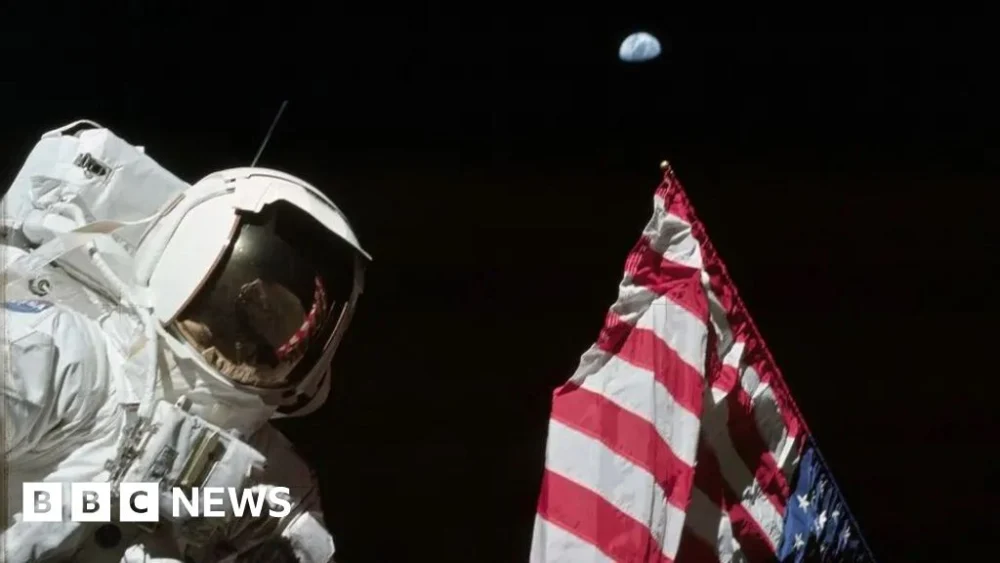
NASA’s ambitious Artemis program aims to establish a sustainable human presence on the Moon within this decade, envisioning a future where astronauts not only visit but also live and work there. Not to be outdone, China has declared its own goal of landing astronauts on the lunar surface by 2030, a testament to its rapidly advancing space capabilities, underscored by its successful landing of a probe on the far side of the Moon in June 2024. Beyond national agencies, a burgeoning sector of private companies has also entered the lunar arena, striving to send scientific craft to the Moon. While these pioneering efforts have seen a mix of successes and notable mishaps, they highlight a vibrant, competitive, and challenging new chapter in space exploration.
However, the path back to the Moon is proving complex. NASA had initially planned to launch Artemis II, its first crewed lunar expedition since Apollo 17, last year. Yet, the agency has since announced a revised timeline, pushing the launch date into 2026, citing the need for additional time to ensure the mission’s safety and success. Concurrently, private aerospace giants like SpaceX and Boeing continue to develop their cutting-edge technologies, though not without encountering their own share of developmental setbacks. These delays, while understandable in the context of such complex undertakings, underscore a poignant reality: the number of living Apollo astronauts, who bear witness to humanity’s first lunar leaps, continues to dwindle with each passing year. Their ranks are thinning, making their stories and perspectives all the more precious.
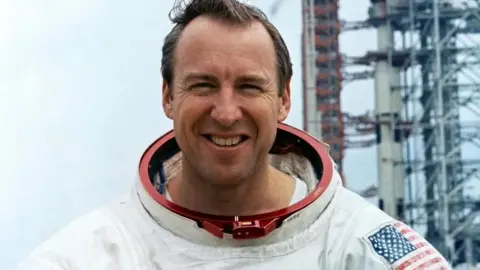
Among these legendary figures is Jim Lovell, a name synonymous with both triumph and peril in space. Along with Frank Borman and Bill Anders, Lovell etched his name in history by undertaking the groundbreaking Apollo 8 mission in December 1968. This mission marked humanity’s first journey to orbit the Moon, a critical step that tested the Command/Service Module and its vital life support systems in preparation for the subsequent Apollo 11 landing. Their spacecraft completed ten orbits of the Moon, providing humanity with its first breathtaking views of Earthrise, before safely returning home. Lovell was later slated to become the fifth human to walk on the lunar surface as commander of Apollo 13 in April 1970. Fate, however, intervened, and the intended lunar landing never occurred. Instead, the mission famously became a harrowing fight for survival after an on-board explosion crippled their spacecraft more than 200,000 miles (321,000 km) from Earth. The gripping saga of his brush with death and the extraordinary efforts of mission control to bring his crew back safely was immortalized in the acclaimed film Apollo 13, where he was famously portrayed by Tom Hanks. Following his retirement from NASA in 1973, Lovell transitioned into a successful career in the telecoms industry. His beloved wife of over 60 years, Marilyn, who became a focal point for media attention during the infamous Apollo 13 incident, passed away in August 2023, leaving him as one of the few remaining direct links to that golden age of space exploration.
But what of the other "Moon men" – those who walked on the lunar surface or played critical roles in these historic missions and are still with us? Who are they, and what are their enduring stories?
Buzz Aldrin (Apollo 11)
On the historic day of July 21, 1969, former fighter pilot Edwin "Buzz" Aldrin made history by becoming the second person to step onto the surface of the Moon, approximately 20 minutes after his commander, Neil Armstrong. As he gazed upon the alien landscape, Aldrin’s initial words captured the moment: "Beautiful view." Armstrong responded, "Isn’t that something? Magnificent sight out here." To which Aldrin famously replied, "Magnificent desolation." This phrase perfectly encapsulated the stark, breathtaking, yet lifeless beauty of the lunar environment.
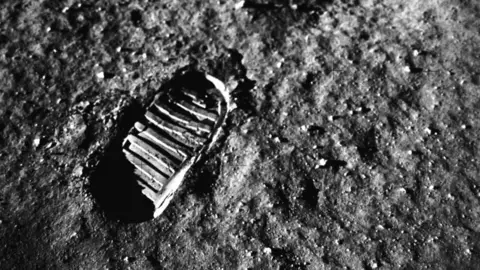
Aldrin openly admitted that being second to step on the Moon never entirely sat comfortably with him. His Apollo 11 crewmate, Michael Collins, observed that Aldrin "resented not being first on the Moon more than he appreciated being second." Despite this personal struggle, Aldrin remained fiercely proud of his monumental achievement. Many years later, his dedication to the truth of the Apollo missions was evident when, at 72, he famously punched a man who persistently claimed Apollo 11 was an elaborate hoax. Following Neil Armstrong’s death in 2012, Aldrin paid tribute, stating, "I know I am joined by many millions of others from around the world in mourning the passing of a true American hero and the best pilot I ever knew."
Despite facing personal challenges in later life, Aldrin never lost his adventurous spirit, participating in expeditions to both the North and South Poles, the latter at the remarkable age of 86. While embracing his celebrity status, he has remained a passionate advocate for the future of space exploration, particularly emphasizing the need to explore Mars. "I don’t think we should just go there and come back – we did that with Apollo," he often asserts, advocating for long-term human presence. His distinctive name has also resonated with new generations, serving as the inspiration for the beloved character Buzz Lightyear from the Toy Story film series. In January 2023, at the age of 93, Aldrin embarked on a new personal journey, marrying for the fourth time, continuing to live a life as extraordinary as his journey to the Moon.
Charles Duke (Apollo 16)
Among the diminishing number of people who have walked on the Moon, only four remain alive, and Charlie Duke is one of them. He achieved this extraordinary feat at the remarkably young age of 36, making him the youngest person ever to set foot on the lunar surface. In a later BBC interview, Duke vividly recalled the "spectacular terrain" he encountered. "The beauty of it… the sharp contrast between the blackness of space and the horizon of the Moon… I’ll never forget it. It was so dramatic."
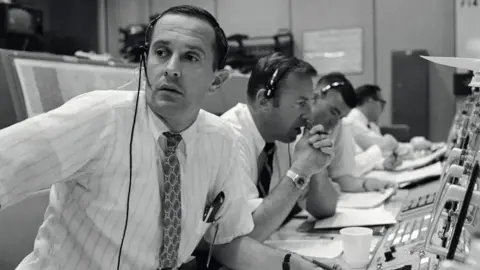
However, Duke’s significant contributions to NASA’s lunar exploration began even before his own Moon walk. During the pivotal Apollo 11 mission in 1969, he served as the Capsule Communicator (Capcom) in mission control. It was Duke, waiting nervously on the other end of the line, who received Neil Armstrong’s iconic message: "Houston, Tranquility Base here. The Eagle has landed." In his distinctive southern drawl, Duke’s relief and excitement were palpable as he replied, "Roger, Tranquility. We copy you on the ground, you’ve got a bunch of guys about to turn blue, we’re breathing again."
In 2022, Duke expressed his excitement about NASA’s upcoming Artemis mission, yet offered a cautionary note to the new generation of astronauts. "They’ve picked near the South Pole for the landing, because if there’s any ice on the Moon, it would be down in that region. So that’s gonna be difficult – because it’s really rough down there. But we’ll pull it off," he stated, reflecting his enduring confidence in human ingenuity. Today, Charlie Duke resides outside San Antonio, Texas, with Dorothy, his wife of over 60 years, sharing a lifetime of memories that include some of humanity’s greatest adventures.
Fred Haise (Apollo 13)
Fred Haise’s name is inextricably linked with one of the most dramatic sagas in space history. He was a vital part of the Apollo 13 crew that narrowly averted disaster in April 1970 after an on-board explosion caused the mission to be aborted when the craft was more than 200,000 miles (321,000 km) from Earth. The world watched with bated breath, gripped by fear and hope, as NASA engineers and the crew worked tirelessly against impossible odds to return the severely damaged spacecraft and its three astronauts safely home. Upon their miraculous return, Haise and his crewmates, James Lovell and Jack Swigert, found themselves instant celebrities, a status that seemed to genuinely surprise them. "I feel like maybe I missed something while I was up there," Haise humorously remarked to talk show host Johnny Carson during their appearance on The Tonight Show.
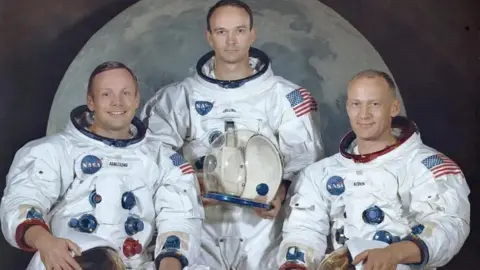
Tragically for Haise, he never achieved his dream of walking on the Moon. Although he was scheduled to command Apollo 19, that mission, along with all other planned flights after Apollo 17, was cancelled due to significant budget cuts. Despite this profound disappointment, Haise continued to serve NASA with distinction, later playing a crucial role as a test pilot for the prototype space shuttle, Enterprise, contributing to the next era of human spaceflight. Like many of his fellow Apollo alumni, after leaving NASA, Haise transitioned into the aerospace industry, where he continued to contribute his expertise until his eventual retirement, always carrying the unique experience of his dramatic lunar journey.
Harrison Schmitt (Apollo 17)
Harrison Schmitt stands out among the Apollo astronauts for his unique background. Unlike the vast majority of his peers, who were accomplished military test pilots, Schmitt had not served as a pilot in the US armed forces. A highly accomplished geologist and academic, he initially played a critical role instructing NASA astronauts on geological principles and what to look for during their lunar field trips. His scientific acumen led him to become a scientist-astronaut himself in 1965, a groundbreaking inclusion.
Schmitt was a member of the last crewed mission to the Moon, Apollo 17, which took place in December 1972. Alongside commander Eugene Cernan, he became one of the last two men to ever set foot on the lunar surface, marking the end of humanity’s initial forays onto another celestial body. His presence on the mission underscored a shift towards more scientific exploration, allowing for expert geological analysis directly from the lunar terrain. After departing NASA in 1975, Schmitt embarked on a political career, successfully being elected to the US Senate to represent his home state of New Mexico. He served one term before returning to the private sector, where he has since worked as a consultant in various industries and continued his academic pursuits. He is also known for expressing views that challenge the scientific consensus on climate change.
David Scott (Apollo 15)
David Scott, the distinguished commander of Apollo 15, is another one of the four living men who have walked on the Moon. His mission in July/August 1971 was not only notable for his lunar walk, but also for pioneering a new mode of lunar exploration: driving on it. Scott, along with his crewmate James Irwin, made history by testing out the Lunar Roving Vehicle (LRV), affectionately dubbed "Man’s First Wheels on the Moon." This innovative vehicle, capable of speeds up to 8 mph (12 km/h), revolutionized lunar surface exploration, allowing astronauts to cover significantly larger distances from their lunar lander much more quickly than on foot, thus expanding the scope of scientific investigations.
Scott vividly recalled the thrill of that experience: "On a first mission you never know whether it’s going to work. The greatest thrill was to get it out, turn it on, and it actually worked." This successful deployment of the LRV marked a pivotal moment, transforming the astronauts from mere walkers to true lunar explorers. After his return from the Moon, Scott continued to contribute significantly to NASA, serving in various management roles within the agency. He later transitioned to the private sector, leveraging his unparalleled experience in aerospace. Furthermore, his expertise has been sought after in the entertainment industry, where he has acted as a consultant on several film and television projects, including the iconic movie Apollo 13 and the acclaimed HBO miniseries From The Earth To The Moon, ensuring the authenticity of these cinematic portrayals of space exploration.
The stories of these "last Moon men" are not just relics of a bygone era; they are living testaments to human courage, ingenuity, and the relentless pursuit of the unknown. As the world gears up for the next chapter of lunar exploration with Artemis and other missions, these pioneers offer invaluable insights and inspiration. What new wonders and challenges will the next generation of lunar adventurers accomplish, building on the incredible legacy of those who first dared to touch the Moon? Only time will tell, but the spirit of Apollo continues to guide the way.




 Nakalama John
 George Anjay
 Ramos Leo
 atisusanti
 Roy Suryo