Nana Banana
Humanity’s fascination with life beyond Earth is ancient, with ancestors weaving narratives of celestial beings inhabiting the heavens. In the early 20th Century, astronomers mistakenly interpreted linear features on Mars as canals, sparking widespread speculation that our planetary neighbor hosted an advanced civilization. This captivating notion fueled a rich vein of pulp science fiction, populating popular culture with iconic imagery of flying saucers and the infamous "little green men." During a period marked by Cold War anxieties, visitors from outer space were frequently depicted as menacing invaders, portending peril rather than offering hope. However, decades later, what many describe as "the strongest evidence yet" of potential life on another world has emerged not from Mars or Venus, but from a distant "Hycean" planet, K2-18b, orbiting a star hundreds of trillions of miles away. K2-18b is particularly intriguing as a "Hycean" world, meaning it is thought to be an ocean-covered planet with a hydrogen-rich atmosphere, making it a prime candidate for hosting liquid water and, potentially, life.

A significant challenge in the quest for alien life has always been knowing precisely where to direct our search. For a considerable time, NASA’s primary focus was Mars, driven by its relative proximity and early hints of past water. This paradigm began to shift dramatically in 1992 with the groundbreaking discovery of the first planet orbiting a star outside our own solar system. While astronomers had long theorized the existence of such exoplanets, this marked the first concrete proof. Since that initial discovery, the pace has accelerated exponentially, with nearly 6,000 exoplanets now confirmed. Many of these are gas giants, akin to Jupiter and Saturn, or worlds too extreme in temperature to sustain liquid water, which is widely considered essential for life as we know it. However, a significant number of these newly discovered worlds reside within what astronomers term "The Goldilocks Zone," or the habitable zone – a region around a star where conditions are "just right" for liquid water to exist on a planet’s surface. Professor Madhusudhan optimistically estimates there could be thousands of such potentially habitable worlds within our own Milky Way galaxy alone.
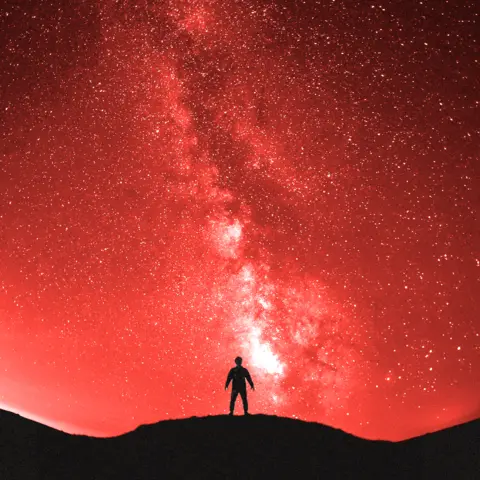
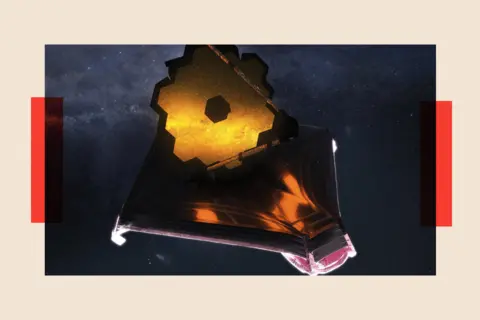
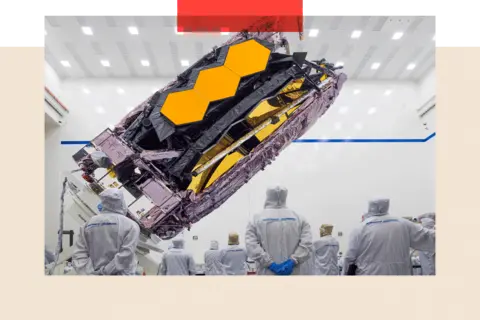
Parallel to this explosion in exoplanet discoveries, scientists have developed increasingly sophisticated instruments capable of analyzing the chemical composition of these distant atmospheres. Their ambition has been nothing short of breathtaking, some might even say audacious. The core idea is to capture the faint starlight that filters through the atmospheres of these faraway worlds as they transit their parent stars. By analyzing the unique spectral "fingerprints" embedded within this light, scientists can identify the presence of specific molecules. The ultimate goal is to detect so-called "biosignatures" – chemical compounds that, on Earth, are uniquely or predominantly produced by living organisms. They have indeed succeeded in engineering such high-precision instruments for both ground-based and space-based telescopes. NASA’s James Webb Space Telescope (JWST), the most powerful space observatory ever constructed, detected the crucial atmospheric gases, including potential biosignatures like DMS, methane, and carbon dioxide, on K2-18b. Its launch in 2021 ignited unprecedented excitement, signaling that the search for extraterrestrial life was finally within humanity’s technological grasp.
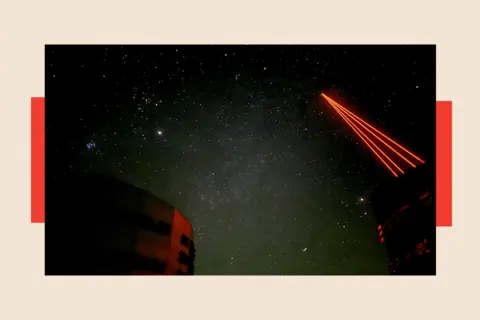
Despite its unparalleled capabilities, the JWST does have limitations; it struggles to detect planets as small as Earth or those orbiting too closely to their host stars due to stellar glare. To overcome these hurdles, NASA is developing the Habitable Worlds Observatory (HWO), slated for the 2030s. The HWO will employ a revolutionary high-tech sunshield to minimize the intense light from a planet’s star, enabling it to directly image and analyze the atmospheres of Earth-sized planets in unprecedented detail. Concurrently, the European Southern Observatory (ESO)’s Extremely Large Telescope (ELT) is set to come online later this decade. Located in the crystal-clear skies of Chile’s Atacama Desert, this ground-based observatory will boast a colossal 39-meter diameter mirror – the largest ever built – allowing it to resolve vastly more detail in exoplanetary atmospheres than any of its predecessors.
Professor Madhusudhan anticipates having sufficient data within the next two years to categorically demonstrate the presence of biosignatures around K2-18b. However, even such a definitive announcement would not immediately trigger widespread celebrations of confirmed alien life. Instead, it would initiate another rigorous scientific debate, focusing on whether the detected biosignatures could potentially be produced through non-biological, abiotic processes. This meticulous verification process is crucial for scientific credibility. Eventually, as more data is amassed from numerous exoplanet atmospheres, and as chemists exhaust all plausible non-living explanations for these biosignatures, the scientific consensus will gradually but inexorably shift towards acknowledging the high probability of life existing on other worlds. Professor Catherine Heymans, Scotland’s Astronomer Royal at Edinburgh University, emphasizes this incremental shift: "With more time on telescopes, astronomers will get a clearer vision of the chemical compositions of these atmospheres. You won’t know that it’s definitely life. But I think the more data that’s built up, and that if you see this in multiple different systems, not just this one particular planet, it gives us more confidence." Much like the World Wide Web, which emerged through a series of incremental technological breakthroughs whose full impact wasn’t immediately apparent, the realization of life beyond Earth may dawn on humanity as a profound, albeit subtly unfolding, scientific, cultural, and social transformation. The moment the balance tips, confirming life elsewhere, might not be a single, dramatic event, but a gradual recognition.
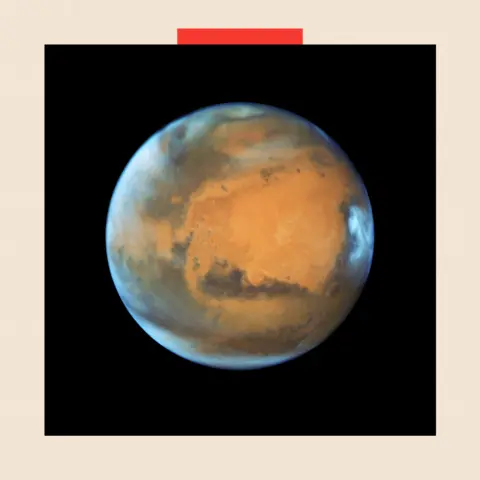
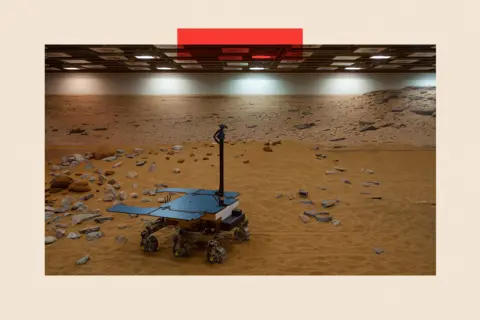
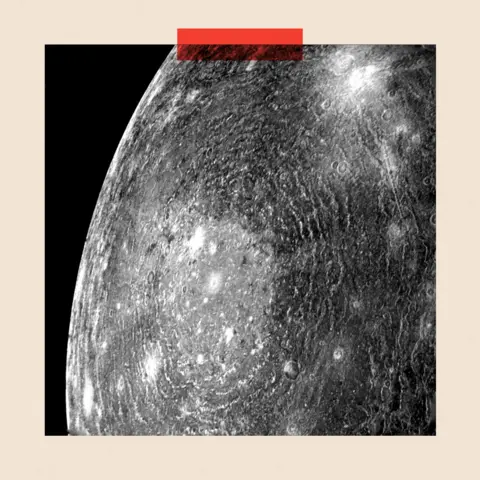
A much more definitive discovery, one less prone to scientific debate, would involve finding life within our own solar system using robotic spacecraft equipped with portable laboratories. An off-world microorganism could be directly analyzed, perhaps even returned to Earth, providing irrefutable prima facie evidence that would significantly curtail any scientific skepticism. The scientific case for the possibility of past or present life within our solar system has strengthened considerably in recent years, thanks to data from various probes. Consequently, several missions are now underway or planned to actively search for such signs. The European Space Agency’s (ESA) ExoMars rover, slated for launch in 2028, is designed to drill deep beneath the Martian surface, searching for evidence of past and potentially extant microbial life in protected subsurface environments. Given Mars’s harsh surface conditions, the discovery of fossilized past life is considered a more probable outcome. China’s Tianwen-3 mission, also targeting a 2028 launch, aims to collect Martian samples and return them to Earth by 2031 for detailed analysis. Simultaneously, NASA’s Europa Clipper and ESA’s Jupiter Icy Moons Explorer (JUICE) spacecraft are en route to Jupiter’s icy moons, particularly Europa and Ganymede, to investigate the presence of vast subsurface oceans beneath their frozen crusts, oceans potentially warmed by tidal forces and hosting hydrothermal vents. These missions are not designed to find life directly but to confirm the necessary conditions for its existence.
As Professor Michele Dougherty of Imperial College, London, explains, "It is a long, slow process. The next decision to make would be a lander, which moon it goes to, and where we should be landing. You don’t want to land where the ice crust is so thick that there is no way you can get underneath the surface. And so, it’s a long, slow burn, but it’s pretty exciting en route." Further afield, NASA is dispatching the Dragonfly rotorcraft to Titan, Saturn’s largest moon, with a planned landing in 2034. Titan is an exotic world, shrouded in an eerie orange haze, with vast lakes and clouds composed of carbon-rich hydrocarbons. Alongside the confirmed presence of water ice, these organic chemicals are considered crucial ingredients for the emergence of life. When asked if she believes there is life on one of Jupiter or Saturn’s icy moons, Professor Dougherty beams, "I’d be very surprised if there wasn’t. Three things are required: a heat source, liquid water and organic (carbon-based) chemicals. If we have those three ingredients, the chances that life is able to form rises really steeply."
While the existence of simple life forms might be common, this offers no guarantee that more complex or intelligent life is prevalent. Professor Madhusudhan believes that, if confirmed, simple life should be "pretty common" across the galaxy. However, he cautions, "But going from that simple life to complex life is a big step, and that is an open question. How that step happens? What are the conditions that govern that? We don’t know that. And then going from there to intelligent life is another big step." Dr. Robert Massey, deputy executive director of the Royal Astronomical Society, concurs that the emergence of intelligent life on another world is considerably less likely than simple microbial life. He observes, "When we see the emergence of life on Earth, it was so complex. It took such a long time for multi-cellular life to emerge and then evolve into diverse life forms. The big question is whether there was something about the Earth that made that evolution possible. Do we need exactly the same conditions, our size, our oceans and land masses for that to happen on other worlds or will that happen regardless?" Dr. Massey posits that even the discovery of simple alien life would represent the latest chapter in the ongoing diminution of humanity’s perceived special place in the cosmos. Centuries ago, humanity believed itself to be at the center of the Universe, and with each subsequent astronomical discovery, we have found ourselves increasingly "displaced" from that central point. "I think the discovery of life elsewhere it would further reduce our specialness," he concludes.
Conversely, Professor Dougherty views such a discovery, particularly within our own solar system, as profoundly beneficial for both science and the human spirit. "The discovery of even simple life will allow us a better understanding about how we might have evolved way back those millions of aeons ago when we first evolved. And so, for me, it’s helping us find our place in the Universe. If we know there is life, elsewhere in our solar system and potentially beyond, [this] would somehow be comforting to me, knowing that we’re a fabric of something larger will make us bigger." Never before have scientists possessed such sophisticated tools or pursued the search for extraterrestrial life with such intensity. Many working in the field believe it is no longer a question of if but when life on other worlds will be discovered. Far from inciting fear, Professor Madhusudhan believes the eventual confirmation of alien life will inspire hope. "When we would look at the sky, we would see not just physical objects, stars and planets, we would see a living sky. The societal ramifications of that are immense. It will be a huge transformational change in the way we look at ourselves in the cosmic scene. It will fundamentally change the human psyche in how we view ourselves and each other, and any barriers, linguistic, political, geographical, will dissolve, as we realise we are all one. And that will bring us closer," he passionately argues. "It will be another step in our evolution."




 George Anjay
 Nakalama John
 atisusanti
 Ramos Leo