
 Roy Suryo
Emma Dyer remembers the chilling moment she clicked "buy now" on a set of weight-loss jabs she found advertised online, a decision that nearly cost her life. Without any prior medical consultation, identification checks, or inquiries into her deeply concerning history of anorexia and bulimia, the process was alarmingly straightforward. "It was just so easy – too easy," she recounted, her voice tinged with the trauma of the experience. "They never asked for my medical history or what medication I was taking. It was like buying groceries." The devastating consequences of this unchecked purchase became terrifyingly apparent within days, when Emma collapsed on her bathroom floor, convinced she was on the brink of death.
Having previously battled eating disorders, Emma had, by her own account, achieved a healthy weight, felt emotionally stable, and was thriving in a job she enjoyed. However, a single, cruel comment from a customer – who allegedly told her "you looked a lot better when you were skinnier" – proved to be the catalyst that sent her spiralling back into dangerous territory. "I came home one night and rushed into it," she explained, the memory still raw. "I typed in ‘weight-loss injections’. I just wanted to lose weight as quickly as I could. I thought if I was skinny again, people would accept me – and I’d accept myself." This desperate desire for external validation led her to purchase what she believed to be Saxenda injections for a sum of £115.
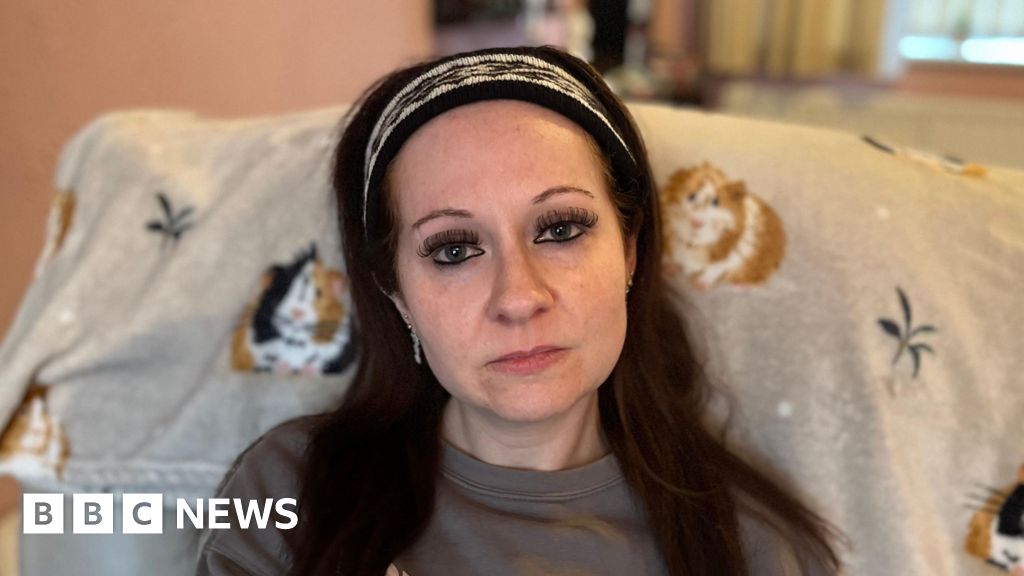
The website Emma used, she claims, offered no safeguards whatsoever. Her only required input was her body mass index (BMI), a figure she was able to falsify. "If they’d checked my medical history with my GP, I don’t think I would’ve been eligible," she stated, highlighting the critical failure in the system. "My BMI was normal. I just wasn’t in the right headspace to make a logical decision."
Upon receiving the injections in March 2024, Emma found the accompanying instructions to be "poorly printed." Unaware of the necessity to start with a low dose, she opted to inject a medium one. "The first day I had no appetite. I thought, ‘this is great, this is what I want’. Then the second day, it all kicked off," she recalled, describing the rapid onset of severe side effects. She soon found herself collapsed on the bathroom floor, utterly incapacitated. "I couldn’t move, I couldn’t speak, I couldn’t open my eyes," Emma recounted, her voice trembling. "I was hallucinating and throwing up so much I started vomiting blood. I literally thought, ‘this is it – this is how I’m going to die’."
Overwhelmed by shame and terror, she initially confided in no one. "I know people would’ve said, ‘Emma, you don’t need to take them’. But in my head, I didn’t think I was fine. So I dealt with it all by myself." Now, she has bravely decided to share her harrowing experience in the fervent hope that others will pause and reconsider before ordering weight-loss jabs online.
Emma’s alarming experience is not an isolated incident; it reflects a broader, concerning national trend. Recent estimates by external researchers from University College London suggest that approximately 1.6 million UK adults have utilized weight-loss injections in the past year. While some individuals can access medications like Mounjaro and Wegovy through the NHS, the vast majority procure them privately. These drugs function as appetite suppressants by mimicking the hormone GLP-1, inducing a sensation of fullness. Although highly effective, experts caution users about the potential for weight regain once the drugs are discontinued.
Dr. Claire Fuller, NHS England’s national medical director, has voiced significant concerns regarding reports of unverified sellers and the promotion of weight-loss jabs devoid of "clinical oversight, medical checks or follow-up care." She emphasized, "The lack of supervision can put people’s health at serious risk, and there may also be concerns about the quality or authenticity of the products on offer." Dr. Fuller firmly stated, "Weight-loss drugs are powerful medicines and can have serious side effects, which is why they must only be prescribed by an appropriately trained healthcare professional." The NHS further stresses that access to such medication should always be coupled with "behavioural support and wraparound care," encompassing nutritional guidance and increased physical activity.
Daniel Magson, CEO of the Derby-based eating disorder charity First Steps ED, corroborates Emma’s experience, noting an alarming surge in individuals accessing weight-loss injections through a variety of channels, including pharmacies, online platforms, and disturbingly, even from sources like hairdressers. He lamented, "And they’re not getting the right support alongside them." The charity is witnessing a disturbing pattern: referrals have risen sharply, with 1,339 adult referrals received in 2024-25, marking a 57% increase from the previous year. First Steps ED is now actively training its staff not only on the specifics of weight-loss injections but also on how the shifting body ideals influenced by these drugs are re-triggering individuals, including those who have been in recovery for decades. Magson expressed profound concern that support services are being left to "pick up the pieces" of this growing crisis.
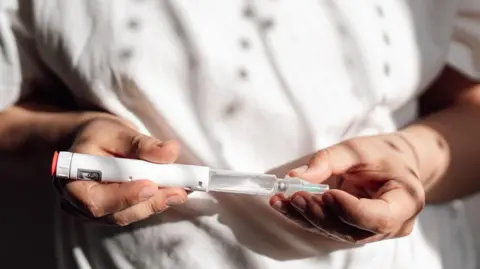
Pharmacist Grace Pickering, based at Well Pharmacy in Alfreton, Derbyshire, confirms that Emma’s ordeal is far from unique. "We’ve had some quite worrying situations where people have shown me things that have not come from medical professionals," she stated. "If you get it from a non-reputable source, the medication might not be what it says it is." Pickering advocates for the establishment of universal minimum standards for all providers, asserting, "All we want is for the service to be led by a medical professional. Face-to-face consultations, regular check-ins, and instant support if patients need to talk about side effects."
Emma wholeheartedly agrees, underscoring that her harrowing experience unequivocally demonstrates the urgent need for tighter regulation. "They should ask for photographic evidence, see the person, check their BMI, know what medication they’re on, ask for medical notes," she insisted. "It’s not just about the checks – it’s before, during and after. You need that ongoing support." Emma’s poignant message is a powerful plea for caution, hoping that by sharing her story, she can prevent others from enduring a similar near-fatal ordeal. "It was the biggest mistake I’ve ever made," she concluded, her voice heavy with the weight of her near-death experience. "I spiralled back into my eating disorder. I nearly died. I wouldn’t wish it on anyone."




 Nakalama John
 atisusanti
 Ramos Leo
