Nakalama John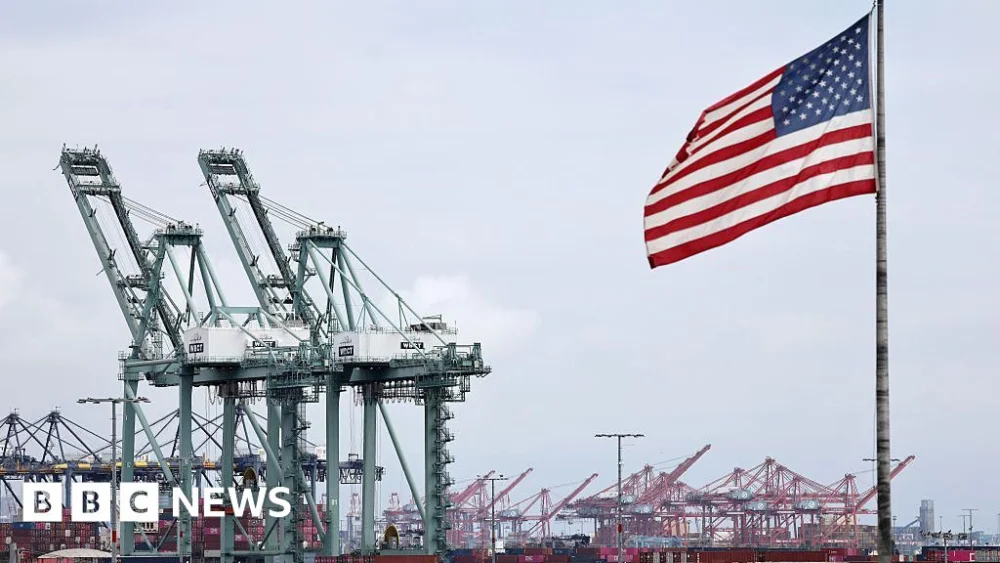
The initial confusion stemmed from President Trump’s statements immediately after the Supreme Court delivered a ruling that blocked many of his previous, sweeping import taxes. On Friday, following the judicial setback, the president announced his intention to introduce a 10% global tariff. However, just a day later on Saturday, he revised this declaration, stating the rate would be a higher 15%. The official documents, however, confirm the tariffs have been set at the lower 10% rate, with no subsequent directive issued to increase it, leaving many to question the administration’s internal coordination and policy consistency. The BBC has sought clarification from the White House, but no immediate comment has been provided, exacerbating the lack of clarity.
This erratic policymaking has drawn sharp criticism from economic analysts. Carsten Brzeski, an analyst with investment bank ING, articulated the widespread concern, stating that the situation "simply adds to the chaos and mess." He highlighted the detrimental impact of rapidly changing tariffs on businesses, which struggle to plan and adapt in such an unpredictable environment. "In terms of uncertainty, we’re back to where we were last year," Brzeski told the BBC’s Today programme, drawing parallels to previous periods of trade volatility. He further warned of a heightened risk of retaliation from the US’s trading partners, concluding, "The risk of a real fully-fledged tariff war – trade war – escalation is clearly higher than last year."
The legal framework underpinning these new tariffs is Section 122 of the 1974 Trade Act. An executive order signed by President Trump on Friday explicitly stated that this temporary 10% import duty was designed to "address fundamental international payments problems and continue the Administration’s work to rebalance our trade relationships to benefit American workers, farmers, and manufacturers." This specific section of the Trade Act grants the president the authority to impose such a charge for a period of 150 days without requiring explicit congressional approval, offering a temporary workaround following the Supreme Court’s recent intervention.
The Supreme Court’s 6-3 decision on Friday dealt a significant blow to the administration’s prior trade strategy. The justices ruled that the president had overstepped his powers by implementing previous broad global tariffs under the 1977 International Emergency Economic Powers Act (IEEPA). The IEEPA grants the president broad authority to regulate international commerce during times of declared national emergency. However, the court found that the administration’s use of IEEPA for general trade disputes, rather than genuine national security emergencies, exceeded the statute’s intended scope. This ruling effectively nullified a substantial portion of the tariffs that had been in place, forcing the administration to seek alternative legal avenues like Section 122, which offers a more limited and temporary authority.
President Trump has consistently argued that tariffs are an indispensable tool for reducing America’s persistent trade deficit – the economic imbalance where the value of imports surpasses that of exports. His "America First" economic philosophy posits that these levies protect domestic industries, encourage local production, and compel other nations to negotiate fairer trade terms. However, recent economic data casts doubt on the efficacy of this approach in achieving its stated goal. The US trade deficit continued its upward trajectory last week, widening by 2.1% compared to 2024 and reaching an approximate total of $1.2 trillion (£890bn). This expansion suggests that despite previous tariff implementations, the underlying structural factors contributing to the trade deficit remain largely unaddressed, or that tariffs themselves may be contributing to higher import costs without adequately boosting exports.
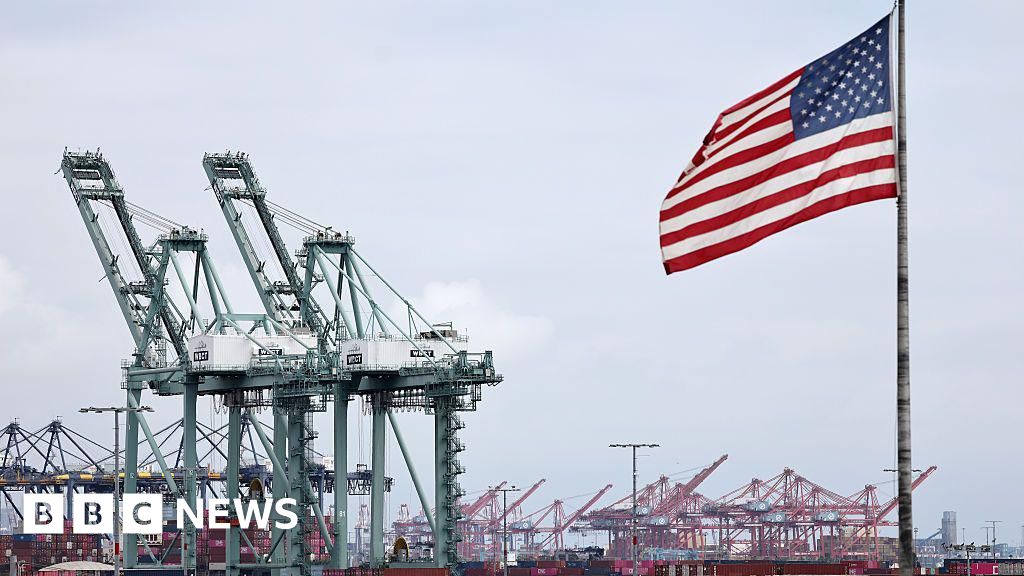
Prior to the Supreme Court’s ruling, the US had already collected at least $130 billion in tariffs under the IEEPA, according to the most recent official data. This revenue, while substantial, has been a point of contention, with critics arguing that it primarily acts as a tax on American consumers and businesses, who ultimately bear the cost of imported goods. The shift to Section 122 for the new tariffs means that while the legal basis has changed, the economic impact of taxing imports and the potential for trade retaliation remain.
The international community has reacted with a mix of apprehension and firm resolve. Countries globally are now re-evaluating their existing trade agreements and preparing for potential reciprocal actions. The United Kingdom, a key ally and aspiring post-Brexit trade partner, stated unequivocally that "no reciprocal action was ‘off the table’" if the US failed to honor its existing tariff deal with the UK. While emphasizing that "no one wants a trade war," the UK’s statement signals a readiness to protect its economic interests should American trade policies become overtly protectionist and detrimental to British commerce. This stance underscores the fragility of bilateral trade relationships that the Trump administration has sought to forge.
The European Union, another major trading bloc, announced it would suspend its ratification of a significant trade deal struck over the summer. Brando Benifei, the chair of the European Parliament’s delegations for relations with the US, expressed the EU’s strong dissatisfaction. "If we get worse conditions then we need to react," he stated, highlighting the EU’s request for immediate clarity from the US regarding the new tariffs. Benifei emphasized the importance of international solidarity in the face of such unilateral actions: "I think you should demand respect. My plea is that all the countries in the world that do not like that we are being treated this way… try to work a bit together." The EU’s potential retaliatory measures could include tariffs on specific US goods, targeting politically sensitive sectors, or pursuing challenges through the World Trade Organization (WTO).
India also responded by deferring previously scheduled talks aimed at finalizing a recent bilateral trade agreement. This move indicates a reluctance to commit to long-term trade frameworks amidst the current uncertainty, reflecting a broader global trend of caution. Other nations, including China, Canada, and Mexico, who have historically been targets of Trump’s trade policies, are likely closely monitoring the situation, preparing their own contingency plans for potential escalation. The re-introduction of broad global tariffs, even at a lower rate, threatens to unravel years of multilateral trade agreements and could further weaken the already strained global trading system.
The domestic political implications of these new tariffs are also significant. For President Trump, the imposition of tariffs aligns with his core "America First" rhetoric, appealing to his base by signaling a tough stance on international trade and a commitment to protecting American jobs. However, the rapidly changing rates and the legal challenges highlight a chaotic policy implementation that could alienate businesses and moderate voters. The administration’s struggle to articulate a consistent trade strategy, especially after a Supreme Court rebuke, raises questions about its effectiveness and stability.
As the new 10% global tariffs take effect, businesses worldwide face renewed challenges in managing supply chains, forecasting costs, and navigating an increasingly fragmented global trade landscape. The immediate outlook remains characterized by profound uncertainty, with the potential for further escalation of trade tensions. The international community’s call for clarity and collective action suggests that the US’s trading partners are prepared to defend their interests, raising the specter of a full-blown global trade war. The coming weeks will be crucial in determining whether the 10% rate holds, what further actions the White House might take, and how other major economies will ultimately respond to this latest chapter in America’s unpredictable trade policy.



 Roy Suryo
 George Anjay
 Ramos Leo