Roy Suryo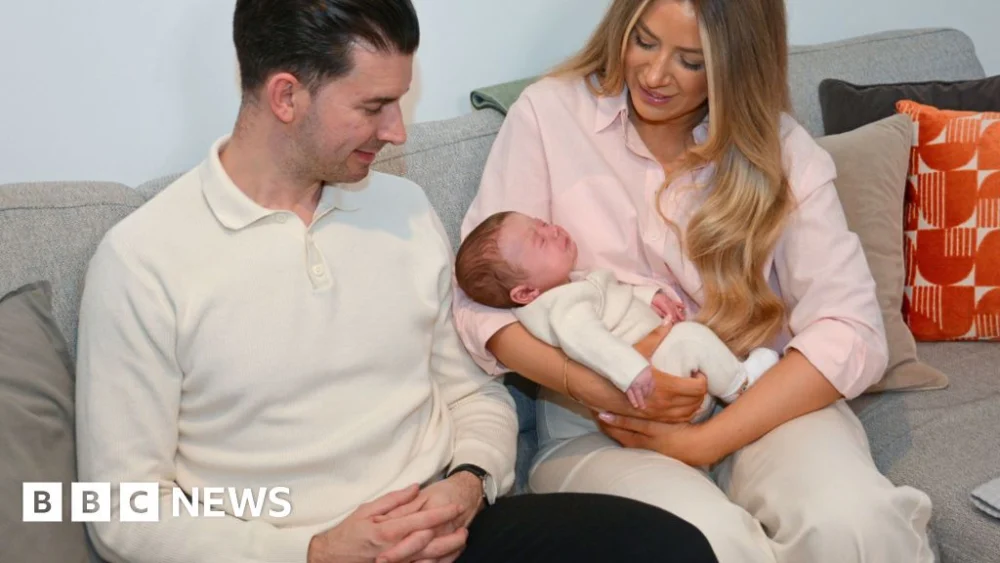
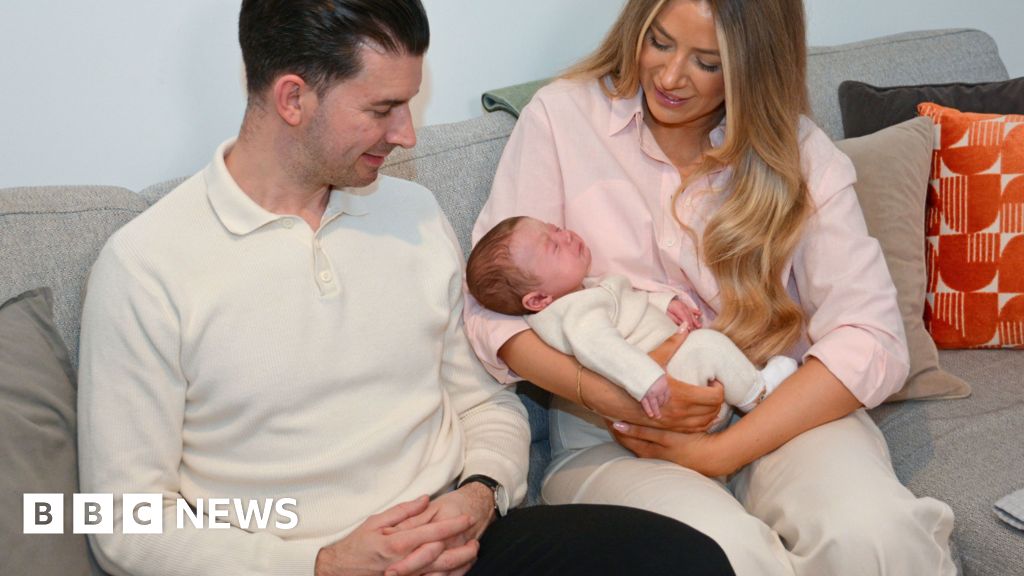
In a monumental achievement for medical science and a beacon of hope for thousands of women, a baby boy has become the first in the United Kingdom to be born following a revolutionary womb transplant from a deceased donor. The overjoyed parents, Grace Bell, who was born without a viable womb, and her partner Steve Powell, from Kent, have described their son Hugo, now 10 weeks old, as an "absolute miracle." Their journey, marked by profound gratitude and unwavering determination, highlights the incredible generosity of organ donation and the pioneering spirit of the medical teams involved.
Grace Bell, in her 30s, was diagnosed with MRKH (Mayer-Rokitansky-Küster-Hauser) syndrome at the age of 16. This rare condition means she was born without a uterus and has never menstruated, although her ovaries function normally. For years, the dream of carrying her own child seemed an insurmountable one. The couple faced a stark choice: surrogacy or the intricate and groundbreaking path of a womb transplant. The announcement that a suitable womb had become available from a deceased donor marked a pivotal moment, filling Bell with a mixture of shock and elation, tempered by a deep awareness of the profound sacrifice made by the donor and her family.
Hugo was born just before Christmas 2025, weighing a healthy nearly 7lbs, at Queen Charlotte’s and Chelsea Hospital in west London. The success of this procedure represents a significant advancement in reproductive medicine and offers a new horizon of possibilities for women diagnosed with uterine factor infertility. Bell and Powell have publicly expressed their deep appreciation for the "kindness and selflessness" of the donor and her family, referring to their decision as an "incredible gift." They also extended their heartfelt thanks to the dedicated medical teams in Oxford and London who guided them through every stage of this complex process.
The womb transplant operation itself was a lengthy and intricate 10-hour procedure undertaken at The Churchill Hospital in Oxford in June 2024. Following the successful transplant, the couple underwent IVF treatment at The Lister Fertility Clinic in London, culminating in embryo transfer and, ultimately, Grace Bell’s pregnancy. Reflecting on the moment she first saw her son, Bell recounted, "It was simply a miracle. I remember waking up in the morning and seeing his little face, with his little dummy in, and it felt like I needed to wake up from a dream. It was just incredible." She added, "I think of my donor and her family every day and pray they find some peace in knowing their daughter gave me the biggest gift: the gift of life. A part of her will live on forever."
This groundbreaking birth is part of a UK clinical research trial involving 10 womb transplants from deceased donors. While three such transplants have already been performed, Hugo is the first baby to be born. The trial also includes plans for five womb transplants from close living relatives in the UK. Professor Richard Smith, a consultant gynaecologist at Imperial College Healthcare NHS Trust and a leading figure in womb transplantation research for over 25 years, was present at Hugo’s birth. He emphasized the collaborative effort, stating that "a huge team of people" had been instrumental in the journey, from the surgical transplant to the fertility treatments and the final delivery. In a touching tribute, Bell and Powell have given their son the middle name Richard, honouring Professor Smith’s crucial role.
The couple is considering the possibility of having a second child. If they choose to do so, surgeons will then remove the transplanted womb. This is a necessary step to mitigate the lifelong need for potent immunosuppressant drugs, which are essential to prevent the recipient’s body from rejecting the transplanted organ but carry significant health risks. Transplant surgeon and joint team leader Isabel Quiroga expressed her delight, calling Hugo’s birth a "ground-breaking moment" for organ transplantation in the UK. She noted that very few babies have been born in Europe following womb transplants from deceased donors. The trial aims to determine if this procedure can become an approved and routine treatment option for the growing number of women of child-bearing age who are unable to carry a pregnancy due to the absence of a functional womb.
Professor Smith reiterated the significance of this achievement, stating that it offers renewed hope to girls and young women who have been informed they will never be able to carry their own children. It is important to note that a baby born through this procedure does not share any genetic material with the womb donor. Globally, over 100 womb transplant operations have been performed, resulting in the birth of more than 70 healthy babies.
The process of donating a womb for transplant differs from that of other vital organs like kidneys or hearts. It is facilitated through a specific request to the families of potential donors who have already consented to organ donation. In the UK, the opt-out system for organ donation means that individuals are presumed to be donors upon death unless they have explicitly opted out. The parents of the deceased donor, who have chosen to remain anonymous, shared their profound sense of "tremendous pride" in their daughter’s legacy. Their daughter also donated five other organs, which were successfully transplanted into four individuals. Her family poignantly stated, "Through organ donation, she has given other families the precious gift of time, hope, healing and now life." This remarkable story underscores the transformative power of organ donation and the incredible possibilities of modern medicine.



 Nakalama John
 atisusanti
 Ramos Leo