
 Nana Banana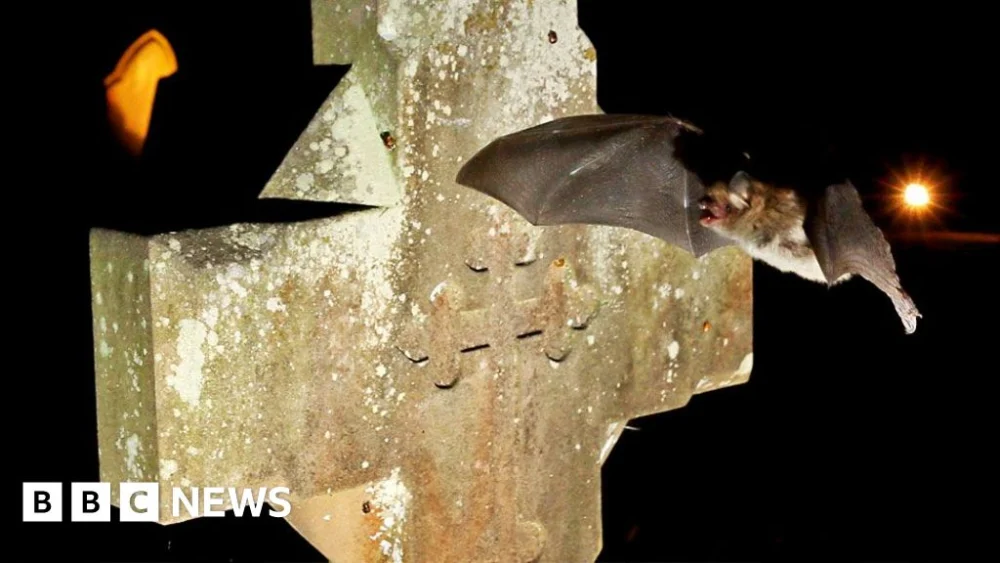
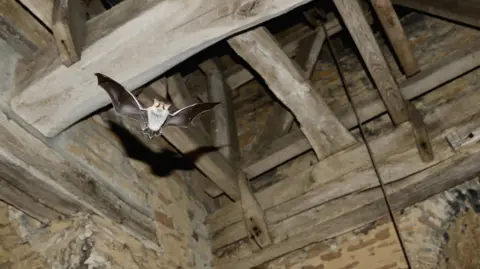
Soon, the quiet is broken by a flurry of activity. The first bats begin to emerge from their hidden roosts, their forms barely visible against the dark backdrop, darting and swooping with incredible agility through the nave and aisles. The amplified sounds of their calls, translated from high-frequency clicks into an audible range, fill the historic building, creating an ethereal chorus that speaks of centuries-old cohabitation. Diana Spencer, a key figure from the pioneering Bats in Churches Project, reflects on this enduring relationship: "Many of these churches have been on these sites for probably 1,000 years, and probably as long as they’ve been standing they’ve had bats in them." This deep historical connection underscores the critical role these ancient structures play in the lives of Britain’s bat populations.
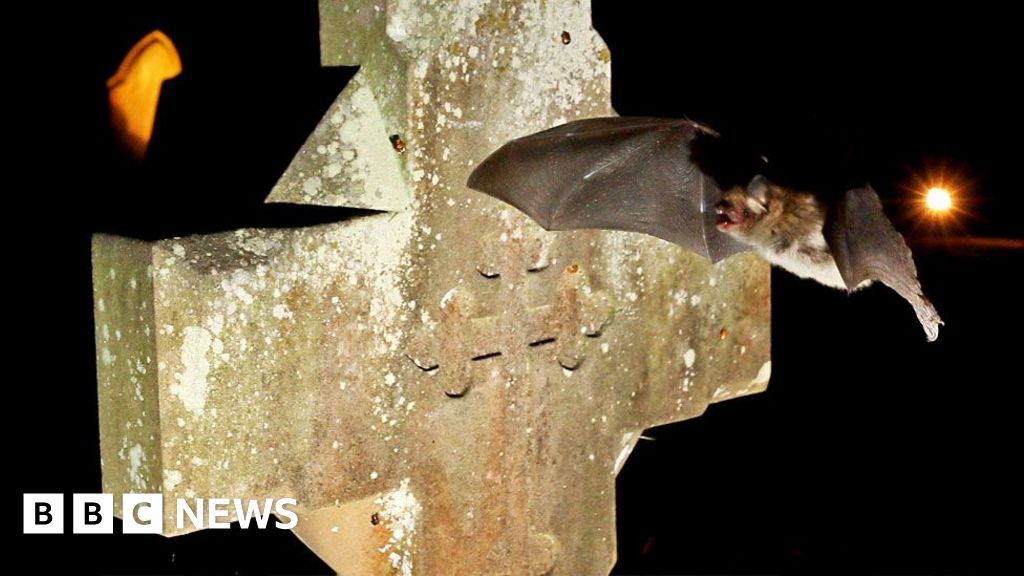
A groundbreaking new study, recently published in the British Ecological Society’s esteemed journal People & Nature, has illuminated the vital importance of these historic buildings as homes for nocturnal animals. The comprehensive research, significantly bolstered by extensive citizen science surveys spearheaded by the Bat Conservation Trust, paints a compelling picture. It estimates that a staggering half of all churches across England—a figure exceeding 8,000 individual sanctuaries—currently host resident bat colonies. For the oldest churches, those with centuries of history etched into their stone, this proportion soars even higher, reaching approximately 80%. Spencer eloquently describes these venerable buildings as "basically like a man-made forest." She elaborates on their suitability: "Full of little nooks and crannies where they can roost, big open flight spaces, dry spaces inside, away from the rain, where they can fly around. It is really just an absolutely perfect environment." The intricate architecture, with its vaulted ceilings, timber beams, hidden roof spaces, and undisturbed attics, offers a labyrinth of safe havens for roosting, breeding, and hibernation, largely undisturbed by human activity during the critical nocturnal hours.
At Guestwick, the resident bat population typically consists of two primary species: the common and widespread Common Pipistrelles, and the more elusive Natterer’s bats. Both species favor the church’s high rafters for their roosts. The Common Pipistrelles are usually the first to emerge, performing a rapid aerial display within the church for a few minutes before deftly squeezing through minute, almost imperceptible gaps around the main church door to venture outside in search of insect prey. The Natterer’s bats, often a little more cautious, typically make their exit slightly later, preferring to slip out through small holes and crevices high in the roof structure to access the external environment. Without the aid of specialized infrared and thermal cameras, these creatures are virtually impossible to detect, blending seamlessly into the darkness of the ancient building. It’s perhaps unsurprising then that the study revealed about a third of the churches surveyed had been entirely unaware of their hidden bat residents, their presence a silent secret kept within the hallowed walls.
However, in other churches, the presence of bats is far from a secret; it’s an undeniable and often challenging reality. Bats, while fascinating creatures, can indeed be messy houseguests. Graeme Peart, a dedicated custodian at St Margaret’s Church in Saxlingham, located just a few miles from Guestwick, articulates the dilemma with a sigh: "They’re lovely, but they’re problematic too." He has been responsible for the upkeep of the church for many years and recounts how the bat population began to cause significant issues about 15 years ago. The primary culprits are bat guano (droppings) and urine, which, when accumulated, can be highly corrosive and damaging. Peart vividly recalls one particularly challenging incident: "One time there was a carpet leading up to the altar that became absolutely sodden with urine and droppings and had to be thrown away." Beyond textiles, the acidic nature of bat excretions also poses a threat to ancient stonework, delicate timber, and valuable artifacts, including the "destroyed brass work" he mentions, which became tarnished and pitted over time.
The situation is further complicated by legal protections. In the UK, all bat species and their roosts are legally protected under national and international legislation, primarily the Wildlife and Countryside Act 1981 (as amended) and the Conservation of Habitats and Species Regulations 2017. This robust legal framework makes it generally unlawful to disturb, harm, or remove bats, or to damage their roosts, without a specific license. This presents a unique conservation dilemma: how to preserve invaluable historic buildings and their contents while simultaneously safeguarding endangered wildlife.
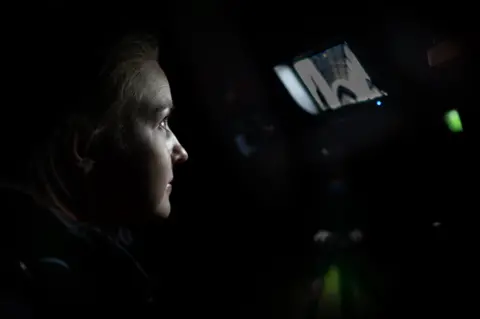
At St Margaret’s Church, an innovative and collaborative solution has been found through close partnership with the Bats in Churches team. Recognizing that outright removal was not an option, they embarked on a major construction project: the creation of a sealed-off loft conversion situated directly above the church’s vestry. Ecologist Phillip Parker, setting up his ladder to offer a glimpse into this ingenious space, explains its purpose: "The idea is that the bats that are in the main body of the church will live in here, rather than in the church itself." This custom-built bat loft is meticulously designed to mimic natural roosting conditions and is equipped with an array of CCTV cameras, allowing the team to continuously monitor the animals’ behavior without disturbance. The insights gained have been invaluable. "What we have found is certain weeks during the year there’ll be a hundred bats in here, and then suddenly they will disappear," Parker reveals. "We don’t know where they go, but they disappear for about 10 days, and then they’ll come back again. And without the CCTV, we never knew that." This data provides crucial information on bat migration patterns, seasonal variations, and roost usage, contributing significantly to conservation efforts.
Undertaking a construction project of this magnitude within a historic building requires considerable investment of time, effort, and, crucially, financial resources. The new bat loft at St Margaret’s, along with the ongoing monitoring of its inhabitants, has incurred costs totaling approximately £50,000. This significant sum has been made possible through funding from the Heritage Lottery Fund and other dedicated conservation partners, highlighting the commitment required to find harmonious solutions.
Diana Spencer emphasizes that while large-scale construction projects are effective, other, less costly solutions are also available, and financial grants are often offered by organizations like the Bat Conservation Trust to assist churches. "On a simple level, you can use sheets or covers over areas where things might be damaged. You can put wax coating on things like brass so that the urine doesn’t damage it," she advises. These practical measures can significantly mitigate damage to valuable church furnishings and fabric. She strongly recommends that anyone discovering bats in a building, particularly a church, should promptly contact the National Bat Helpline for expert advice and guidance, ensuring both bat welfare and heritage preservation are considered.
It is increasingly clear that more bats are seeking refuge within the venerable walls of England’s churches. This trend is not coincidental; it reflects a broader ecological challenge. "They’re losing lots of habitat – lots of woodland," Spencer explains, highlighting the destruction of natural roosting sites. Furthermore, human modifications to modern dwellings, making homes "warmer, more airtight," inadvertently reduce the availability of suitable crevices and access points for bats. Coupled with pressures like pesticide use impacting their insect food sources, churches are emerging as critical, often last-resort, sanctuaries for these ecologically important mammals.
The evolving relationship between churches and their winged residents is leading to creative engagement strategies. Rather than viewing bats solely as a nuisance, some parishes are beginning to embrace them as a unique asset, transforming their presence into an educational opportunity. "We regularly see churches having bat nights and bat events," Spencer notes with enthusiasm. These events serve a dual purpose: they offer a "really, really good way of reaching people, particularly in the local community, who might not come into a church for a service or prayer," but will be drawn in by the chance "to watch the bats, because people find them really, really fascinating." These initiatives not only foster greater understanding and appreciation for bats but also breathe new life into church buildings, transforming them into vibrant community hubs for conservation and education. The challenge of the "unholy mess" is slowly giving way to a shared understanding, proving that with ingenuity, collaboration, and a little help from technology, both ancient heritage and precious wildlife can thrive side by side.



 Roy Suryo
 Nakalama John

 atisusanti