
 Ramos Leo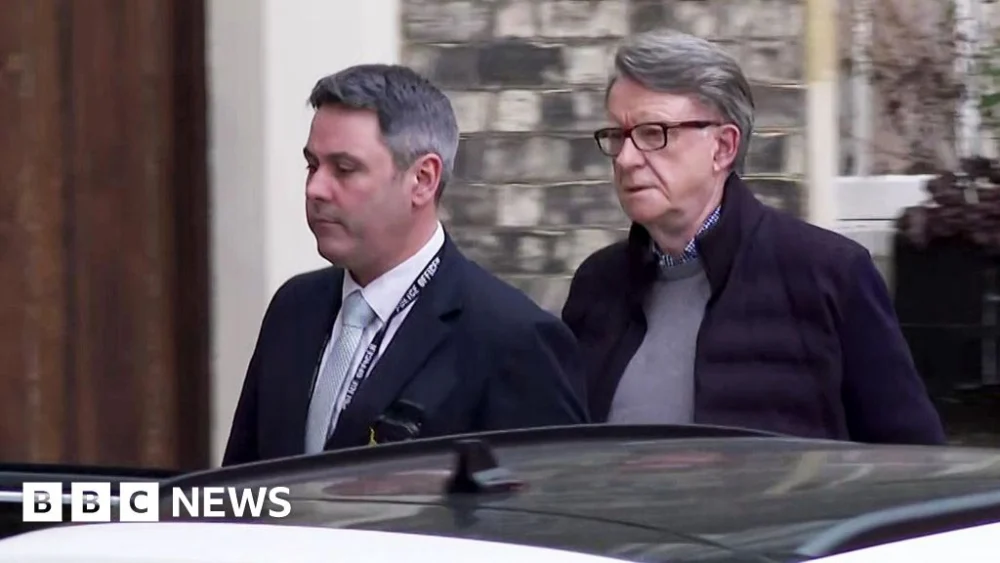
Mishcon De Reya, the legal firm representing Lord Mandelson, wasted no time in challenging the Metropolitan Police’s rationale for the arrest. A spokesperson for the firm stated unequivocally to the BBC that the suggestion Lord Mandelson was planning to abandon the United Kingdom for permanent residence abroad was "baseless." They highlighted a prior agreement with law enforcement for the peer to attend a voluntary interview next month, rendering the Monday arrest both unnecessary and, in their view, unjustifiable. "There is absolutely no truth whatsoever in any such suggestion," the spokesperson declared, demanding that the Metropolitan Police Service (MPS) provide the evidence upon which they relied to justify such a disruptive arrest. The legal team reiterated Lord Mandelson’s unwavering commitment to cooperate fully with the ongoing police investigation, with his "overriding priority" being to clear his name amidst the serious accusations.
The Metropolitan Police, adhering to standard procedure in ongoing investigations, declined to comment on the specifics of the arrest or the claims made by Lord Mandelson’s lawyers. This silence, while customary, leaves a vacuum for speculation regarding the precise intelligence that led officers to believe such a high-profile individual, with deep roots and public commitments in the UK, might abscond.
Lord Mandelson, a central architect of New Labour and a confidant of former Prime Minister Tony Blair, was taken into custody on suspicion of misconduct in public office. Following his arrest, he was transported to Wandsworth police station in London for an extensive interview. The process spanned nine hours, culminating in his release on bail in the early hours of Tuesday morning, pending further investigation. As a condition of his bail, Lord Mandelson was required to surrender his passport, a standard measure imposed by authorities when there are concerns about an individual’s potential to leave the country. This bail arrangement extends until the end of May, allowing investigators further time to gather evidence and consult with the Crown Prosecution Service (CPS) regarding potential charges.
The roots of this investigation trace back to earlier this month when the Metropolitan Police launched an inquiry into allegations that Lord Mandelson, while serving as a government minister, had illicitly shared market-sensitive information with Jeffrey Epstein. These explosive claims first surfaced after the US Department of Justice released a trove of documents last month, shedding light on Epstein’s vast network and interactions with numerous prominent individuals. Among these documents were emails between Lord Mandelson and Epstein, which ignited the current storm.
Specifically, a 2009 email exchange allegedly shows Lord Mandelson conveying an assessment by an adviser to the then-Prime Minister Gordon Brown concerning critical policy measures, including an "asset sales plan." The implications of such a disclosure are profound, potentially impacting financial markets and national economic strategy. Further allegations involve a 2010 communication where Lord Mandelson purportedly discussed a proposed tax on bankers’ bonuses and confirmed an imminent bailout package for the Eurozone just a day before its official public announcement. The timing and nature of these alleged disclosures raise serious questions about the integrity of government information and the ethical boundaries of ministerial conduct.
Lord Mandelson’s position, as understood by the BBC, is that he has not engaged in any criminal activity and that his actions were not driven by financial gain. This suggests a potential defence centered on the context of the communications, perhaps arguing that the information shared was not truly "market-sensitive" in a criminal sense, or that his interactions with Epstein were misconstrued or benign. However, the gravity of being accused of misconduct in public office, especially when linked to a figure as notorious as Epstein, carries significant legal and reputational weight.
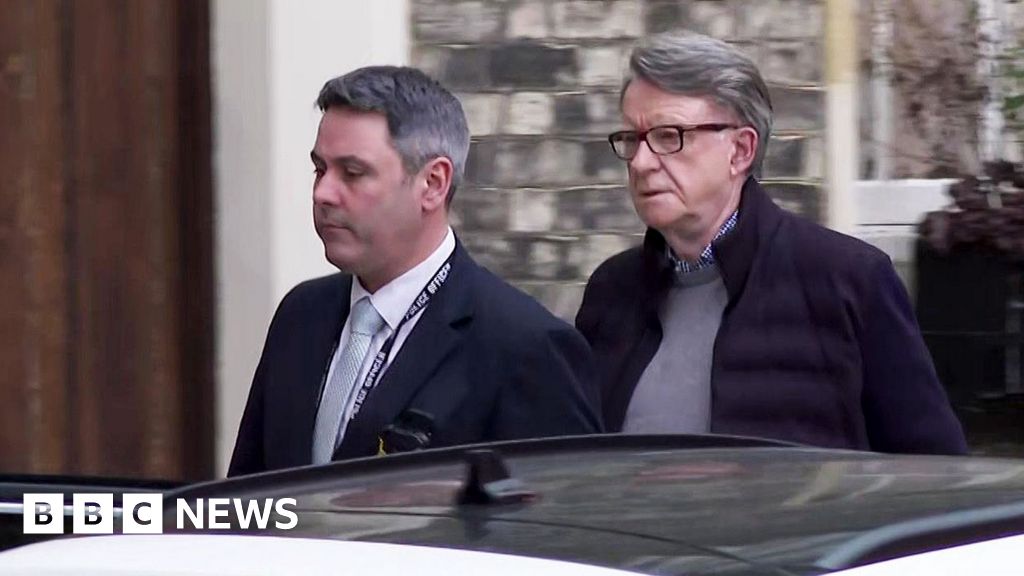
The arrest itself was a discreet but firm operation. On Monday, Lord Mandelson was observed being escorted from his London residence by plain clothes officers, who then ushered him into the back of an unmarked car. The arrest was carried out by officers from the Met’s central specialist crime division, indicating the serious and complex nature of the allegations. The ongoing consultations between the police and the Crown Prosecution Service underscore the meticulous legal process involved in such high-profile cases, where every piece of evidence and legal argument will be rigorously scrutinised before any decision on charges is made.
Lord Mandelson has been a ubiquitous and often controversial figure in British politics for decades. Nicknamed the "Prince of Darkness" for his strategic acumen and often ruthless political maneuvering, he played a pivotal role in the Labour Party’s modernisation under Tony Blair, helping to craft the "New Labour" movement and orchestrate the party’s landslide victory in the 1997 general election. His career has been marked by both significant achievement and periods of intense scrutiny and scandal, including two previous resignations from cabinet in the late 1990s and early 2000s, only to make remarkable political comebacks.
His portfolio of ministerial roles was extensive, including Secretary of State for Trade and Industry, Secretary of State for Northern Ireland, and later, Secretary of State for Business, Innovation and Skills, as well as First Secretary of State. His influence extended beyond domestic politics, culminating in his appointment as British ambassador to the US, a significant diplomatic posting that underscored his continued relevance on the international stage. However, his tenure in this role was abruptly cut short in September following the emergence of new information regarding the depth and nature of his relationship with Jeffrey Epstein, prompting Downing Street to relieve him of his duties. This dismissal, just months prior to the current arrest, laid the groundwork for the ongoing criminal investigation.
The Epstein scandal, with its global reach and a cast of powerful figures, continues to cast a long shadow, highlighting the potential for individuals in positions of influence to be compromised or to engage in inappropriate conduct. The allegations against Lord Mandelson, while distinct from the more direct accusations faced by others in Epstein’s orbit, nevertheless raise fundamental questions about the standards expected of public officials and the protection of sensitive government information.
As the investigation progresses, the focus will intensify on the content of the alleged communications, the context in which they occurred, and whether they meet the legal threshold for misconduct in public office. The defence will undoubtedly seek to challenge the interpretation of these exchanges and the police’s assessment of Lord Mandelson’s intentions and actions. For Lord Mandelson, a man accustomed to the glare of public life, this latest chapter represents perhaps his most significant personal and legal challenge, with his reputation and legacy hanging in the balance. The political establishment, and the public, will be watching closely as this complex and highly sensitive investigation unfolds.



 Roy Suryo

 Nakalama John
 atisusanti
