Nana Banana
An annual biological imperative for Emperor penguins – the complete shedding and regrowing of their feathers – is tragically turning into a perilous ordeal, as Antarctica undergoes a dramatic transformation driven by a warming world. Scientists tracking these majestic birds have unveiled a disturbing trend: the very act essential for their survival now poses an existential threat, with thousands feared lost to the icy waters.
Each year, Emperor penguins embark on what is known as a "catastrophic moult," a grueling 30-40 day period during which they must remain on stable platforms of floating sea ice. This critical time allows them to replace their old, weather-beaten, and less efficient feathers with a fresh, waterproof coat. Without this process, their remarkable insulation, vital for surviving the harshest environment on Earth, would fail, leading to hypothermia and death. However, recent years have seen an unprecedented collapse in Antarctic sea ice, primarily attributed to escalating climate change, thereby depriving these iconic birds of the safe havens they desperately need.
The alarming findings, spearheaded by Dr. Peter Fretwell, a climate and science reporter and veteran researcher at the British Antarctic Survey, paint a stark picture. Using sophisticated satellite imagery, Fretwell and his team, who have studied Emperor penguins for two decades, can no longer locate the majority of the birds that were once present. "This was really an "oh my God" moment," Dr. Fretwell recounts, reflecting on the gravity of the discovery. "You could see this was something game-changing for Emperor penguins. Suddenly you’re thinking, well, have we got time to save them?" This poignant question underscores the profound shift in the survival prospects for a species already considered among the most vulnerable to global warming.
The research, published in the esteemed scientific journal Communications Earth & Environment, provides compelling evidence of the devastating impacts of the severe collapse in Antarctic summer sea ice observed between 2022 and 2024. This period witnessed a record-breaking reduction in sea ice extent, a phenomenon previously reported by the BBC and now directly linked to widespread penguin mortality. The study specifically focuses on West Antarctica, a region that hosts a significant portion—approximately 30-40%—of the global Emperor penguin population. These magnificent creatures are widely regarded as the most at-risk air-breathing Antarctic animals from climate change, a grim distinction they now tragically live up to.
The annual moult is an extraordinary feat of endurance. Emperor penguins migrate thousands of kilometers to find stable sea ice for this crucial phase. During this period, their metabolism undergoes a dramatic shift as they fast, drawing upon vast fat reserves accumulated through intense foraging. The process of growing new feathers is incredibly energy-intensive, with birds losing up to 50% of their body mass. Their feathers are renowned as "the most complicated and best insulating of any animal," a marvel of natural engineering that allows them to thrive in sub-zero temperatures. Yet, as the old feathers are pushed out by new ones, the birds temporarily lose their waterproofing and much of their insulation. "It’s probably the most dangerous time for adult Emperor penguins because they haven’t got their waterproof suits on," Dr. Fretwell explains. Should they be forced into the frigid waters during this vulnerable state, their chances of survival are virtually nil.
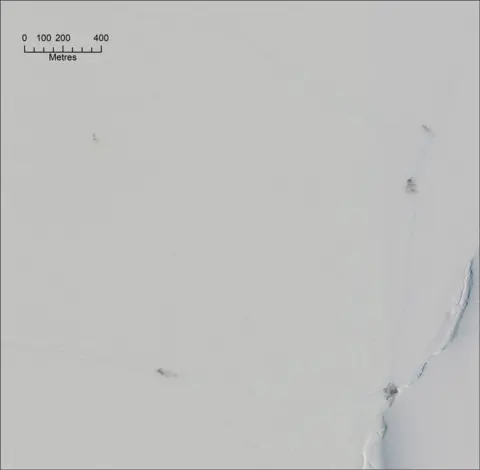
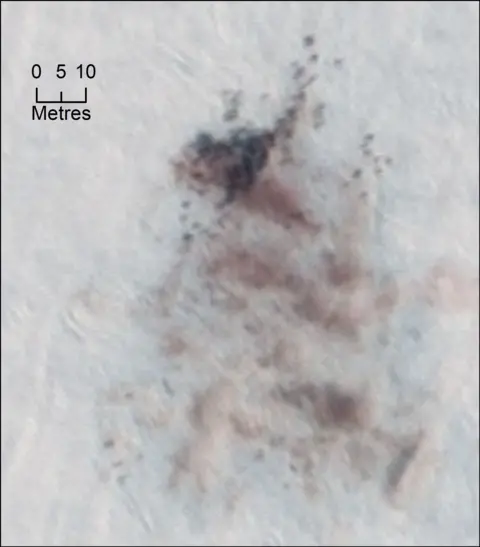
For years, the specific locations and scale of the Emperor penguin moult remained largely unstudied, a gap in understanding their life cycle. This changed when Dr. Fretwell began noticing distinctive large brown smudges in satellite pictures captured between 2019 and 2025. These seemingly innocuous marks, observed in an area aptly named Marine Bird Land, were eventually identified as extensive mounds of shed feathers—a clear indicator of large colonies undergoing their annual transformation. In 2019, 2020, and 2021, the sea ice conditions were relatively stable, and these feather mounds were consistently visible, signifying healthy and successful moulting events.
However, the situation drastically deteriorated in 2022. That summer, the extent of sea ice across much of Antarctica shrank dramatically, plummeting from an average of 2.8 million square kilometers to an unprecedented record low of 1.79 million square kilometers in 2023. This alarming trend persisted, with minimal recovery in West Antarctica until 2025. When Dr. Fretwell revisited the satellite images for these critical years, the once-prominent signs of moulting penguins had largely vanished. "There should have been lots of penguins there, but actually we could only see 25 groups," he stated, referring to groups that can range from a few dozen to over a thousand birds. The subsequent year showed little improvement: "Again this year the sea ice hasn’t been too bad, but I can only see a handful of penguins really."
The stark absence of these feather mounds and the visible decline in penguin groups lead to a chilling conclusion: most of these birds have likely perished. The most probable cause of death is freezing after being forced into the water without their protective, waterproof plumage. While some individuals or smaller groups might have attempted to travel to alternative locations in East Antarctica to complete their moult, such disruptive migrations would invariably come at a severe cost, jeopardizing breeding cycles and foraging success, ultimately leading to significant population losses.
This crisis highlights the profound and intricate dependency of Emperor penguins on stable sea ice. Beyond moulting, sea ice platforms are fundamental for their entire life cycle: breeding, raising chicks, and providing access to foraging grounds. The loss of stable ice during the breeding season has already been documented to cause widespread chick mortality, as young birds, not yet waterproof, drown when their ice nurseries break up prematurely. The additional threat during moult adds another layer of vulnerability, creating a dual challenge that could accelerate their decline far beyond previous projections.
In the face of such dire circumstances, the possibility of adaptation, however limited, offers a glimmer of hope. Dr. Fretwell has observed some groups attempting to moult on shallow ice shelves—a change in behavior that suggests a desperate attempt to cope with the disappearing sea ice. While this might provide a temporary refuge, it is likely to come with its own set of challenges, potentially disrupting established breeding and feeding patterns, and perhaps exposing them to new predators or resource scarcity. Whether this adaptation is a viable long-term survival strategy or merely a symptom of profound environmental stress remains to be seen.
The findings serve as a stark and urgent reminder that the impacts of global warming, while sometimes appearing gradual, can manifest in sudden, catastrophic shifts within delicate ecosystems. "It wasn’t just a few colonies that were lost and it wasn’t a slow process," Dr. Fretwell emphasizes, underscoring the rapid and widespread nature of the devastation. The emotional toll on the scientists witnessing this unfolds is palpable. "It is the only piece of science I’ve ever done that’s really emotionally got me," he admits, highlighting the personal connection and deep concern for these magnificent creatures.
The next steps in this critical research involve comparing these findings with an imminent population count of Emperor penguins in the Ross Sea region, a major destination for their migrations. This comparative analysis will provide more comprehensive data on the scale of mortality and population decline. The results could necessitate a significant revision of predicted extinction dates for Emperor penguins, potentially bringing them much closer. "Now I’m asking, is that coming forwards towards us? Is it the end of the century?" Dr. Fretwell wonders aloud, his voice reflecting the profound uncertainty that now surrounds the future of this iconic Antarctic species.
The plight of the Emperor penguin underscores the urgent global imperative to address climate change. Their struggle is a powerful barometer of the health of our planet, signaling the cascading consequences of human activity on even the most remote and seemingly resilient ecosystems. Saving the Emperor penguin, and countless other species reliant on the stability of polar environments, demands immediate and decisive action to reduce greenhouse gas emissions and safeguard the fragile balance of our natural world. The "catastrophic moult" has become a stark metaphor for the catastrophic changes engulfing Antarctica, and a compelling call to humanity to change course before it’s too late.



 Roy Suryo