Nana Banana
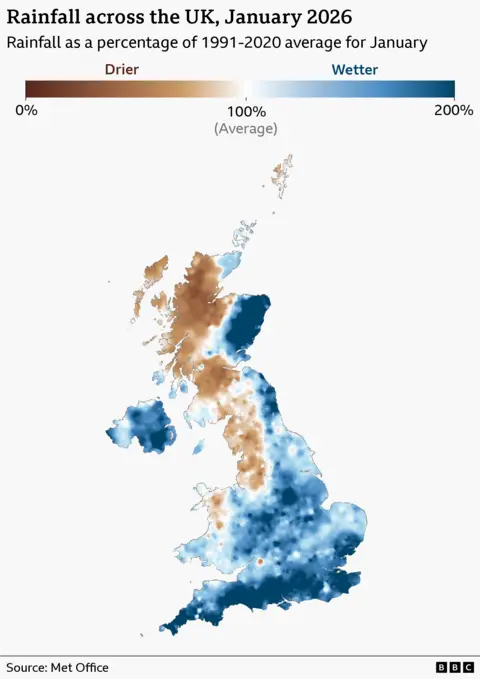
The United Kingdom is currently grappling with a severe and persistent deluge, as areas from the picturesque landscapes of Cornwall to the rugged coastlines of County Down have endured their wettest January on record, with relentless heavy rain continuing through February. This sustained downpour has not only saturated the ground but also raised a critical question for communities and policymakers alike: is this pattern of increasingly wet winters and frequent flooding a new normal we must prepare for? The immediate cause of the recent prolonged rainfall has been attributed to a blocked weather pattern, specifically a stubborn high-pressure system entrenched over Scandinavia. This atmospheric phenomenon acts like a barrier, preventing the low-pressure systems and their associated wet weather fronts from moving eastward across the Atlantic, effectively trapping them over the UK and forcing them to repeatedly drench the islands.
However, beyond this immediate meteorological explanation lies a more profound and concerning trend linked directly to global climate change. The Met Office, the UK’s national weather service, estimates that at current levels of global warming, the likelihood of experiencing intensely wet winters like that of 2023/24 has drastically increased. What was once considered a rare, "once in 80-year event" has now become a "once in 20-year" occurrence. With projections indicating further global warming in the coming decades, the frequency of such severe weather events could accelerate even more, fundamentally altering the fabric of British life and posing significant challenges for housing, transport networks, and the nation’s food supply. The stark reality of this new climate regime is already being felt on the ground; a farmer in Somerset, battling to save his submerged crops, conveyed the desperate situation, telling the BBC that he was living on a "knife edge" as his harvest was mere days away from succumbing to rot in the floodwaters.
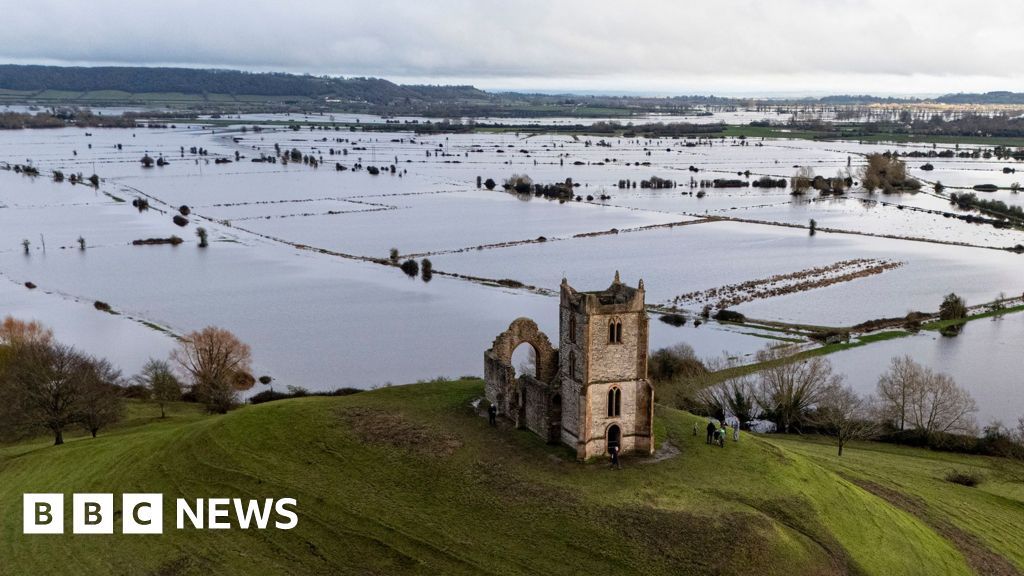
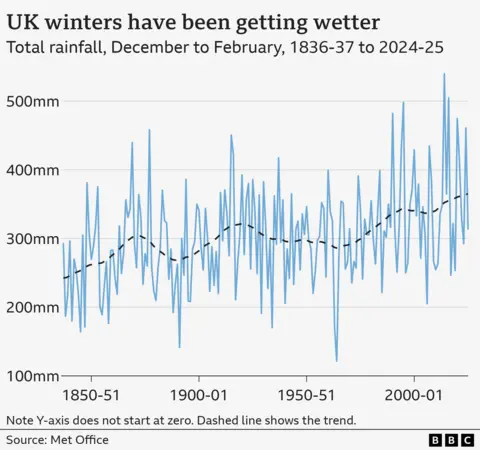
The escalating trend towards wetter winters is unequivocally supported by historical data. On a single Tuesday this winter, more than 100 locations across the UK were under active flood warnings, while over 300 homes had already been inundated by floodwaters, according to the Environment Agency (EA). This relentless and continuous rainfall mirrors a pattern observed over the past few years, with a striking six of the ten wettest winters since records began nearly 250 years ago having occurred in the 21st century. While the UK’s rainfall patterns are naturally influenced by inherent climatic variability, this pronounced shift towards increasingly sodden winters aligns precisely with the long-term predictions from the UK’s meteorological organisation and climate scientists worldwide.
The underlying scientific principle is clear: the increased burning of fossil fuels such as coal and oil over the last two centuries has released vast quantities of greenhouse gases, primarily carbon dioxide (CO2), into the atmosphere. These gases trap heat, leading to a warming planet. It might seem a small increment, but for every 1°C rise in global temperature, our atmosphere gains the capacity to hold approximately 7% more moisture. This additional atmospheric water vapour then fuels heavier, more intense rainfall events. Concurrently, sea levels around the UK are also experiencing an accelerating rise, driven by the thermal expansion of warmer oceans and the melting of glaciers and ice sheets globally. Since 1901, the average sea level around the UK has climbed by 20 centimetres. While this figure might not appear substantial in isolation, when coupled with extreme storm events and powerful tidal surges, it significantly exacerbates the risk and severity of coastal flooding, transforming routine high tides into potential disasters.
The question of "how much wetter could our winters get?" looms large. Currently, the UK experiences an average of about seven days a year where rainfall exceeds 80mm – a volume considered a heavy rainfall event. To put this into perspective, if just 30mm of this falls within a single hour, it typically triggers a flash flooding warning due to the sheer speed and volume of water. However, Met Office projections indicate a concerning future: if global temperatures surpass a 2°C increase above pre-industrial levels, this number of heavy rainfall days would rise to nine annually. This forecast is particularly alarming given that, even with existing policies aimed at reducing carbon emissions, the United Nations projects that global temperatures are still expected to increase by at least 2.5°C by the end of the century.
Professor Lizzie Kendon, head of climate projections at the Met Office, further elaborates on the evolving nature of rainfall. She highlights that beyond just more intense rainfall, the UK is also observing a trend of rainfall events becoming more clustered together. "That is really important," she explains, "because that can lead to successive rainfall events, [which] can lead to very saturated soils, and as we’re seeing currently in the UK, that can lead to exacerbated flooding as well." This clustering means less time for soils to drain and rivers to recede between storms, amplifying the flood risk with each new weather system.
The damage resulting from these increasingly wetter winters is multifaceted and extensive, posing significant threats to homes, critical transport infrastructure, and the vital national food supply. In a sobering assessment issued last December, the Environment Agency estimated that by 2050, a staggering one in four properties across the UK would be at risk from flooding. This was the first time the EA had explicitly incorporated the impacts of a warmer climate into its flood risk assessments for the UK. Regions identified as particularly vulnerable include the East Midlands, Yorkshire and The Humber, and parts of south-east England.
This grim forecast is further complicated by national housing policy. The EA warns that the number of properties at risk would rise even higher if more homes continue to be built on floodplains. Despite these warnings, the UK government’s ambitious plan to construct 1.5 million new homes within the current Parliament means that in some parts of the country, over 10% of these new dwellings are being erected in zones demonstrably prone to flooding. This policy creates a direct conflict between development goals and climate resilience, potentially locking in future flood risk for thousands of families.
The transport network faces a similarly precarious future. A significant proportion – currently estimated at a third – of the nation’s railways are at risk of flooding. Such incidents invariably lead to widespread cancellations, prolonged delays, and substantial damage to vital infrastructure, disrupting commuters, freight, and the broader economy.
The agricultural sector, the bedrock of the nation’s food security, is also bearing the brunt of these climatic shifts. The National Farmers Union (NFU) articulated the severe risks confronting the farming community in a letter to MPs last November. They stressed that "farmers and growers experience both [drought and floods] on an annual basis, and both severely impact their ability to produce food." The wet winter of 2024, which ranked as the second wettest on record, inflicted an estimated £1 billion in losses from damaged crops alone. James Winslade, a beef and arable farmer from Somerset whose land is extensively featured in the media due to the inundation, shared his profound frustration. With over 90% of his farm submerged in the recent rains, he fears his crops are only days away from rotting. "We can’t protect everywhere. There isn’t insurance for crop damage. We don’t get compensation," he lamented, highlighting the systemic vulnerabilities within the sector. A third-generation farmer, Winslade noted that neither his father nor his grandfather had ever witnessed such consistent and severe levels of flooding.
While the UK possesses an extensive network of flood defences, their effectiveness is hampered by a complex and often fragmented system of ownership and maintenance. Responsibility for these crucial defences is distributed across a patchwork of organisations, including local authorities, water companies, charities, and even individual farmers. Of the approximately 100,000 flood defences maintained directly by the Environment Agency, 9% are currently reported to be below their target condition, based on a five-point scoring system that reflects their importance. However, previous analysis by the BBC Shared Data Unit revealed an even more concerning picture: defences not maintained by the EA were found to be 45% more likely to fall below their required target condition. This disparity points to significant inconsistencies in maintenance standards and funding across the country.
Further exacerbating the flooding problem is increased urban development. The concreting over of natural surfaces for new housing estates, commercial buildings, and extensive car parks prevents rainwater from being absorbed naturally into the ground. Instead, it runs off rapidly into drains and rivers, which are often not designed to cope with such increased volumes, leading to them becoming overwhelmed and breaching their defences.
In response to these growing threats, an Environment Agency spokesperson affirmed their commitment, stating, "As a result of climate change, we are seeing more flooding and extreme weather. Whilst it is sadly not possible to stop all flooding, the Environment Agency is committed to helping communities to adapt." They highlighted the government’s flood programme, which plans a further £10.5 billion investment aimed at protecting an additional 900,000 properties by 2036.
The undeniable trend of increasingly wet winters and frequent flooding poses an existential challenge to the UK. It demands a holistic and urgent approach, encompassing not only robust investment in physical flood defences and adaptation measures but also a critical reassessment of land use planning, agricultural practices, and infrastructure resilience. Without significant and sustained efforts to mitigate climate change and enhance national preparedness, the recent deluges may indeed be a stark preview of the "new normal" – where wetter winters and their devastating consequences are not just here to stay, but likely to intensify.

 George Anjay
 Nakalama John
 atisusanti
 Ramos Leo