Nakalama John
The monthly expenditure of £40,000 is not merely a number; it represents a complex web of essential services and resources required to maintain a safe, healthy, and stimulating environment for a menagerie of exotic species. Approximately £5,000 of this substantial sum is directly attributed to energy costs, a figure that has escalated dramatically in recent times. For a facility housing creatures ranging from meerkats and crocodiles to various species of snakes and wildcats, consistent and precise environmental control is not a luxury but a fundamental necessity. Reptiles, for instance, require carefully regulated temperatures and UV lighting to thrive, while many mammals from warmer climates need heated enclosures, especially during colder British months. This continuous demand for heating, ventilation, and lighting places an immense and unavoidable burden on the park’s utility bills.
Beyond the significant energy outlay, the remaining £35,000 covers a myriad of other critical operating expenses. Food, for such a diverse collection of animals, is a considerable and ever-increasing cost. Each species has specific dietary requirements – from specialist pellets and fresh produce for herbivores to high-quality meats and live prey for carnivores and insectivores. Sourcing these varied and often exotic foodstuffs in sufficient quantities, especially with rising inflation, presents a continuous logistical and financial challenge. The park’s commitment to providing species-appropriate diets is paramount for the animals’ health and well-being.
Site maintenance is another major component of the monthly budget. Enclosures, many of which are custom-built to replicate natural habitats and ensure the safety of both animals and visitors, require constant upkeep, repairs, and upgrades. This includes fencing, heating systems, filtration for aquatic habitats, and general infrastructure maintenance across the expansive park grounds. Furthermore, the provision of stimulating environments – enrichment items, climbing structures, and varied landscapes – is crucial for preventing boredom and promoting natural behaviours in captive animals, all of which contribute to maintenance costs.
Medical care for 232 animals, many of whom arrive with pre-existing conditions from previous neglect or improper care, is an ongoing and often unpredictable expense. Routine veterinary check-ups, vaccinations, parasite control, and emergency treatments are all part of the essential care package. Exotic animals often require highly specialized veterinary expertise, which can be more costly than standard domestic animal care. Medications, surgical procedures, and diagnostic tests can quickly accumulate into substantial bills, underscoring the vital importance of a robust medical fund.
Other operating costs encompass a wide range of administrative and logistical necessities. This includes staff salaries for the dedicated team of zookeepers, animal welfare officers, maintenance personnel, and administrative staff who work tirelessly to ensure the smooth running of the park. Insurance, waste disposal, pest control, security, and the myriad of permits and licences required for operating a licensed zoo and rescue centre all contribute significantly to the overall financial burden. Each of these elements is indispensable for the park to operate legally, safely, and effectively.
Jamie Mintram, the owner of Ark Wildlife Park, articulated the dire situation with palpable concern, stating that "income from ticket sales and visitors no longer covered the bills." This decline in revenue, coupled with soaring operational costs, has created an unsustainable financial deficit. The broader cost of living crisis has a dual impact: it drives up the park’s expenses while simultaneously reducing the disposable income of potential visitors and donors. Fewer people are able to afford leisure activities like visiting a wildlife park, and charitable donations, though deeply appreciated, often suffer when household budgets are stretched thin.
"Things are at breaking point, we are now asking for a hand," Mintram appealed, his words conveying the urgent need for external support. This plea for help signifies that the park has exhausted its internal resources and is facing an existential threat. A "breaking point" for a wildlife park means potential compromises on animal welfare, difficult decisions about taking in new rescues, and ultimately, the risk of closure, which would have devastating consequences for the animals in its care.
This is not the first instance the park, which uniquely operates as a zoo, an animal refuge, and even features a dinosaur attraction to diversify its appeal, has voiced concerns about financial instability. Like many charitable organisations and visitor attractions, Ark Wildlife Park has weathered various economic storms, including the profound impact of the pandemic. However, the current confluence of high inflation, soaring energy prices, and reduced public spending presents a challenge of unprecedented scale.
Mintram further elaborated on the pervasive nature of the crisis: "Everyone is feeling the cost of living crisis and we’ve seen a big increase in our bills. We need help to care for our current animals but also those we’re being asked to give homes to." This highlights a tragic paradox: as the park’s capacity to care for animals diminishes due to financial strain, the demand for its rescue services is simultaneously increasing. The cost of living crisis, combined with other societal factors, is leading to a greater number of animals, particularly exotic pets, being abandoned or surrendered.
"A lot of these exotic animals are very expensive to keep, they require a lot of heating for example, it costs a lot of money to look after them," Mintram stressed. This statement underscores the inherent challenges of running a facility dedicated to exotic species. Unlike domestic animals, many exotic pets have highly specific environmental and dietary needs that are costly to replicate outside of their natural habitats. Maintaining tropical temperatures for reptiles, providing ample space and complex enrichment for primates, or ensuring secure, predator-proof enclosures for wildcats, all come with significant financial implications. The ethical responsibility to provide these animals with the best possible welfare standards means these costs cannot be cut without serious consequences.
Adding to the park’s concerns is upcoming government legislation aimed at tightening restrictions on primate ownership. The new rules will make it illegal to keep monkeys, lemurs, and other primates in England without a licence, a move designed to improve animal welfare standards for these intelligent and complex creatures. Anyone found to be owning a primate without the appropriate licence could face severe penalties, including six months in jail, an unlimited fine, or both. Crucially, these rules are specifically targeted at private owners, not licensed zoos or rescue centres.
While the legislation is a positive step for primate welfare in principle, Mintram fears it will have an immediate and negative impact on rescue centres like Ark Wildlife Park. "There are an estimated 5,000 primates that are currently kept in domestic settings as pets in the UK but the exact figures are hard to come by," he noted, highlighting the scale of the potential problem. He anticipates a surge in abandoned primates as owners, unwilling or unable to meet the stringent new licensing requirements, attempt to offload their animals.
This concern is not without precedent. Mintram recalled a similar situation in 2019 when invasive species regulations were introduced. "We saw this happen in 2019 when the invasive species regulation came in and there was a spike in animals such as raccoons and tanukis coming into us or even being let loose," he explained. The historical pattern suggests that legislative changes, while well-intentioned, can inadvertently lead to a temporary increase in animal abandonment, placing immense pressure on already stretched rescue organisations. The prospect of thousands of primates suddenly needing rehoming, when specialist facilities are already struggling, is a daunting one.
Mintram passionately argued for broader legislative reform, advocating for changes to "cover the whole exotic pet trade." He believes that the current regulations are insufficient to prevent irresponsible ownership and the subsequent suffering of exotic animals. Stricter controls on the sale and keeping of all exotic pets would, in his view, help to reduce the number of animals that ultimately end up abandoned or in need of rescue.
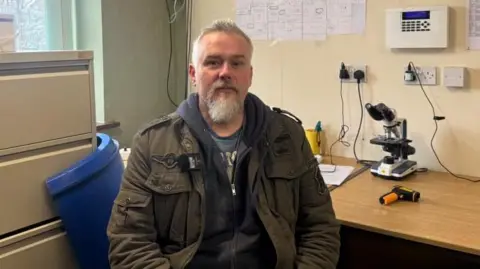
The consequences of this ongoing crisis extend far beyond the park’s balance sheet. "There are very few rescue centres who are capable of rehoming some of these animals. If we can’t rehome them they risk being euthanised," Mintram warned starkly. This chilling reality underscores the critical role that facilities like Ark Wildlife Park play. Without their existence and capacity, many exotic animals with complex needs face an incredibly bleak future. The lack of suitable, specialist rehoming options means that euthanasia, a last resort, becomes a more probable outcome for animals that are otherwise healthy but simply have nowhere to go.
Ultimately, Mintram’s message is a plea for greater public awareness and responsibility: "People need to know what they are getting into before they take these animals on." The exotic pet trade, often driven by impulse or a lack of understanding, can lead to years of suffering for animals and significant financial and emotional burdens for owners. Ark Wildlife Park stands as a testament to the dedication required to care for these magnificent creatures, but also as a stark reminder of the consequences when that dedication falters, or when the financial demands become simply too great to bear. The park’s future, and the fate of its hundreds of residents, now hangs precariously in the balance, dependent on a much-needed influx of support.



 Roy Suryo
 George Anjay
 Ramos Leo