Nakalama John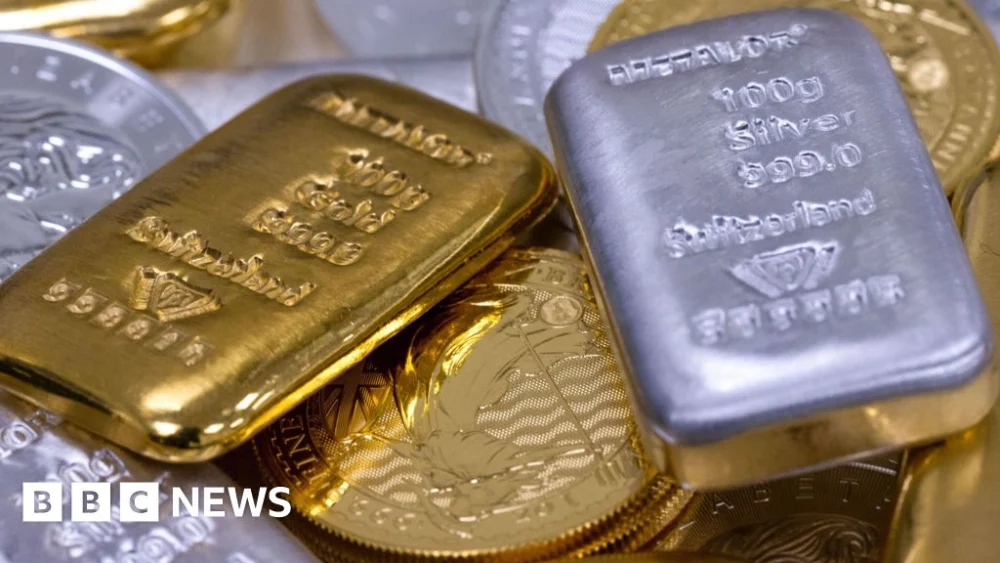
The journey for gold in 2025 was particularly breathtaking. The yellow metal’s price surged by an astonishing more than 60% over the year, reaching an unprecedented record high of over $4,549 (£3,378) an ounce. This historic peak reflected intense market optimism and robust demand. However, the festive period brought a sharp correction, with prices retreating after Christmas to settle at approximately $4,330 an ounce by New Year’s Eve. This late-year dip underscored the inherent volatility even in a bull market, reminding investors that even record-breaking ascents can be followed by swift pullbacks.
Silver mirrored gold’s dramatic trajectory, though with its own distinct characteristics. The white metal touched an all-time high of $83.62 an ounce on Monday before consolidating its gains to trade around $71 an ounce as the year drew to a close. Silver’s dual role as both a precious metal and a critical industrial commodity means its price is influenced by a broader set of variables, often leading to more pronounced swings compared to gold. Its climb to record levels highlighted both robust investment interest and strong industrial demand throughout the year.
Experts widely attribute these significant annual gains to a complex interplay of several factors. Rania Gule, a market analyst from the trading platform XS.com, articulated this complexity, stating, "Gold and silver prices are experiencing a notable rise due to the interplay of several economic, investment, and geopolitical factors." These intertwined forces created a fertile environment for precious metals, pushing their values to historic heights.
A primary driver of the price surge, according to Ms. Gule, has been the widespread expectation that the US Federal Reserve will implement further interest rate cuts in 2026. Lower interest rates typically diminish the appeal of yielding assets like bonds, making non-yielding assets such as gold and silver relatively more attractive. Additionally, rate cuts can weaken the U.S. dollar, making dollar-denominated commodities more affordable for international buyers and further boosting demand. The market, always forward-looking, began pricing in these anticipated policy shifts well in advance, providing a sustained tailwind for precious metals.
Beyond monetary policy, gold purchases by central banks worldwide played a crucial role in bolstering prices. According to the World Gold Council trade association, central banks collectively added hundreds of tons of gold to their reserves throughout the year. Central banks often acquire gold to diversify their holdings, hedge against currency devaluation, and enhance national financial stability, particularly in times of global economic uncertainty or geopolitical tension. This institutional buying provides a strong foundational demand for gold, signaling confidence in its long-term value.
Investment platform AJ Bell’s head of markets, Dan Coatsworth, emphasized additional catalysts, noting that soaring gold and silver prices were heavily influenced by investors "latching onto precious metals in response to concerns over inflation" as well as volatile stock markets. In periods of rising inflation, precious metals are traditionally viewed as a reliable store of value, preserving purchasing power when fiat currencies might be eroding. Moreover, when equity markets experience turbulence, investors often seek refuge in assets perceived as "safe havens," and gold and silver have historically fulfilled this role, offering a measure of stability amidst broader market gyrations. Concerns about global tensions and economic uncertainty further amplified this safe-haven demand, with investors flocking to assets considered resilient in times of crisis.
Looking ahead to 2026, the market backdrop appears largely unchanged, according to Mr. Coatsworth, suggesting continued support for precious metals. He highlighted several persistent concerns that are likely to encourage investors to "stay bullish on gold and silver." These include high government debt levels in major economies like the UK and the US, which can fuel fears of inflation or sovereign default. Additionally, the potential for renewed protectionist trade policies, such as those associated with Donald Trump’s tariffs, could disrupt global supply chains and economic stability, pushing investors towards safer assets. Nerves over a potential "AI bubble" also contribute to this cautious sentiment; the rapid, often speculative, growth in artificial intelligence stocks has led some to fear an eventual sharp correction, prompting a flight to tangible assets.
Despite these supportive factors, experts issued warnings regarding the sustainability of such rapid gains. Mr. Coatsworth cautioned that the sharp increases experienced by gold and silver in 2025 could make them vulnerable to a significant pullback in the coming year. He explained, "If financial markets go through a difficult patch, investors looking to liquidate positions might first reach for assets that have delivered strong gains in the past year or so, or ones that are easy to sell. Gold ticks both boxes." This highlights the risk that, while gold and silver offer safety, their liquidity and recent profitability can also make them targets for profit-taking during broader market corrections. Ms. Gule, while optimistic, tempered expectations, predicting that gold would continue to rise in 2026 but "at a more stable pace compared to the record highs observed in 2025."
Silver’s specific drivers added another layer to its compelling narrative. Daniel Takieddine, co-founder of investment firm Sky Links Capital Group, pointed to "supply tightness and industrial demand" as key factors pushing up silver prices. Silver is indispensable in numerous industrial applications, including solar panels, electronics, 5G technology, electric vehicles, and medical devices. This robust industrial demand provides a fundamental floor for its price, distinct from gold’s predominantly monetary role.
A significant development contributing to supply tightness emerged from China, the world’s second-largest producer of silver. In October, China’s Ministry of Commerce announced new restrictions on the export of silver, alongside metals like tungsten and antimony. The stated rationale behind these measures was "to step up the protection of resources and the environment." This move by a major producer sent ripples through global markets, exacerbating concerns about supply. Tesla boss Elon Musk, responding to news of these restrictions on social media, succinctly voiced the industrial community’s apprehension: "This is not good. Silver is needed in many industrial processes." Such export controls from a key supplier can dramatically impact global availability and pricing, especially for a metal with such diverse and critical industrial uses.
The increasing accessibility of precious metals investment through vehicles like exchange-traded funds (ETFs) also played a significant role. Mr. Takieddine highlighted the "large amounts of money that have flowed into the precious metals market through investments like exchange-traded funds." ETFs are financial instruments that hold a basket of underlying investments, in this case, precious metals, and trade on a stock exchange much like a single stock. They offer investors a convenient and liquid way to gain exposure to precious metals without the complexities and costs associated with taking physical possession of bullion. This ease of access has broadened the investor base, contributing to increased demand and price appreciation.
While the outlook for silver remains promising, Mr. Takieddine echoed the warnings of potential volatility. He cautioned that "rallies may be followed by sharper corrections," suggesting that silver’s inherent volatility, driven by both speculative interest and its industrial demand cycles, means investors should be prepared for significant price swings. As 2026 unfolds, the precious metals market will continue to be a focal point for investors navigating a complex global landscape, with the potential for both substantial gains and notable drawdowns after a truly blockbuster year.



 Roy Suryo