
 Ramos Leo
Family voting is a term used to describe situations where one family member is perceived to be exerting influence over another individual’s vote, often by accompanying them into the polling booth. While assisting a voter with a disability or language barrier is permissible under strict conditions, the core concern lies in any action that undermines the principle of a secret ballot and the voter’s independent choice. The Ballot Secrecy Act 2023 explicitly addresses this, making it an offence to be present in a polling booth with another person for the purpose of influencing their vote. This legislation underscores the critical importance of ensuring every vote cast is a genuine reflection of individual will, free from coercion or pressure.
Democracy Volunteers, a non-profit organisation dedicated to monitoring electoral processes to ensure fairness and adherence to regulations, issued a rare on-the-night statement following the closure of polls on Thursday. John Ault, the director of Democracy Volunteers, expressed profound concern, stating that their observers had witnessed "the highest levels of family voting at any election in our 10-year history of observing elections in the UK." This stark declaration immediately drew attention to the by-election’s conduct.
Ault further elaborated on the statistical data gathered by his team. He highlighted a significant disparity between the Gorton and Denton by-election and other recent parliamentary contests. For instance, in the Runcorn and Helsby by-election, Democracy Volunteers reported family voting in 12% of observed polling stations, affecting an estimated 1% of voters. In stark contrast, their observations in Gorton and Denton indicated family voting in a staggering 68% of polling stations, impacting approximately 12% of the voters observed. This tenfold increase in the proportion of affected voters, alongside the much wider prevalence across polling stations, underpinned the urgency of their report.
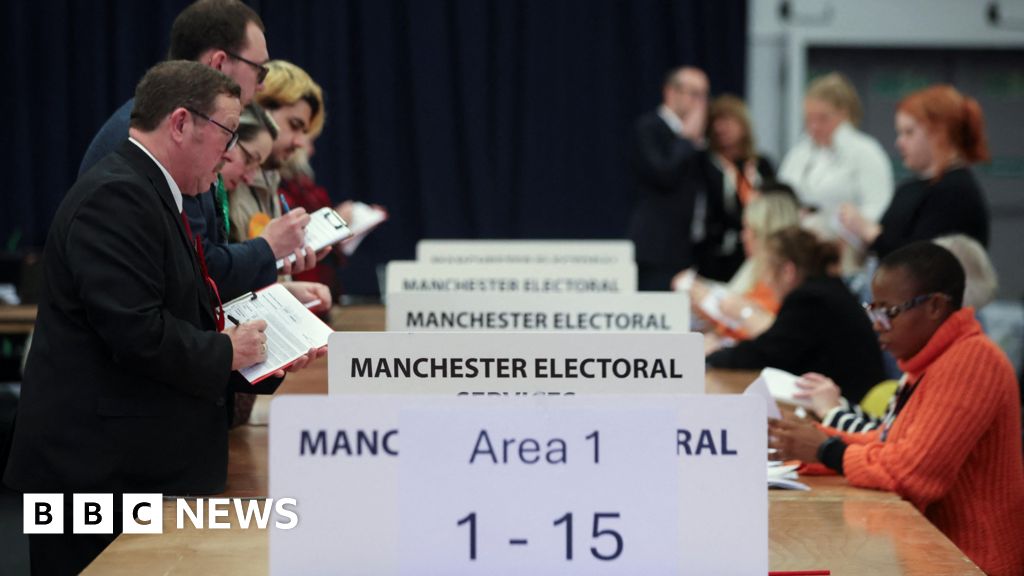
The group’s methodology involved deploying four observers who visited 22 of the 45 polling stations within the constituency. Each visit lasted between 30 to 45 minutes, allowing for sustained observation of voter behaviour. Out of the 22 observed polling stations, volunteers reported potential instances of family voting in 15 of them. From a sample of 545 individuals casting their votes, a total of 32 cases of family voting were identified, with a particularly high concentration of nine cases reported in a single polling station. These detailed observations provided the basis for Democracy Volunteers’ grave concerns, suggesting a systemic issue rather than isolated incidents.
However, the acting returning officer responsible for overseeing the Gorton and Denton by-election vehemently rejected these claims. A spokesperson for the officer stated that polling station staff receive specific training to identify and address any evidence of undue influence on voters. Crucially, the spokesperson asserted that "no such issues" had been reported by staff during polling hours, implying that if problems existed, they were not brought to the attention of those managing the election on the ground. The returning officer’s office also criticised Democracy Volunteers for waiting until after polls had closed to make their claims public. They emphasised the availability of a "central by-election hub" designed for rapid response to reported issues throughout the day, in collaboration with the police who maintained a presence at every polling station. The spokesperson expressed "extreme disappointment" that Democracy Volunteers chose to delay their allegations, suggesting that timely reporting could have allowed for immediate action.
The Electoral Commission, the independent body responsible for overseeing elections in the UK, acknowledged awareness of Democracy Volunteers’ report. A spokesperson for the Commission reiterated that electoral offences fall under the purview of the police, and encouraged anyone who believes an offence has occurred to report it to law enforcement. The Commission also highlighted its statutory electoral observer Code of Practice, which stipulates that electoral observers "may bring potential irregularities, fraud or significant problems to the attention of elected officials on the spot." This statement implicitly supports the returning officer’s criticism regarding the timing of Democracy Volunteers’ report, underscoring the expectation for immediate communication of concerns.
The allegations have naturally sparked reactions across the political spectrum. Anna Turley, the Labour Party chair, told BBC Newsnight that reports of family voting in Gorton and Denton were "extremely worrying and concerning," adding that "that’s not what we want to see in our democracy." She called for a thorough review of the evidence and a decision on which authorities should investigate the matter further. Green Party leader Zack Polanski, speaking on BBC Breakfast, agreed that any wrongdoing should be investigated, but also referenced Manchester City Council’s statement that no issues had been reported, suggesting a need for a balanced approach.
Reform UK leader Nigel Farage, however, adopted a more forceful stance, stating that the claims raised questions "about the integrity of the democratic process in predominantly Muslim areas." He went further, asserting that the election was "a victory for sectarian voting and cheating." While the party’s chair, David Bull, acknowledged that the alleged practices probably did not affect the final result of the by-election, he stressed the imperative to "ensure this doesn’t happen" in future elections. Farage’s comments, linking the concerns to specific demographics, injected a controversial element into the discussion, prompting further debate about the socio-cultural dynamics that might contribute to such practices, whether intentional or not.
These concerns underscore a fundamental pillar of democratic elections: the secrecy of the ballot. This principle is not merely a procedural formality but a safeguard designed to protect voters from intimidation, coercion, and undue influence, ensuring that each individual’s choice is made freely and independently. The allegations in Gorton and Denton, regardless of their ultimate substantiation, highlight the delicate balance between cultural practices, community dynamics, and the strict legal requirements of electoral processes. While families often discuss politics and even vote together, the line is crossed when assistance turns into influence, or when a voter feels pressured to vote a certain way.
The role of election observers is crucial in identifying potential vulnerabilities in the electoral system and upholding public confidence. However, their effectiveness often hinges on their ability to work collaboratively with election authorities. The tension between Democracy Volunteers and the acting returning officer highlights a procedural challenge: when and how should observations of potential irregularities be reported? Timely reporting allows authorities to intervene, investigate, and rectify issues during the polling period, while post-election reports, though valuable for long-term analysis, can be more difficult to act upon retrospectively.
Ultimately, the ‘family voting’ concerns raised in Gorton and Denton necessitate a thorough and transparent investigation. The conflicting accounts from Democracy Volunteers and the local election authorities demand reconciliation. Ensuring the integrity of the democratic process, and critically, public trust in that process, depends on a clear understanding of what occurred, why it occurred, and what measures, if any, need to be implemented to prevent similar issues in future elections. The seriousness of the allegations, combined with the varying political responses, ensures that this issue will remain a subject of scrutiny and debate regarding the robustness of electoral safeguards in the UK.




 Roy Suryo

 Nakalama John
 atisusanti
